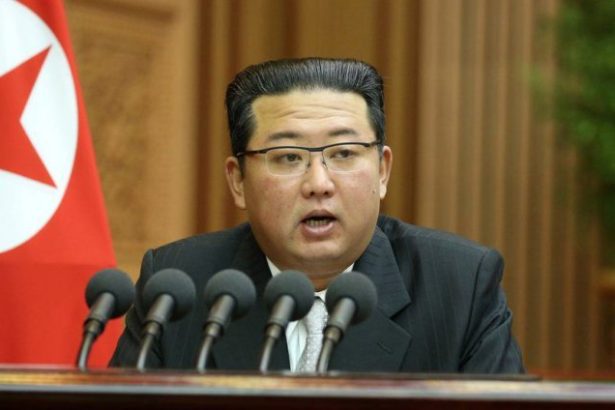
The ruling Workers’ Party of Korea has confirmed Kim Jong Un as its general secretary, state media reported, a move widely expected given the country’s long-standing political structure.
The announcement came from the party congress on Sunday and signals continuity in leadership of North Korea, where the Kim family has held power since the late 1940s.
State news agency KCNA said the leadership under Kim had “radically improved” the country’s “war deterrence” capabilities, citing nuclear forces as the central component of its defence posture.
Despite international sanctions aimed at curbing its weapons programme, North Korea continues to advance its nuclear capabilities and regularly conducts missile tests that violate United Nations resolutions. However, the secretive nature of the regime makes independent verification of its military progress difficult.
Kim, who assumed control after the death of his father in 2011, has prioritised investment in nuclear development, transforming Pyongyang’s strategic posture and heightening concerns in the West, particularly in the United States.

The ongoing party congress, now in its fourth day, is expected to outline the next phase of the country’s weapons programme. Prior to the meeting, North Korea displayed what it described as new nuclear-capable rocket launchers, signalling continued focus on military development.
The congress, held every five years in recent years, began on 19 February and involves around 5,000 party members, according to KCNA. It provides rare insight into the political structure of a country where decision-making processes remain largely opaque.
Officials describe the congress as the most significant political event in North Korea, shaping policies on foreign relations, economic planning and security priorities.
While Kim remains firmly in control, the composition of the party’s executive committee has changed significantly. More than half of the 39-member presidium has been replaced since the previous congress in 2021, state media indicated.
In his opening address, Kim pledged to prioritise economic development and improvements in living standards, describing these objectives as urgent national tasks.
The congress continues to attract international attention as analysts seek clues about North Korea’s strategic direction and potential implications for regional security.