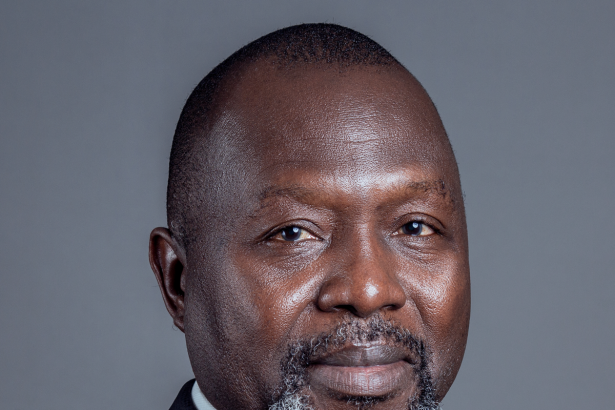
Deputy Attorney-General and Minister for Justice, Dr Justice Srem-Sai, has urged the Ghana Bar Association (GBA) to strengthen its independence from political parties and the corridors of political power and remain firmly focused on defending the public interest.
He expressed concern that the legal profession’s traditional responsibility to advocate for the genuine public interest had increasingly been overshadowed by what he described as a growing interest among some leaders of the Bar in gaining access to national political power.
Dr Srem-Sai made the remarks in an address delivered on behalf of his boss, Attorney-General and Minister for Justice, Dr Dominic Ayine, at the opening of the GBA’s annual conference in Ada on Monday, September 14, 2026.
His demand for political neutrality from GBA came after the President of the GBA, Mrs Efua Ghartey, waded into public discussions surrounding Chief Justice Paul Baffoe-Bonnie’s recent comments on the performance of state-owned enterprises (SOEs).
For years, there has been mistrust between the ruling National Democratic Congress (NDC) and the GBA, which is seen as aligned with the opposition New Patriotic Party (NPP). The Bar is quick to speak out and even condemn matters under an NDC government, while remaining silent on similar issues under an NPP administration.
More Read
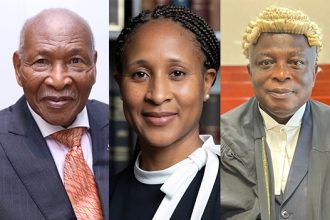
Observers have said that the association is structured in a way that allows NPP-leaning individuals to emerge as its leaders, while those seen as not aligned don’t. To address the perceived political bias, some lawyers aligned with the NDC started the Ghana Law Society.
Speaking at this year’s GBA Annual Conference, Mrs Ghartey described the Chief Justice’s comments as unfortunate and said they tended to create an undesirable impression that the Judiciary was taking sides in the country’s political affairs.
“The recent commendation of a public institution and the comparison to a past government’s output by no mean a person than the Chief Justice of the Republic of Ghana left much to be desired,” Mrs Ghartey stated, quoting Matthew 12:34 in the Bible, where Jesus Christ was famously quoted as saying “Out of the abundance of the heart the mouth speaks”.
She also pointed out that the statement issued by the Judicial Secretary in the aftermath of the Chief Justice’s comments, which sought to defend him, “was at best lacklustre”.
She said that while the GBA was committed to protecting the independence of the Judiciary, the institution itself must act within the provisions of the Constitution and not seek to promote the bidding of another arm of government, especially the Executive, “its ultimate appointing authority”.
Mrs Ghartey further cited a Supreme Court decision which held that holders of independent institutional or statutory offices, including judges, were, by implication of their independent status, constrained in their ability to actively take sides in partisan politics.
However, Dr Srem-Sai said such perceptions risked undermining public confidence in the GBA and making it appear that the Bar represented particular political interests rather than the broader public good.
He said the Bar was increasingly being perceived by sections of the public as a mouthpiece for particular political interests.
“The decline in the persons of the Bar’s sacred duties to advocate for genuine public interest on one hand and, on the other, the rise in the leadership’s interest over the years in obtaining access to the corridors of national political power, this shift appears unfortunately to be fast-converting the Bar’s sacred public duty into one of persistent political convenience where the Bar is often seen and described by the public as a mouthpiece of a particular political interest rather than of the public interest as a whole,” he said.
Dr Srem-Sai stressed that the authority and credibility of the GBA depended on its independence from the state, political parties, and persons in high office.
“I too strongly believe that the Bar’s authority rests on its independence from the State, from political parties and yes, from the office which I occupy,” he said.
The Deputy Attorney-General said his call for greater independence should not be interpreted as a call for the Bar to withdraw from national discourse.
He instead advocated for a Bar that remained visible, principled and actively engaged in matters of public interest while maintaining a clear distance from political convenience.
“What I asked for in Wa and still ask for here today is not a Bar that is silent or hidden but a Bar that is visible and present, not a Bar that flips on principles but a Bar that is consistent,” he said.
He added that the Bar should not distance itself from public discourse but should instead distance itself from political convenience and the corridors of national political power.
“Not a Bar that keeps its distance from public discourse but one that keeps its distance from political convenience, from the corridors of national political power.”
Dr Srem-Sai said his position was informed by his experience with legal associations in other countries, particularly within the Commonwealth, where professional bodies maintained a strong degree of independence from political authorities.
“These observations of mine are not borne out of a cursory piece of luxury, they are borne out of my deep experience in the affairs of Bars in other countries and within the Commonwealth whereby Associations are fiercely professional and keep a distance from the corridors of political power,” he said.
He, however, cautioned that demands for the independence of the legal profession must be accompanied by corresponding responsibilities on the part of the state.
“These experiences taught me one thing, it is that the demand for independence must not be isolated from proper context, the demand for the Bar’s independence must come with a demand on the state itself for responsibility,” he said.
Mrs Ghartey said the Association would continue to defend the independence of the Judiciary in accordance with Article 128 of the 1992 Constitution.
She, however, cautioned that judicial independence did not give judicial officers the latitude to engage in partisan political conduct.
She quoted a Supreme Court decision which held that holders of independent institutional or statutory offices, including judges, were, by implication of their independent status, constrained in their ability to actively take sides in partisan politics.
Mrs Ghartey said the Bar would remain vigilant in ensuring that public institutions operated within constitutional standards.
She also raised concerns about excessive bail conditions being imposed on persons arrested for various offences and called for bail to be reasonable, proportionate and consistent with the constitutional presumption of innocence.
She said the Bar was considering a human rights watch committee to monitor compliance with Article 14 and other human rights provisions, as well as provide legal assistance to suspects where necessary.
Dr Ayine urged the GBA to uphold consistency in its principles and maintain a clear distance from partisan political interests.
He said the Association’s conduct had, at times, created the perception that it was aligned with a particular political side, warning that such impressions could undermine its independence and credibility.
He said the GBA must remain independent not only of the government but also of political parties and the Office of the Attorney-General.
“An Attorney-General who wishes for the Bar that agrees with him all the time clearly misunderstands his own job and also the role of the Bar as a civil society organisation. Suffice to say that like each of us here in this hall, I too strongly believe that the Bar’s authority rests on its independence from the State, from political parties and yes, from the office which I occupy.
“Accordingly, what I asked for in Wa and still ask for here today is not a Bar that is silent or hidden but a Bar that is visible and present. Not a Bar that flips on principles but a Bar that is consistent. Not a Bar that keeps its distance from public life and discourse but one that keeps its distance from political convenience,” he stated.
Dr Ayine also disclosed that the government was preparing to introduce a Legal Practitioners’ Standards Board Bill.
The proposed legislation would establish an independent statutory body responsible for setting and maintaining standards of professional conduct and continuing competence for legal practitioners. It would also create an independent disciplinary committee separate from the board’s licensing and standard-setting functions.
Dr Srem-Sai said the move had become necessary because the existing disciplinary system had been characterized by delays and concerns about fairness.
He said the intention was to extricate the disciplinary process from government control and give the Bar greater ownership of the process.
Chief Justice Paul Baffoe-Bonnie, in a speech read on his behalf by Justice Anthony Forson, said the Judiciary was undertaking several reforms to modernize the administration of justice.
He cited the ongoing review of the High Court Civil Procedure Rules and the e-Justice programme as measures intended to improve the efficiency and accessibility of the justice system.
The five-day conference, being held at the Aqua Safari Resort in Ada, is on the theme“150 Years of Ghana’s Legal Evolution: Transforming the Profession and Driving its Future with Industry.”The conference is running from September 13 to 18, 2026.