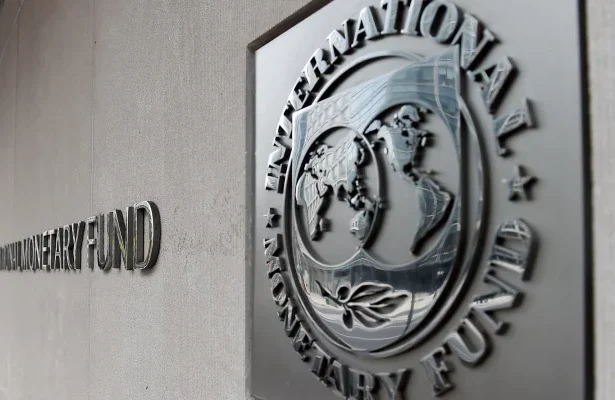
A staff mission from the International Monetary Fund (IMF) will arrive in Accra on 29 April 2026 to commence Ghana’s sixth and final review under its Extended Credit Facility (ECF) programme.
The mission is expected to spend about two weeks in the country, engaging government officials and key stakeholders as part of the assessment process ahead of Ghana’s planned exit from the programme in August 2026.
The review will focus on Ghana’s performance since the fifth assessment, with particular attention to delayed targets and the implementation of structural reforms.
Fiscal developments are expected to feature prominently, especially issues within the energy sector, including debt management and ongoing reforms. Government expenditure will also be examined, with emphasis on allocations to priority sectors such as social protection.
The IMF team is also expected to determine a set of prior actions required for the successful completion of the review and the release of the final tranche of support under the programme.
More Read

In the financial sector, discussions will cover progress made in addressing longstanding weaknesses within the banking system.
Following the engagements in Accra, the team will return to Washington, D.C. to analyse the data and prepare a report for consideration by the IMF Executive Board.
Ghana’s programme, initially scheduled to end in May 2026, has been extended to August 2026.
The IMF Resident Representative in Ghana, Adrian Alter, has described the extension as technical, explaining that it allows time to complete assessments based on recent economic data.
Ghana entered the three-year ECF arrangement in May 2023, with support amounting to about US$3 billion.
At the fifth review, the IMF indicated that Ghana’s performance had been broadly satisfactory, despite some delays in reforms. It noted that economic growth exceeded expectations in 2025, supported by strong performance in the services and agriculture sectors.
The IMF projects Ghana’s economy to grow by 4.8% in 2026, with inflation expected to decline to single digits.
The Director of the IMF’s Africa Department, Abebe Aemro Selassie, has urged Ghana to maintain fiscal discipline to sustain gains made under the programme.
A recent IMF technical mission to the Bank of Ghana has also recommended strengthening oversight and risk management frameworks to enhance financial system stability.