The growing crisis of container loss at sea incidents that disrupt supply chains, endanger navigation, damage marine ecosystems and drive up the cost of doing business at ports dominated discussions at the 11th session of the International Maritime Organization’s (IMO) Sub-Committee on Carriage of Cargoes and Containers (CCC-11) last week.
The meeting, held in London from 8th to 12th September 2025, brought together maritime regulators and experts from across the world.
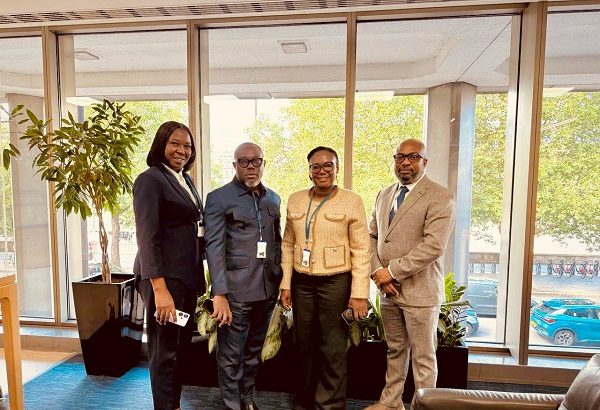
Ghana was represented by a delegation from the Ghana Shippers’ Authority (GSA) and the Ghana Maritime Authority (GMA), led by Prof. Ransford Gyampo, Chief Executive Officer of the GSA.
The CCC is the IMO’s technical body charged with drafting and reviewing international codes and guidelines governing the safe carriage of cargoes at sea from solid bulk and dangerous goods to liquefied gases and containerized shipments.
It also sets safety standards for emerging fuels and strengthens inspection regimes designed to prevent accidents and safeguard the marine environment.

At this year’s session, the Sub-Committee considered amendments to the International Maritime Solid Bulk Cargoes (IMSBC) Code, updates to cargo-securing manuals, and new guidelines for alternative fuels such as ammonia and hydrogen.
Prof. Gyampo was joined by Sylvia Asana Dauda Owu, GSA Deputy CEO (Technical Services), Capt: Derrick Attachie, Executive (Technical II), and Lydia Tsotsoo Odai-Tettey of the GMA.
The team actively contributed to technical deliberations, particularly on matters affecting trade facilitation and the cost of doing business at Ghana’s ports.
Key recommendations emerging from CCC-11 included revising cargo-securing manuals to incorporate harmonised performance standards for lashing software and establishing stronger inspection regimes for containers and securing gear.
The session also encouraged enhancing stowage planning and operational guidance to reduce the risk of container losses in severe weather and developing further guidelines for vessels operating on alternative fuels.
These recommendations will now be forwarded to the IMO’s Maritime Safety Committee for further consideration and possible adoption.
Speaking on the sidelines of the meeting, Prof. Gyampo stressed the wider economic implications of container safety:
“The global conversation on container safety is not just technical; it has a direct bearing on the competitiveness of our traders and the safety of our maritime space.”
By taking part in these global deliberations, Ghana is not only protecting its trade interests but also consolidating its role as a key maritime player in West Africa, with the GSA at the forefront of advancing industry reforms.