By Patrick Biddah
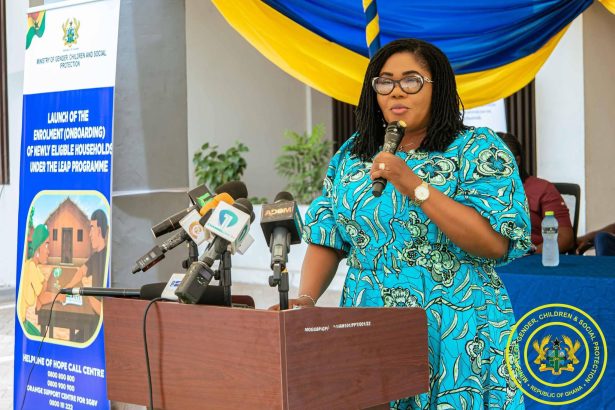
The Government, has announced the onboarding of 400,000 new households under a relaunch of the Livelihood Empowerment Against Poverty (LEAP) Programme following a nationwide reassessment exercise.
The Minister for Gender, Children and Social Protection, Dr Agnes Naa Momo Lartey, made this known at an official event held on Friday, April 24, 2026.
She described the exercise as a major reform aimed at strengthening the effectiveness, transparency and fairness of the programme.
According to the Minister, the reassessment was necessary to reflect the changing dynamics of poverty and ensure that support reaches those who need it most.
More Read

The LEAP Programme, which has been running for 18 years, remains a key component of Ghana’s social protection system, providing cash transfers and improving access to essential services for vulnerable households.
Dr Lartey noted that the reassessment led to the transition of about 220,520 households out of the programme, either through graduation or exit.
She explained that the addition of 400,000 new households represents one of the largest expansions of the programme since its inception.
The Minister emphasized that the relaunch marks a shift from a static system to a more dynamic and responsive social protection framework.
She announced that nationwide enrolment of the newly selected households will begin on April 27, 2026 and is expected to be completed within two to four weeks.
Dr Lartey added that payments to new beneficiaries will commence only after the successful completion of the enrolment process to ensure accountability and system integrity.
She further assured that households exiting the programme will be supported through transitional arrangements, including livelihood and financial empowerment initiatives.
The Minister reaffirmed government’s commitment to strengthening social protection and ensuring that no eligible Ghanaian is left behind.
A Social Protection Specialist with the World Bank, Madam Cynthia Nimo-Ampredu, commended the Ministry and its technical teams, including the LEAP Management Secretariat, the Ghana National Household Registry, and the Ghana Statistical Service, for their dedication and ownership throughout the process.
She noted that, the World Bank regular reassessments, as anticipated under the Social Protection Act 2025, are critical to ensuring that limited government resources are efficiently targeted at the most vulnerable.
She also stressed the need for continuous updates to the Ghana National Household Registry and intensified public education to help beneficiaries understand that while social assistance is a right, it is not indefinite.
She further highlighted improvements made over the past three years, including the review of benefit levels and their indexation to inflation, while calling for expanded “cash-plus” interventions to support sustainable graduation from the programme.