By Patrick Biddah
Ghana and Sierra Leone have pledged to move beyond formal agreements and ensure the full implementation of commitments aimed at driving socio-economic development in both countries, following the successful conclusion of a ministerial meeting under the Permanent Joint Commission for Cooperation (PJCC).
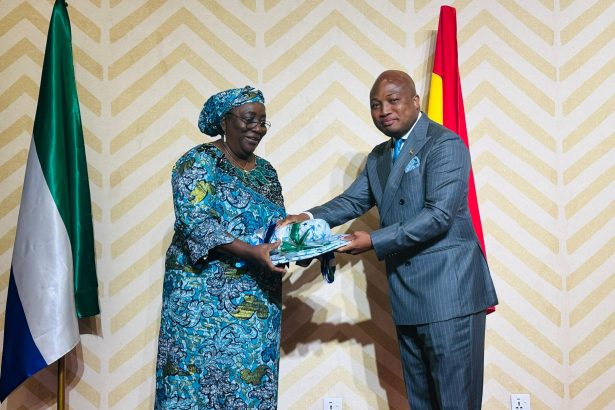
At the closing ceremony of the ministerial session on April 22, 2026, Ghana’s Minister for Foreign Affairs, Samuel Okudzeto Ablakwa, announced that six Memoranda of Understanding (M0Us) and one major agreement had been signed, describing the outcome as a significant achievement within a short period.
He noted that while the signing marked an important milestone, the real task lies ahead.
“These MOUs and agreements will not, in themselves, deliver results. The hard work begins now,” he stressed, underscoring the need for sustained follow-up and implementation.
More Read
To ensure progress and follow-up , the Minister revealed that Ghana’s Ministry of Foreign Affairs has established a dedicated Delivery Unit to track and monitor the execution of agreements, preventing them from stagnating without tangible outcomes.
The six MoUs signed between Ghana and Sierra Leone span key sectors critical to national development, including energy cooperation, trade facilitation, agricultural development, particularly in the cocoa sector, defence collaboration, and broader economic partnerships.
Also speaking at the closing session, Sierra Leone’s Deputy Minister for Foreign Affairs and International Cooperation, Frances Piagie Alghali, described the PJCC meeting as a turning point in bilateral relations, emphasizing that it reflects a shared commitment to transforming diplomatic ties into practical development gains.
She highlighted the role of leadership from both nations, noting that the initiative builds on sustained engagements between John Dramani Mahama and Julius Maada Bio, whose recent reciprocal visits laid the groundwork for deeper cooperation.
According to her, the agreements are designed not merely as diplomatic instruments but as catalysts for inclusive growth, job creation, and economic resilience in both countries.
Over two days of deliberations, technical teams from both sides worked to align priorities and identify actionable steps within the agreed sectors, ensuring that each MoU is backed by clear implementation strategies.