
The Ghana Education Trust Fund (GETFund) has disbursed three cheques totalling GH¢199,471,691 to settle outstanding payments owed to suppliers of perishable food items under the Free Senior High School (Free SHS) and Technical and Vocational Education and Training (TVET) programmes.
The payments cover arrears accumulated between October and February for Free SHS and between October and December for TVET institutions, providing much-needed relief to service providers who supply essential food items such as vegetables, meat, and eggs to schools nationwide.
The Fund said the move underscores the government’s commitment to honouring its financial obligations to suppliers who play a critical role in sustaining feeding and logistical operations across second-cycle institutions. It is also expected to ease mounting operational pressures on vendors and ensure the uninterrupted provision of perishable goods to students.
GETFund further reaffirmed its commitment to timely disbursements and sustained collaboration with stakeholders to strengthen education delivery across the country.
The release comes against the backdrop of a deepening crisis surrounding the Free SHS feeding programme, following a breakdown in high-level talks convened by the Minister for Education, Haruna Iddrisu, on Friday, 17 April 2026.
More Read
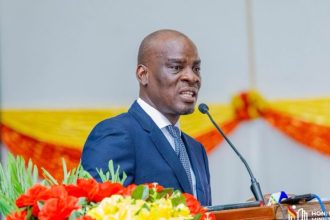
The meeting, held at the Ministry of Education, brought together key stakeholders, including the Conference of Heads of Assisted Secondary Schools (CHASS), the National Food Buffer Stock Company, and GETFund, to address growing concerns over food shortages in schools.
At the centre of the dispute is the procurement of perishable food items, which have become increasingly scarce due to funding delays and supply chain constraints.
In an attempt to resolve the impasse, Mr Iddrisu proposed that GETFund maintain an arrangement allowing CHASS to independently procure perishable items. However, the parties failed to reach a consensus.
The stalemate follows a formal petition submitted by CHASS and the Conference of Principals of Technical Institutions (COPTI), highlighting the severe financial strain on school administrators.
Headteachers across the country have reportedly resorted to using personal funds and credit facilities from local suppliers to sustain daily feeding, as supplies from the Buffer Stock Company continue to dwindle amid rising inflation.
School heads have warned that without immediate financial intervention, they may be forced to shut down institutions, a move that could disrupt the academic calendar and preparations for the West African Senior School Certificate Examination (WASSCE).
With more than 1.2 million students enrolled under the Free SHS policy, the stakes remain high. Stakeholders are expected to reconvene in the coming days to seek a coordinated and sustainable solution to the challenges confronting the programme’s feeding system.