…..In Ghana’s BRICS membership bid
Ghana’s proposed membership of the BRICS bloc presents an opportunity to diversify its international partnerships, strengthen its bargaining power and enhance its influence in global governance, but the move also carries economic, diplomatic and strategic risks, a new policy brief has warned.
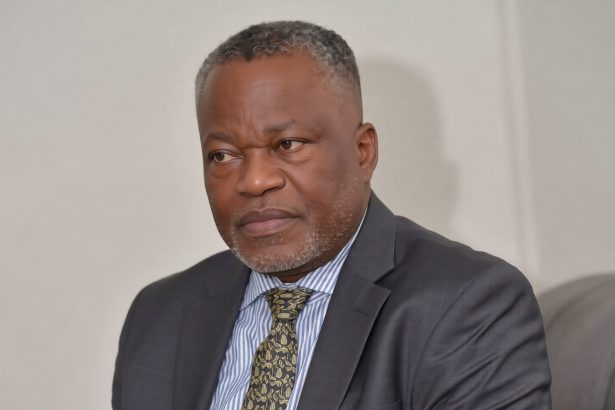
The brief, titled A Test of Agency: Ghana’s BRICS Application and the Future of Strategic Diversification, authored by the respected retired Colonel Festus Aboagye, a Security Analyst with Ulinzi Africa Resources, argues that the proposed membership should be assessed not merely as a geopolitical alignment but as a test of the country’s ability to pursue its national interests while preserving its strategic independence.
The six-page policy brief, published in October 2026, examines the potential benefits and risks of Ghana’s decision to seek membership in the grouping, which includes Brazil, Russia, India, China, and South Africa, alongside other countries that have joined in recent years.
According to the document, Ghana’s decision to pursue BRICS membership is a significant foreign policy initiative, but public debate has tended to present it as either an escape from excessive dependence on Western institutions and markets or a step towards alignment with China, Russia and other emerging powers.
More Read
The author cautions that both interpretations could be misleading, arguing that the more important consideration is whether participation would strengthen Ghana’s capacity to make independent decisions, scrutinize international partnerships and change or withdraw from arrangements when necessary.
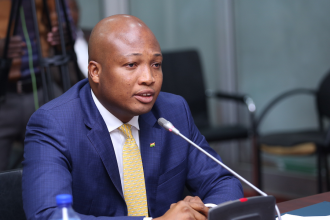
On October 6, 2026, Foreign Affairs Minister Samuel Okudzeto Ablakwa announced a Cabinet decision approving Ghana’s intention to formally apply for BRICS membership.
The policy brief, however, states that, based on the available evidence, Ghana had not submitted a formal application as of October 10, 2026. It therefore distinguishes the announcement of an intention to apply from the completion of the application process.
It also notes that BRICS membership does not automatically confer access to the New Development Bank, which operates a separate accession process.
The brief identifies economic diversification as one of the principal benefits Ghana could derive from engagement with BRICS.
Membership could help Ghana expand commercial relationships beyond traditional markets, gain access to emerging economies, and reduce its vulnerability to dependence on a single market, lender, or development partner.
It could also strengthen Ghana’s bargaining position in negotiations with traditional partners by providing the country with a wider range of options.
However, the author argues that the benefits would depend on the substance of the agreements Ghana negotiates, rather than membership itself.
The document points out that Ghana’s five largest export destinations in 2025 accounted for more than two-thirds of its exports, with four of the five being BRICS members.
The United Arab Emirates accounted for 25.9 percent of exports, followed by India at 16.0 percent, South Africa at 10.3 percent, and China at 4.9 percent. Switzerland, with 14.2 percent, was the exception.
The figures, the brief argues, demonstrate that Ghana already has significant export exposure to BRICS members, largely driven by gold.
Consequently, the challenge is not simply to expand trade with the bloc, but to improve the quality of that trade through greater value addition, a wider range of products, and more diversified export destinations.
The brief also identifies potential opportunities in development finance, noting that BRICS is associated with alternative financing mechanisms, particularly the New Development Bank.
It argues that Ghana could eventually gain an additional source of project financing beyond existing multilateral institutions, although membership of BRICS would not automatically guarantee access to the bank.
Another potential benefit is increased influence in global governance.
According to the author, BRICS provides developing countries with a platform to advocate reforms in international financial institutions and influence discussions on development finance, climate finance, trade rules, and the structure of global governance.
However, the brief acknowledges that the extent of Ghana’s influence within the grouping remains uncertain.
It further argues that engagement with BRICS could allow Ghana to maintain relationships with Western partners while expanding cooperation with emerging powers, provided the country manages its external relationships carefully.
Despite the potential benefits, the policy brief warns that diversification could create new dependencies if Ghana does not carefully scrutinize its commitments.
One major concern is the possibility of replacing dependence on Western partners with dependence on a single BRICS member for financing, technology, infrastructure, or energy.
The author therefore urges the government to assess the terms of agreements, financing arrangements, ownership structures, and exit provisions before entering into major commitments.
The brief also cautions that increased trade volumes would not necessarily translate into economic transformation if Ghana continued exporting predominantly raw commodities while importing higher-value manufactured goods.
It argues that the composition of trade, rather than its volume alone, should determine whether engagement with BRICS advances Ghana’s economic interests.
Financing arrangements also require scrutiny, particularly regarding transparency, repayment obligations, collateral requirements and public accountability.
The document cites Ghana’s public debt position as a reason for caution. At the end of June 2026, external public debt stood at US$28.9 billion, representing 45.6 percent of total public debt, according to figures attributed to the Ministry of Finance.
Multilateral creditors accounted for 41.9 percent of external debt, international capital markets 29.0 percent, bilateral creditors 20.0 percent, and commercial lenders 9.2 percent.
The author notes that the available debt bulletin does not provide a breakdown of bilateral debt by creditor country, identifying this as a transparency gap that should be addressed.
The brief further raises the possibility of diplomatic and trade repercussions from Western partners, particularly the United States.
It recalls a July 2025 statement by US President Donald Trump that countries aligning themselves with what he described as the “anti-American policies of BRICS” could face an additional 10 percent tariff.
The document says no such measure against Ghana had been reported as of the time of writing, but argues that the threat warrants attention given Ghana’s continued reliance on Western markets, development finance, and security cooperation.
It also warns that participation in BRICS could expose Ghana to competing diplomatic expectations, even though the grouping is not a military alliance and membership does not automatically amount to strategic alignment.
The author therefore urges the government to distinguish between cooperation that advances Ghana’s interests and commitments that could constrain its foreign policy choices.
The policy brief recommends that the government publicly clarify the objectives of its application and indicate whether it is seeking full membership or another form of participation.
It also calls for a comprehensive, government-wide assessment of major commitments, including their total costs, financing terms, potential benefits, and exit provisions.
The government is urged to establish measurable indicators to evaluate the benefits of engagement, covering export diversification, domestic employment, productive investment, technology transfer, financing costs, and the implementation of agreed projects.
The brief further recommends that Parliament demand a ministerial statement on the application and exercise of scrutiny over significant financial, trade, and technology agreements.
It says confidentiality provisions in such agreements should be legally justified, time-limited, and subject to review.
Civil society organizations and research institutions are encouraged to develop independent analytical capacity to assess Ghana’s external partnerships, while the media is urged to focus on the terms of agreements and the implementation of projects rather than ideological arguments for or against BRICS.
The author also calls for Ghana to identify shared priorities with African members and partners, including South Africa, Egypt, Ethiopia, Nigeria and Uganda, in areas such as industrialization, value addition, development finance, technology transfer and fairer representation in global governance.
Regional institutions, including the Economic Community of West African States (ECOWAS) and the African Union, could provide platforms for comparing terms and experiences.
In its conclusion, the brief argues that Ghana’s proposed BRICS membership should not be understood as a choice between East and West, but as a question of how the country positions itself in an increasingly complex international environment.
It maintains that the potential gains are real, but so are the risks of new dependencies, financial exposure, technology lock-in and diplomatic pressure.
The decisive issue, according to the author, is whether participation would give Ghana more choices, greater economic resilience, and stronger sovereignty.
“BRICS membership is not principally a test of alignment. It is a test of agency,” the brief concludes.
The author argues that Ghana’s success will ultimately depend on whether it can diversify its partnerships without allowing any single country or bloc to dominate its trade, financing, technology or strategic decision-making.