Ghana and Burkina Faso have formalised a new military cooperation arrangement aimed at protecting cross-border trade and strengthening security along the transport routes linking the two countries.
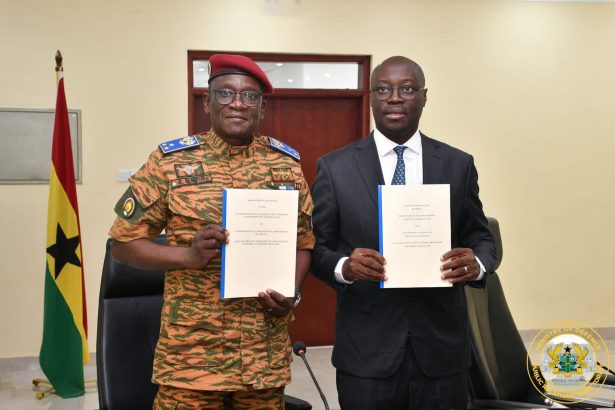
The agreement, signed in Accra by Acting Minister for Defence Cassiel Ato Forson and Burkina Faso’s Minister of State for Defence and Veterans Affairs, Major General Célestin Simporé, seeks to enhance joint efforts against growing security threats affecting trade and border communities.
The two governments have agreed to work together on coordinated military operations, intelligence sharing and enhanced border surveillance to safeguard commercial vehicles transporting goods between the countries.
A key feature of the pact is the deployment of military escorts for cargo trucks using the Tema–Ouagadougou and Takoradi–Ouagadougou trade corridors, which have become increasingly important for Burkina Faso’s imports and exports.
The agreement also provides for joint patrols and other security measures designed to curb terrorism, armed attacks and cross-border smuggling, while ensuring the uninterrupted movement of goods.

The latest arrangement builds on commitments made under the Permanent Joint Commission for Cooperation between Ghana and Burkina Faso and is expected to be implemented immediately.
The initiative comes at a time when Burkina Faso has redirected more of its international trade through Ghana’s ports following changing regional trade dynamics. The shift has increased cargo volumes along Ghana’s northern transport corridors, making security a growing priority for both countries.
Burkina Faso continues to battle persistent attacks by extremist groups, with insecurity disrupting transport and economic activity across parts of the Sahel. The two governments believe closer military collaboration will help protect critical supply routes while limiting the spread of instability towards Ghana’s northern border.
Officials say the partnership reflects the shared determination of both countries to promote regional security, facilitate trade and strengthen economic cooperation through safer transport corridors.