The African Union (AU) has urged governments and development partners to move beyond fragmented interventions, calling for integrated policies, stronger institutions and increased development financing to accelerate progress towards the 2030 Agenda for Sustainable Development and the African Union’s Agenda 2063.
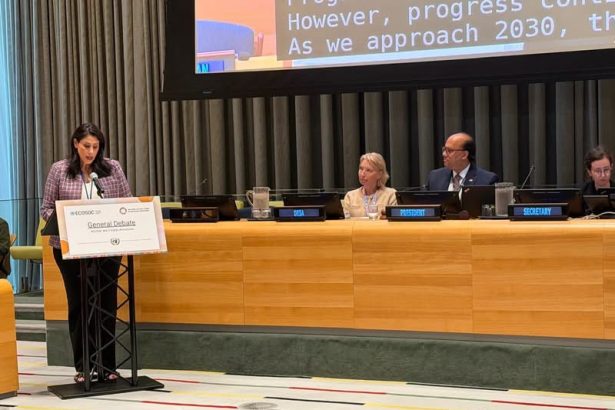
Addressing the General Debate of the High-Level Political Forum (HLPF) 2026, the Deputy Chairperson of the African Union Commission, Ambassador Selma Malika Haddadi, said the complex nature of today’s global challenges demands coordinated action backed by coherent national planning and sustainable financing.
She noted that sustainable development cannot be achieved through isolated sectoral interventions, stressing that progress in water, energy, food security, industrialisation and sustainable cities is closely interconnected.
According to Ambassador Haddadi, countries must strengthen public institutions while ensuring development financing supports national systems, reinforces country ownership and builds long-term institutional capacity.
She also highlighted Africa’s strategic importance to global sustainable development, citing the continent’s youthful population, abundant renewable energy resources, critical minerals and the opportunities presented by the African Continental Free Trade Area (AfCFTA).
More Read
Ambassador Haddadi called on the international community to increase access to affordable development finance, expand climate financing, facilitate technology transfer and invest in Africa’s productive capacity to help drive inclusive economic transformation.
She stressed that translating global commitments into tangible outcomes requires greater urgency, policy coherence and stronger collaboration among governments, development partners and international institutions.