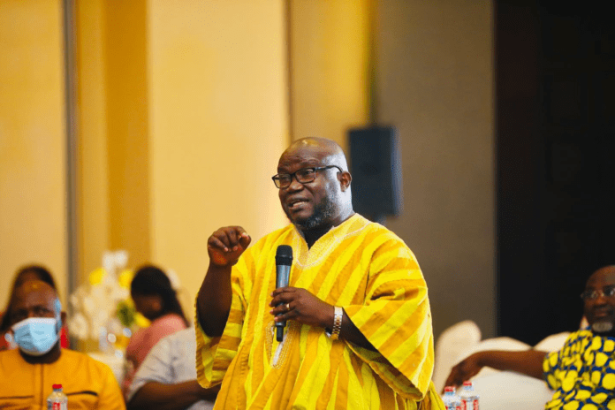
The Convener of the Coalition Against Galamsey, Ken Ashigbey, says the conditions for declaring a state of emergency in areas affected by illegal mining already exist, and he is urging government to act without delay.
Speaking on the Citi Breakfast Show on Tuesday, 16 September 2025, Ken Ashigbey recalled that President John Dramani Mahama himself has described galamsey as a national emergency, yet state institutions have been slow to implement decisive measures.
“We know the president, and that he is not a person who will implement a law in its draconian nature. So, we believe that under a state of emergency, we can be specific in the way we apply it and what it is that we do,” he said.
He cited the destruction of water bodies as clear justification for such a declaration.
“Currently, if we take all our water bodies, there is no fishing going on in them. But the ‘chamfans’ are still on them. There are many places where people have blocked portions of rivers and are mining illegally. You can declare a state of emergency in those areas,” he explained.
More Read
Ashigbey also highlighted the ongoing assault on forest reserves, despite some reclamation efforts.
“The president said they have reclaimed about nine. Their grading used to be red and now some have improved to amber. But people are still destroying them. You can declare a state of emergency in those as well so that no excavator moves into those communities,” he added.
He insisted that the current scale of environmental destruction meets constitutional grounds for action, pointing to the provisions of Article 39.
“The president has said it himself that it is a national emergency, and it is because the ingredients that constitute a national emergency in Article 39 are all clearly shown. So, I don’t know what the national security is not telling the president,” he stated.
Ashigbey’s comments add to renewed calls from civil society, faith-based groups, and environmental advocates for stronger government measures to stop galamsey, which continues to devastate rivers, forests and farmlands across Ghana.