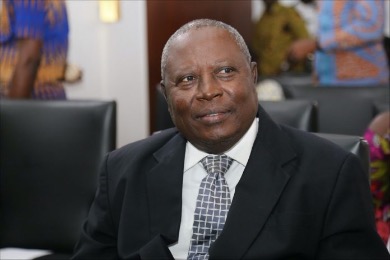
Former Special Prosecutor Martin A.B.K. Amidu has questioned the Mahama administration’s handling of the Asante Berko-AKSA bribery case, accusing the government of waiting until a US conviction before announcing plans to pursue persons implicated in the scandal.
In an opinion dated August 9, Mr Amidu said the Office of the Special Prosecutor (OSP) had opened investigations into the matter as far back as April 2020.
The investigation centred on allegations that between 2015 and 2016, a Turkish energy company channelled between $3 million and $4.5 million through a Ghanaian intermediary to bribe Ghanaian officials in an attempt to secure a power plant contract.
The case came to public attention after the US Securities and Exchange Commission (SEC) filed a civil action against Asante Kwaku Berko, a US-Ghanaian citizen and former Managing Director of the Tema Oil Refinery (TOR), on April 13, 2020.
Berko was convicted by a US court on August 6, 2026, over bribery and corruption linked to the transaction.
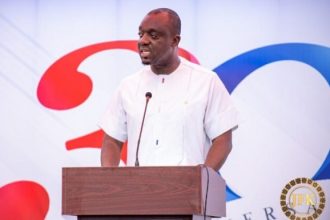
Two days later, on August 8, the Attorney-General announced that Ghana was working with US authorities to prosecute individuals implicated in the case.
Mr Amidu described the development as “insulting to the intelligence of the electorate.”
“The GoG is not a junior partner or an adjunct of the United States of America Government for the GoG to wait until a US Court convicts a US-Ghanaian citizen… before announcing to the Ghanaian public what the government… intends doing,” he wrote.
He argued that the OSP should already have completed its investigations before the NDC won the December 7, 2024 elections.
Mr Amidu said he personally directed the OSP to commence a preliminary investigation into the allegations in April 2020.
According to him, the OSP subsequently worked with the Federal Bureau of Investigation (FBI) in Ghana before his departure from office in November 2020.
He said the investigation continued under the Deputy Special Prosecutor and was later inherited by the current Special Prosecutor.
However, he claimed the case subsequently “only to disappear later from the published list of cases under investigation.”
Mr Amidu said information contained in the US SEC’s complaint should have provided investigators with sufficient leads to identify the Ghanaian officials allegedly involved.
The complaint referred to individuals identified as “Government Official 1”, “Government Official 2” and a “Politically Exposed Person” who was described as “an immediate family member of one of the most senior officials of Ghana at the time.”
“No professional investigator and prosecutor could have missed the identities of the persons implicated,” he stated.
The former Special Prosecutor also extended his criticism to the broader prosecutorial approach of the Attorney-General’s Office under the current administration.
He accused the Attorney-General of discontinuing cases involving members of the National Democratic Congress (NDC) through nolle prosequi to facilitate their appointments while pursuing or reviving cases involving members of the New Patriotic Party (NPP).
Mr Amidu cited the prosecution of former NPP Ashanti Regional Chairman Bernard Antwi Boasiako, popularly known as Chairman Wontumi, as well as the revival of an appeal involving former MASLOC chief executive officer Sedina Tamakloe Attionu.
Attionu was acquitted on July 30, 2026.
“When an Attorney-General… turns round immediately to prosecute adversaries in the departed government… his government and office forfeit the trust of an objective and impartial electorate,” Amidu said.
He further drew a distinction between President John Mahama and his predecessor, Nana Addo Dankwa Akufo-Addo, in relation to their legal backgrounds.
Mr Amidu said President Mahama “unlike former President Akufo-Addo, is not a lawyer” and described it as “ethically disturbing” to witness what he termed the “politically partisan execution of the impartial prosecutorial function.”