Ghana has made a strong pitch to global investors to take advantage of the country’s economic opportunities and use it as a gateway to the wider African market.
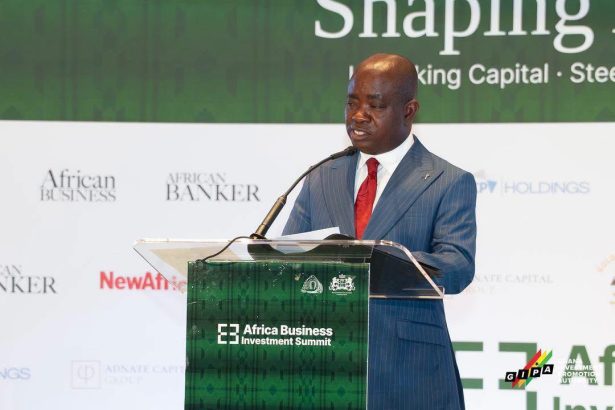
Delivering President John Dramani Mahama’s keynote address at the Africa Business Investment Summit (ABIS) 2026 in Washington, D.C., Deputy Minister for Trade, Agribusiness and Industry Sampson Ahi said Ghana is ready to work with investors who believe in the continent’s economic future.
He said Ghana’s investment proposition is anchored on economic reforms, industrialisation, value addition and the opportunities created by the African Continental Free Trade Area (AfCFTA).
“Africa’s moment” is how Ahi described the current economic opportunity on the continent, pointing to Africa’s natural resources, youthful population, expanding consumer markets and growing pool of entrepreneurs.
He said AfCFTA provides the foundation for one of the world’s largest emerging markets, connecting more than 1.3 billion people with a combined GDP of over US$3.5 trillion.
Ahi also pointed to Ghana’s recent economic performance as evidence of improving investor confidence, citing real GDP growth of six per cent in 2025, with non-oil GDP expanding by 7.6 per cent.
The economy recorded further growth of 6.4 per cent in the first quarter of 2026, he said.
However, the Deputy Minister stressed that government’s ambition goes beyond economic recovery, with the focus now shifting towards structural transformation through industrialisation, productivity, value addition and job creation.
He highlighted the 24-Hour Economy Programme and the Investment Opportunities Mapping Project as key initiatives aimed at expanding production, attracting investment and ensuring that economic opportunities reach different parts of the country.
Ahi identified energy, technology, agriculture, mining, tourism, maritime development, infrastructure and manufacturing among the sectors offering significant opportunities to investors.
He said the Feed Ghana Programme is also expected to create opportunities across the agricultural value chain by increasing food production, reducing imports and providing industries with reliable local raw materials.
The government’s industrialisation agenda includes the development of industrial parks and special economic zones such as the Greater Kumasi Industrial City and Special Economic Zone, Dawa Industrial Zone and Tema Integrated Industrial Park.
According to Ahi, Ghana’s position as host of the AfCFTA Secretariat further strengthens its appeal to investors seeking access to markets across the continent.
He said investing in Ghana should therefore be viewed as an entry point into the wider African market.
“Let history record that we did not only gather to speak about Africa’s future. We gathered to invest in it, and to build it,” he said.
The Asantehene, Otumfuo Osei Tutu II, who attended the summit, urged investors to take Africa’s opportunities seriously while calling on African governments to create the systems and conditions required to attract sustainable investment.
He described good governance as an economic asset, arguing that strong institutions and effective leadership can improve investor confidence and accelerate development.
Ghana’s Ambassador to the United States, Victor Smith, also called for investment partnerships that create jobs and expand opportunities for Africa’s youth.
He said investments should contribute to building an Africa where young people can pursue their aspirations rather than being compelled to leave the continent in search of opportunities.
The ABIS 2026 brought together policymakers, investors, development finance institutions and private-sector leaders to examine investment opportunities and strategies for accelerating Africa’s economic transformation.