Ghana’s serving and retired security chiefs have called for stronger measures to prevent political vigilantism and election-related violence ahead of the 2028 general elections.
The call was made during a national policy dialogue on vigilantism organized by Election Watch Ghana in Accra yesterday, Tuesday, August 25, as participants assessed the implementation of the Vigilantism and Related Offenses Act, 2019 (Act 999).
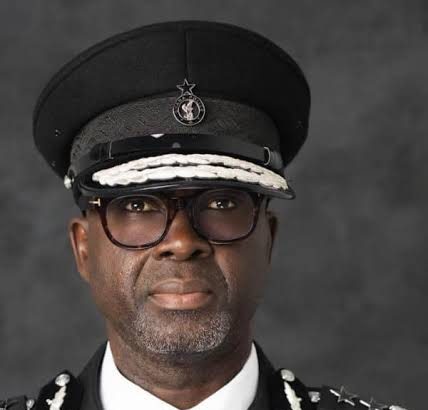
National Security Coordinator, COP Osman Abdul Razak; Ghana’s first Minister for National Security in the Fourth Republic, Kofi Totobi Quakyi; and former National Security Minister under the Kufuor administration, Francis Poku, agreed that more needed to be done to make the law effective.
The dialogue, organized by Election Watch Ghana and held at the Kofi Annan International Peacekeeping Training Center, brought together national leaders, security experts, legal practitioners and civil society actors to examine Ghana’s response to political vigilantism.
COP Abdul Razak raised concerns about the early recruitment and mobilization of groups that could potentially be used to foment political violence ahead of the 2028 elections.

He said security agencies’ early warning systems had already detected signs of mobilization, making it necessary to begin preventive measures well before the election period.
According to him, recruitment into groups that could be used for political violence typically begins months before elections, and waiting until political parties formally commence their campaigns could leave security agencies responding to violence rather than preventing it.
“It is easier to prevent political violence before the main event, that is, elections. By the time campaign rallies are underway in earnest, we are managing containment rather than genuine prevention,” he said.
He said the security agencies must move beyond a reactive approach and adopt intelligence-led measures long before the campaign period.
“Our early warning systems have already flagged this. We cannot go to sleep; we have to keep ourselves on our toes,” he stated.
COP Abdul Razak proposed that intelligence mapping and stakeholder engagement should begin 12 to 18 months before elections, while youth engagement and civic education should be undertaken 9 to 12 months before the polls.
He further called for active monitoring of political mobilization at least six months before elections, followed by targeted preventive operations during the campaign period.
COP Abdul Razak said that although Ghana has recorded relative discipline in election-related security since the passage of Act 999, the reduced visibility of organized vigilante groups should not be taken as evidence of their complete eradication.
He said some groups were rebranding themselves as internal security teams, volunteer task forces or community security initiatives, while others had dissolved into less visible networks.
“Mobilization has moved online on social media, encrypted chats, local disputes, private security arrangements or other informal channels,” he said.
The National Security Coordinator called for stronger intelligence gathering and coordination among security agencies to identify emerging threats before they developed into organized political violence.
He also stressed that enforcement of Act 999 must remain neutral, evidence-based, and free from political interference.
Selective or delayed enforcement, he warned, could undermine public confidence in the law and weaken efforts to prevent political violence.
He said the ultimate objective should be to ensure that Ghana’s democratic processes remain peaceful and that citizens can participate freely in elections without intimidation or violence.
Mr Francis Poku, however, described the enactment of Act 999 as a “knee-jerk reaction”, arguing that its provisions had made the law difficult to enforce.
He recalled that the legislation was introduced amid public pressure to address political vigilantism following the violence that marred the January 31, 2019, Ayawaso West Wuogon by-election.
However, he argued that existing laws could have been strengthened to deal with the problem.
“This Vigilante Act 999 was a knee-jerk reaction because, as far as I’m concerned, within 24 hours, the system should have known what had happened because those involved were within national security,” he said.
Mr Poku questioned the need for separate legislation, arguing that the state already had intelligence and existing legal mechanisms that could have been used to address conduct the Act sought to criminalize.
He also criticized the law’s evidentiary requirements and mandatory prison terms, which he said could discourage the police from enforcing it.
He cited the provisions relating to the use or possession of weapons and the protection of property, arguing that the severity of the prescribed sentences presented practical challenges for law enforcement.
“Let’s look at the law again. It is never going to work,” he said, urging policymakers to review the legislation and assess whether its provisions were enforceable.
Mr Poku further argued that Act 999 had failed to address the land guard menace, which he partly attributed to weaknesses in Ghana’s land dispute resolution system.
Mr Kofi Totobi Quakyi, meanwhile, reflected on the circumstances surrounding the establishment of the Justice Emile Short Commission of Inquiry into the Ayawaso West Wuogon by-election violence, as well as some of the recommendations in its final report.
He expressed disappointment with aspects of the report and the subsequent handling of its recommendations, warning that the failure to fully act on some of them could contribute to a perception that perpetrators of political violence and vigilantism could escape accountability.
Mr Totobi Quakyi said such a perception could encourage vigilantism by creating the impression that political or other considerations could shield perpetrators from prosecution.
He recalled that he had written to the President at the time requesting the establishment of a commission of inquiry into the Ayawaso West Wuogon violence.
“I wrote a letter to the President at the time and asked that the President might consider setting up a commission of inquiry to probe the Ayawaso-West-Wuogon by-election violence,” he said.
He said he was subsequently contacted by the Presidency and asked whether he would support the appointment of Justice Emile Short as chairman of the commission.
“That evening, the announcement came out, and I just hoped that it was not a knee-jerk reaction,” he said.
Mr Totobi Quakyi said he was subsequently disappointed by aspects of the commission’s report, particularly recommendations that were not accepted.
He cited the recommendation concerning an individual who assaulted a Member of Parliament during the violence.
“One particular recommendation was that the person who assaulted an MP would not be prosecuted, and the reason was that the MP had engaged in a provocative act and so that cancelled the slap that he received, and I thought that was unfortunate,” he said.
The observations by the serving and former security chiefs have renewed calls for a broader assessment of Act 999, particularly its effectiveness, enforceability, and ability to prevent the emergence or reorganization of groups capable of perpetrating political violence.
With the 2028 elections still ahead, the participants stressed the importance of early intervention, intelligence-led policing, accountability and political neutrality in preventing vigilantism from threatening Ghana’s democratic process.