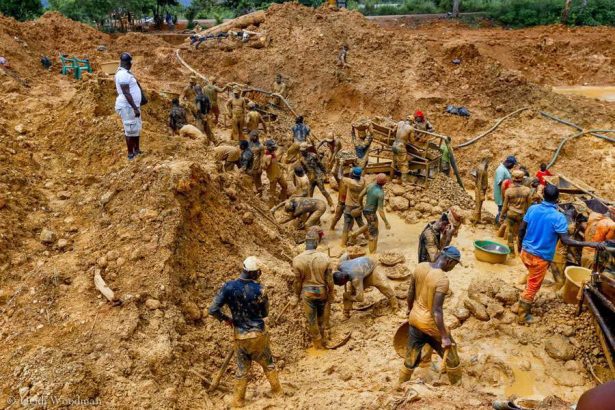
The Ghana Coalition Against Galamsey has accused some state institutions responsible for enforcing Ghana’s anti-illegal mining measures of failing to act decisively on reports submitted by the Blue Water Guards, allowing some illegal miners to continue operating.
The Coalition said the effectiveness of government’s investment in the Blue Water Guards programme would be undermined if reports of illegal mining activities were not followed by arrests, prosecutions and sustained enforcement.
Convener of the Coalition, Engineer Kenneth Ashigbey, made the allegation at a press briefing in Accra on Monday, 20 July 2026, while responding to the Lands and Natural Resources Ministry’s Accountability Series presentation.
Government has recruited and deployed more than 2,000 Blue Water Guards with the mandate to monitor water bodies affected by illegal mining and report activities to relevant authorities.
While welcoming the initiative, Mr Ashigbey said the programme would achieve little if institutions responsible for enforcement failed to respond.
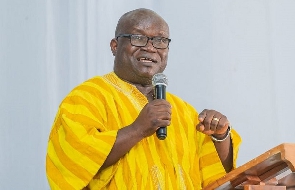
“Government could recruit 1,000 more, and nothing would change if the police and NAIMOS are not ready to respond swiftly to what is reported,” he said.
According to him, there is a growing perception among communities that illegal miners reported by the Blue Water Guards are not being arrested or prosecuted.
He alleged that some Metropolitan, Municipal and District Assemblies, as well as some security agencies, have either failed to prioritise action against illegal mining or have become compromised.
Mr Ashigbey also criticised what he described as a lack of cooperation from some personnel of the Ghana Police Service.
He said illegal mining activities occurring within police jurisdictions without intervention undermine public confidence in law enforcement.
“The police, as the state agency with primary responsibility for enforcement, must ensure negligence or indifference towards illegal mining does not bring the institution into disrepute,” he said.
The Coalition called on the National Security Council, the Inspector-General of Police and the Presidency to investigate jurisdictions where illegal mining reports are allegedly ignored and sanction officers found culpable.
Mr Ashigbey also raised concerns about alleged misconduct within the National Anti-Illegal Mining Operations Secretariat (NAIMOS).
He alleged that some NAIMOS officers seize equipment belonging to illegal miners during operations but later demand payments before releasing the seized equipment.
According to him, if such allegations are proven, they represent a serious betrayal of the mandate of the anti-illegal mining body.
“We have received reports alleging that confiscated equipment is being returned to miners upon payment of a fee. If this is true, it is shameful and an affront to the integrity of NAIMOS,” he said.
The Coalition called on NAIMOS to publicly address the allegations and provide details on its enforcement activities, complaints system and actions taken against reported illegal mining operations.
Mr Ashigbey also questioned the transparency of NAIMOS operations, asking for information on its public complaint mechanisms and records of complaints received and resolved.
He said accountability was necessary to determine whether enforcement operations were being conducted fairly and without fear or favour.
The Coalition maintained that the fight against illegal mining could only succeed when all institutions — including NAIMOS, the police, local authorities and other state agencies — work together to ensure offenders are arrested and prosecuted.