The Accra Metropolitan Assembly (AMA) has launched an ambitious 10-year Solid Waste Optimisation Strategy aimed at overhauling waste management in the capital, reducing greenhouse gas emissions and attracting international climate financing to address one of the city’s most persistent environmental challenges.
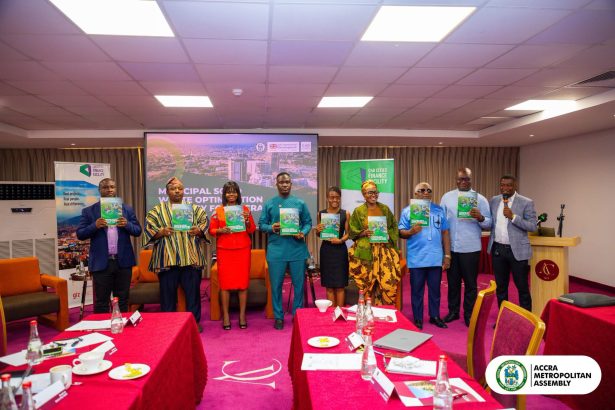
The strategy, unveiled on Wednesday at the Accra City Hotel, forms part of a broader plan to transform Accra’s waste sector through source separation, composting, resource recovery and improved governance while reducing the volume of refuse ending up at landfill sites.
Authorities believe the initiative will not only improve sanitation and public health but also position Accra as a climate-responsive city capable of leveraging global climate finance to support sustainable urban development.
In a speech delivered on his behalf by the Presiding Member of the AMA, Hon. Musah Ziyad, the Mayor of Accra, Hon. Michael Kpakpo Allotey, described poor waste management as one of the greatest environmental and public health threats confronting the capital.
He said the strategy would provide a structured roadmap for reducing waste generation, encouraging households and institutions to separate waste at source, expanding composting and recycling, and strengthening the city’s waste management systems.
According to the Mayor, extensive technical, financial, environmental and social feasibility studies undertaken with support from the C40 Cities Finance Facility have already positioned the proposed Waste Source Separation and Composting Project for implementation.
He disclosed that the project had attracted considerable interest from development finance institutions and had secured grant support from the African Development Bank, describing the development as a major vote of confidence in Accra’s climate agenda and its capacity to deliver transformational urban infrastructure.
Hon. Allotey expressed gratitude to the C40 Cities Finance Facility, GIZ, C40 Cities, the Governments of the United Kingdom and Germany, as well as the Ministry of Local Government, Chieftaincy and Religious Affairs, the Office of the Minister responsible for Climate Change and Sustainability, the Ministry of Finance, the Environmental Protection Agency, the Greater Accra Regional Coordinating Council, private sector partners, civil society organisations and community groups for supporting the initiative.
Speaking on behalf of the British Government, Ms Charlotte Beck of the Foreign, Commonwealth and Development Office said the project reflected commitments made during President John Dramani Mahama’s recent visit to London, where Ghana and the United Kingdom signed a new Growth Partnership aimed at translating innovative ideas into investment-ready infrastructure projects.
She noted that the waste optimisation initiative represented the kind of practical climate investment that development partners were eager to support because it unlocked financing opportunities, strengthened public institutions and built long-term implementation capacity.
According to her, the Accra project was already influencing broader policy discussions across Ghana by helping shape national approaches to municipal waste management and demonstrating a model that could be replicated in other metropolitan areas.
National Coordinator of the Cities Finance Facility, Mr Abraham Afful, stressed that waste management remained a central pillar of Accra’s climate action agenda.
He explained that the strategy had been developed to ensure that waste management reforms moved beyond policy documents to practical implementation capable of delivering measurable improvements in sanitation, public health and environmental sustainability.
Mr Afful said the objective was to ensure that the strategy did not remain “another document on the shelf” but translated into tangible projects that residents could see and benefit from.
Also addressing the gathering, Mr Gunnar Wegner, Cluster Coordinator for the Energy and Climate Portfolio at GIZ, speaking on behalf of the German Embassy and GIZ, commended the AMA for pursuing innovative and sustainable approaches to solving Accra’s growing waste management challenges.
He observed that the city’s willingness to build strategic partnerships demonstrated leadership in addressing complex urban issues while contributing to Ghana’s climate commitments and development goals.
Mr Wegner emphasised that the success of the project would depend on ensuring that the proposed waste management system aligned with the practical realities of service delivery and could be sustained over the long term.
The Solid Waste Optimisation Strategy, which covers the period from 2025 to 2035, is expected to guide waste management reforms across selected municipalities within the Greater Accra Metropolitan Area.
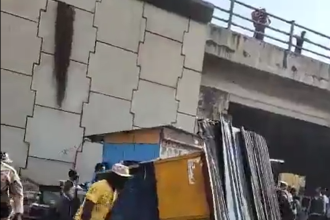
Beyond improving sanitation, the strategy seeks to create green jobs, reduce illegal dumping and open burning of refuse, improve public health and strengthen the city’s resilience against climate-related challenges, including flooding and air pollution.
The initiative represents one of the most comprehensive attempts by the AMA to reposition waste management from a sanitation challenge into a driver of climate action, environmental sustainability and economic opportunity.