The Minister for Fisheries and Aquaculture, Emelia Arthur, has reaffirmed Ghana’s commitment to sustainable fisheries management and aquaculture development, stressing that the sector remains critical to food security, job creation and economic growth.
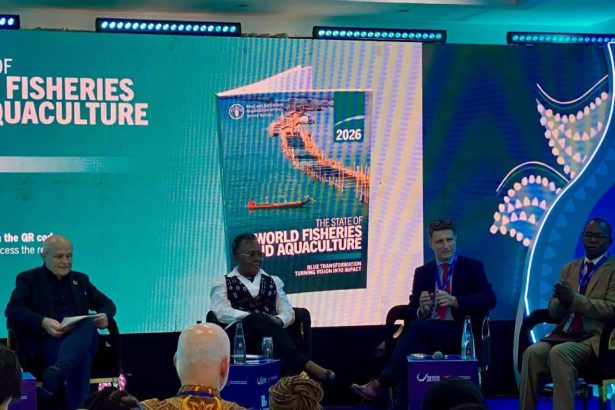
The Minister made the remarks during a high-level side event at the 11th Our Ocean Conference 2026, organised by the Food and Agriculture Organization of the United Nations (FAO).
The event, themed “The State of World Fisheries and Aquaculture: From Data to Action – Blue Transformation: Turning Vision into Impact,” brought together policymakers, fisheries experts, development partners and industry stakeholders from around the world to discuss strategies for promoting sustainable fisheries and aquaculture development.
Discussions focused on the importance of data-driven decision-making, innovation and stronger partnerships in transforming the fisheries sector to ensure food security, support livelihoods and guarantee the sustainable management of marine resources.
Addressing participants, Emelia Arthur emphasised that sustainable fisheries and aquaculture development are essential for building resilient economies and coastal communities, particularly in developing countries that depend heavily on marine resources.
She noted that Ghana remains committed to advancing responsible fisheries practices and strengthening the blue economy through policies that promote sustainability while creating opportunities for economic growth.
The Minister further underscored the need for collaborative action among governments, development partners, research institutions and private sector actors to address challenges confronting the fisheries sector and unlock its full potential.
According to her, global commitments made towards protecting ocean resources must be translated into practical actions that produce tangible benefits for fishers, fish farmers and communities whose livelihoods depend on the sector.
She stressed that investment in innovation, scientific research and sustainable resource management would be crucial in safeguarding marine ecosystems while ensuring continued food production and employment opportunities for future generations.
The side event formed part of the broader Our Ocean Conference agenda, a global platform that seeks to mobilise international commitments and partnerships towards the protection and sustainable use of ocean resources.
The conference continues to serve as a key forum for advancing discussions on ocean conservation, sustainable fisheries, marine biodiversity and the development of the blue economy.