Written by: Abigail Teye
In the dense forests scarred by illegal mining pits and along rivers turned brown by pollution, another battle is quietly unfolding in Ghana — one not fought with excavators or water pumps, but with cameras, microphones and notebooks.
The deeper Ghana sinks into the galamsey crisis, the more dangerous it is becoming for journalists to tell the story.
Across mining communities, forest reserves and polluted river bodies, environmental journalists are increasingly facing intimidation, threats and physical attacks for exposing the devastating impact of illegal mining activities.
What used to be routine field reporting has now turned into a high-risk assignment where cameras, microphones and notebooks have become targets almost as much as the journalists holding them.
More Read
Over the past few years, environmental reporters have played a crucial role in documenting the scale of destruction caused by illegal mining — polluted rivers such as the Pra, Ankobra and Offin, destroyed cocoa farms, and degraded forest reserves that once formed part of Ghana’s ecological backbone.
But as these stories gain visibility, the risks to those reporting them have also escalated.
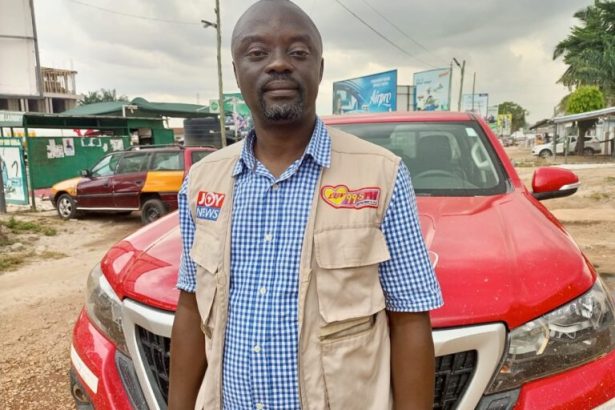
One of the most widely reported incidents came in October 2024 when environmental journalist Erastus Asare Donkor and his team from Multimedia Group were attacked while investigating illegal mining activities in the Ashanti Region.
Months later, in February 2025, another group of journalists — Akwasi Agyei Annim, Henry Fynn Emil and Jacob Adu-Baah — were also attacked while reporting on illegal mining activities in the Western Region. Their equipment was damaged and they were reportedly forced to delete recorded footage despite the presence of police escorts.
The team were confronted by armed men at a mining site, their equipment seized, and footage allegedly deleted. The incident was not only a physical attack but also a direct attempt to erase evidence of environmental destruction.
The Ghana Journalists Association condemned the attack as part of a worrying pattern of violence against journalists, stressing that such acts create a chilling effect that discourages investigative reporting. The Association has consistently called for the protection of journalists in the field, insisting that any assault on the media is an assault on accountability and democracy itself.
It has also repeatedly urged law enforcement agencies to treat attacks on journalists as serious crimes that must be investigated and prosecuted without delay, warning that impunity only emboldens perpetrators.
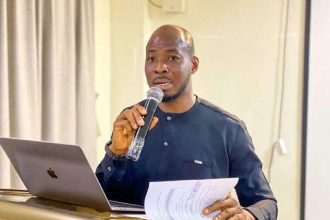
Yet, In September 2025, another incident was recorded in the Central Region, where journalist Nana Kwame Essel was assaulted while covering a mining pit collapse that had already claimed lives. He was attacked while filming the scene and had his equipment vandalised after refusing to delete footage.
Together, these cases point to a troubling reality: environmental journalism in Ghana is becoming a high-risk profession, especially when reporting on illegal mining operations that operate in remote or heavily contested areas.
The Media Foundation for West Africa also strongly condemned the incident, framing it within a broader regional concern about shrinking press freedom. The organisation has long tracked attacks on journalists across West Africa and has repeatedly warned that Ghana’s reputation as a relatively safe environment for media work is being threatened by increasing violence and intimidation.
In its response to incidents like these, the MFWA often emphasises the need for stronger legal enforcement, better safety mechanisms for reporters in the field, and institutional reforms that ensure security agencies respond decisively when journalists are attacked.
The organisation A Rocha Ghana described the attacks as not only a press freedom issue but also an environmental justice concern. According to environmental advocates, journalists covering illegal mining are effectively acting as watchdogs for communities whose livelihoods depend on clean water, fertile soil and intact forests. The organisation has consistently highlighted that silencing environmental reporting ultimately silences affected communities who lack the platform to speak for themselves.
The attacks, however, did not end there.
In February 2025, another disturbing incident was reported in the Western Region involving journalists Akwasi Agyei Annim, Henry Fynn Emil and Jacob Adu-Baah, who were allegedly assaulted while covering illegal mining operations on farmlands. Reports indicated that the journalists were forced to delete recorded footage, even in situations where security personnel were reportedly present.
The recurrence of such incidents has deepened concern among press freedom advocates.
Globally, organisations such as UNESCO have long maintained that the safety of journalists is central to democratic governance. UNESCO consistently calls attention to the problem of impunity in crimes against journalists, warning that when attacks go unpunished, they encourage further violence and weaken public access to information. In the context of environmental journalism, UNESCO has also highlighted that reporters covering natural resource exploitation often face heightened risks because their work intersects with powerful economic and political interests.
Similarly, the International Federation of Journalists (IFJ) has repeatedly flagged environmental reporting as one of the most dangerous beats worldwide. The organisation argues that journalists investigating mining, land use and climate-related issues are increasingly exposed to threats from both state and non-state actors, particularly in regions where resource conflicts are intense.
In Ghana’s case, the intersection of illegal mining, environmental degradation and local power structures creates a particularly volatile environment for reporters.
Beyond the condemnations, media experts say the repeated attacks point to a deeper structural problem — weak enforcement of laws protecting journalists and limited accountability for perpetrators. While statements of condemnation are often issued after each incident, prosecutions remain rare, reinforcing a cycle of impunity.
The environmental toll that these journalists report on is already severe.
Rivers that once supplied drinking water to communities are now heavily polluted. Forest reserves continue to shrink under the pressure of illegal excavation. Cocoa farms, a backbone of Ghana’s agricultural economy are being destroyed, leaving farmers displaced and livelihoods threatened.
In this context, environmental journalists have become essential witnesses to a national crisis.
Yet the risks they face raise a difficult question: how long can they continue reporting freely in environments where the act of documentation itself can trigger violence?
For now, despite the threats, many continue to return to the field — driven by the belief that the story of Ghana’s environment must be told, no matter how dangerous it becomes.