The Institute of Economic Affairs (IEA) has intensified its call on government not to renew Gold Fields’ lease for the Tarkwa mines, insisting that Ghana must take stronger control of its natural resources to secure long-term national benefit.
The push was made at a press conference in Accra on Wednesday, 13th May 2026, where the institute argued that the country’s continued reliance on foreign mining operators has limited the value derived from its mineral wealth.
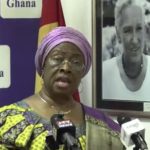
Former Chief Justice and IEA fellow, Sophia Akuffo, led the call, stressing that Ghana must prioritise local ownership and control of strategic national assets as the Tarkwa mining lease approaches its 2027 expiration.
She argued that extending the lease would not serve the country’s long-term interests, insisting instead on a framework that places meaningful Ghanaian participation at the centre of mining operations.
“The IEA considers the requested lease renewal deeply inimical to Ghana’s long-term economic and strategic interests and therefore calls on government to decisively reject this approach, while prioritising a framework that secures meaningful Ghanaian ownership of the mine at Tarkwa,” she said.
The Tarkwa mine, one of Ghana’s most significant gold assets, is currently operated by Gold Fields, which is seeking an extension as its lease nears expiration in 2027.
Founder and Chairman of the institute, Charles Mensa, added that Ghana’s economic challenges are partly rooted in its overdependence on external control of key sectors.
He noted that Ghana has repeatedly turned to the International Monetary Fund for support over the years, describing it as evidence of weak domestic value retention from natural resources.
According to him, the country’s vast reserves of gold, oil, bauxite and lithium are still not being fully leveraged to strengthen the economy due to excessive foreign dominance in extraction and management.
Former Speaker of Parliament, Aaron Mike Oquaye, also backed the campaign, arguing that many countries are now reclaiming control of strategic resources and Ghana should not be left behind.
He questioned continued foreign operation of key national assets, insisting that Ghana must rethink its approach to resource governance.
“The question is whether we should allow them to continue operating what we know is our lifeblood. The answer is no,” he said.
Prof. Oquaye further linked Ghana’s economic struggles to long-standing weaknesses in resource management and policy direction.
The IEA maintained that the current structure of mineral exploitation benefits foreign interests more than the Ghanaian economy.
It argued that stronger local participation would ensure that more value remains in-country through jobs, indigenous enterprise growth, and improved fiscal returns.
The institute further stressed that Ghana must begin to treat its mineral wealth as a strategic national asset rather than a commercial arrangement driven largely by external actors.