The 24-Hour Economy and Accelerated Export Development Programme Secretariat (24H+) has begun the process of developing a new cooperative legal framework aimed at modernising Ghana’s cooperative sector and driving structural transformation.
The initiative was contained in a press statement issued and signed by the Head of Communications of the Secretariat, Gillian Heathcote.
According to the statement, the move forms part of broader efforts to reposition cooperatives as key drivers of sustainable and inclusive socio-economic development.
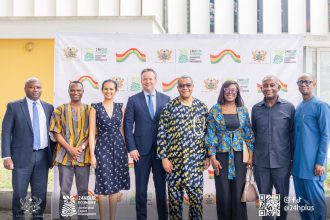
The statement followed a stakeholder forum in Accra under the theme; “Cooperatives as a Pathway to Sustainable and Inclusive Socio-Economic Development in Ghana,” which brought together actors across the cooperative ecosystem for dialogue, consensus-building, and action.
As part of the process, the Secretariat has constituted a joint committee to draft a Cooperative Legislation Bill for submission to Parliament and, upon approval, assent by President John Dramani Mahama.
The proposed legislation is expected to replace outdated legal provisions and align the sector with current economic and institutional realities.
The Secretariat is also working with cooperative associations to secure funding and technical assistance for the revival and modernisation of cooperative support systems nationwide.
These interventions are expected to strengthen governance, improve access to finance, and enhance operational capacity.
Speaking at the forum, Presidential Advisor on the 24-Hour Economy and Accelerated Export Development Programme, Augustus Goosie Tanoh, highlighted the critical role cooperatives can play in revitalising Ghana’s real sector, particularly agriculture, manufacturing, and small and medium enterprises.
He described cooperatives as effective vehicles for empowering women, youth, and small businesses, but noted that the sector continues to face challenges such as limited access to finance, weak institutional support, and an outdated legal framework that is more than 58 years old.
Mr. Tanoh stressed that cooperatives that lack access to capital cannot grow, and called for urgent reforms to unlock the sector’s full potential.
The proposed reforms are expected to strengthen farmer participation across production, processing, and marketing value chains.
The Secretariat noted that many farmers currently operate under systems where external entities control key aspects of production and input supply, reducing profitability despite higher output.
Under the new arrangements, cooperatives are expected to assume a stronger role in owning and managing processing infrastructure, backed by improved governance systems.
According to the statement, continuous production models are also expected to maximise asset utilisation and create jobs, while circular production systems would turn by-products into additional revenue streams.
It stated that other expected benefits include more affordable financing, stronger technical support, and better value chain integration.
The statement also added that mechanisms such as a Solidarity Fund are also expected to cushion cooperative members against production and market shocks, while structured market systems are intended to improve market access and price predictability.
Minister for Fisheries and Aquaculture Development, Emelia Arthur, underscored the importance of cooperatives in expanding aquaculture, creating jobs, and increasing value addition for export. She said the government is interested in partnering with cooperatives in selected districts.
Chief Director of the Ministry of Labour, Jobs and Employment, Hamidu Adakruogu, also reaffirmed the Ministry’s commitment to strengthening the regulatory environment, promoting decent work standards, and positioning cooperatives as viable platforms for structured job creation, especially for the youth.
The Secretariat maintained that the legal and institutional reforms, together with the proposed cooperative arrangements, would help reposition farmers from primary producers to owners of agro-industrial enterprises and deepen the sector’s contribution to Ghana’s economic transformation.
In closing, National Coordinator of the 24-Hour Economy and Accelerated Export Development Programme, Kyeretwie Opoku, thanked stakeholders for their participation and reaffirmed the Secretariat’s commitment to working collaboratively to transform Ghana’s cooperative sector.