
The Ghana Revenue Authority has rolled out a new artificial intelligence system, Publican AI, in what appears to be a bold attempt to clamp down on deep-rooted import duty fraud and long-standing leakages at the country’s ports.
Commissioner-General of the authority, Anthony Sarpong, is betting on the technology to confront entrenched practices such as under-declaration, misclassification and deliberate undervaluation of goods—schemes widely believed to have cost the state millions in lost revenue over the years.
Speaking on Good Morning Ghana on Metro TV Ghana on Monday, 13 April, Sarpong admitted that the system is being deployed to plug glaring loopholes within the customs regime.
“We have introduced the new artificial intelligence system, Publican AI to tackle long standing leakages in customs revenue,” he said.
For years, industry watchers and policy analysts have raised concerns about how human discretion within customs processes has created fertile ground for manipulation, with some importers allegedly exploiting the system to evade the full payment of duties.
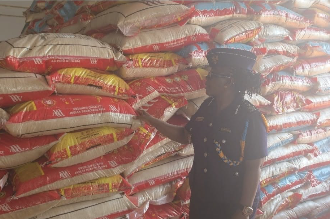
“Customs revenue has often been undermined by human dependent processes that leave room for discretion and manipulation,” Mr Sarpong explained. “This has cost the state significant income over the years.”
He identified three key pressure points the new system will target—areas often cited as the weak links in customs enforcement.
“The first is the country of origin of goods,” he said. “Importers sometimes misstate origin to reduce freight costs and ultimately pay less duty.”
“The second is classification. Every product has a code under global trade rules, and when goods are wrongly classified, it affects the amount of tax paid.”
“The third is valuation,” he added. “Some importers understate the price of goods, making it difficult for customs to determine the true value.”
According to Sarpong, Publican AI is designed to go beyond routine checks by interrogating declarations against global trade data—an intervention expected to expose inconsistencies that may otherwise slip through manual processes.
“It reviews product classifications, compares declared values with international price ranges, and verifies supplier information, including the stated country of origin,” he said.
Despite the aggressive posture of the new system, Sarpong was quick to allay fears within the service, insisting that the technology is not a replacement for officers but rather a reinforcement tool.
“We are not taking away human oversight,” he said. “The system provides faster and more reliable data, but the final decision still rests with the officer.”
The deployment of Publican AI comes at a time when pressure is mounting on the GRA to boost domestic revenue mobilisation amid persistent economic challenges, with import duties remaining a critical lifeline for government finances.
“This will help standardise assessments and reduce reliance on manual judgment,” he said. “Ultimately, it ensures that importers pay the correct duties and that the country protects its revenue.”
Whether the new AI-driven approach will finally shut down the long-criticised loopholes at the ports remains to be seen—but for now, the GRA appears to be signalling a tougher, tech-driven era in the fight against customs fraud.