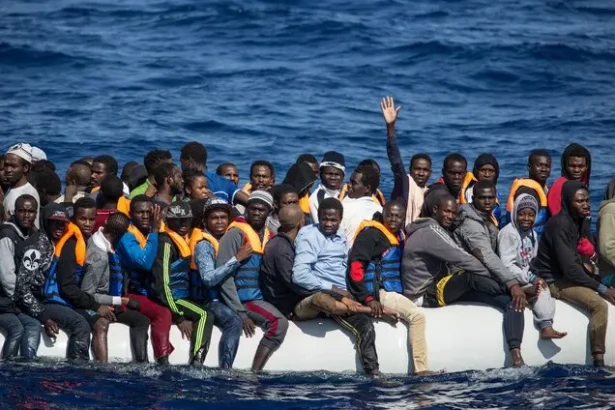
More than 600 migrants have died attempting to cross the Mediterranean Sea in the first two months of 2026, highlighting the growing risks associated with irregular migration.
The alarming figure was disclosed by Stella Yobat of the Ghana Immigration Service (GIS) at the launch of the Migrant Media Action Project in Sunyani. She warned that the actual number of deaths could be far higher due to underreporting along major migration routes.
“The numbers we have may only reflect a fraction of the reality. Many deaths remain unverified, and the true scale of the tragedy could be far worse,” she cautioned.
Within Ghana, the Bono Region has emerged as the leading hotspot for irregular migration, followed closely by Bono East, raising concerns over migration patterns in the middle belt.
Officials say Migration Information Centres and Migrant Resource Centres are working to reverse the trend by promoting safe and legal travel options. These centres, run in partnership with the International Organization for Migration and local authorities, provide counselling, public education and reintegration support for returnees.
Programme Officer at the Song-Ba Empowerment Centre, Kwasi Agyapong, said the newly launched Migrant Media Action Project seeks to tackle misinformation driving risky migration decisions.
“Song-Ba is a youth and women-led organisation committed to empowering survivors of sexual and gender-based violence, young people, and returning migrants. We work to strengthen voices, promote dignity and safety, and build economic resilience through advocacy, skills training, and community action,” he said.
He explained that the initiative will use media training, community engagement and a Migration Literacy Guide to ensure migration choices are based on accurate information.
“Through media capacity-building workshops, the dissemination of a Migration Literacy Guide, community dialogues, and structured stakeholder engagement, we aim to create an informed ecosystem where migration decisions are driven by facts, not myths,” he added.
The project comes at a time when economic pressures and misinformation continue to push many Ghanaians towards dangerous migration routes, with stakeholders warning that without sustained intervention, more lives could be lost.