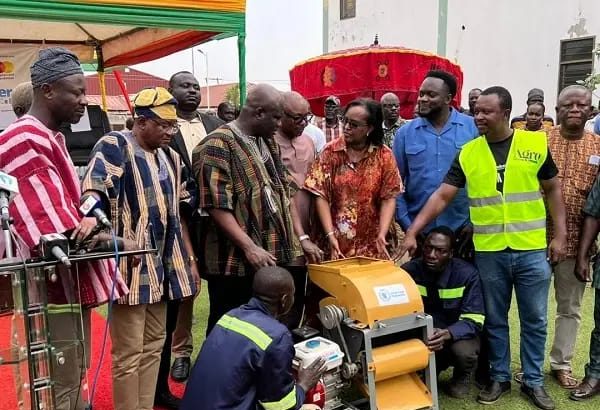
The government has teamed up with the World Food Programme (WFP) to equip young Ghanaians with practical skills in agricultural equipment fabrication as part of efforts to deepen mechanisation and curb post-harvest losses.
The initiative, unveiled at Savelugu in the Northern Region, is designed to train local artisans to manufacture critical post-harvest machines locally, reducing dependence on imported equipment while strengthening Ghana’s food production chain.
The programme was launched under the Local Fabricators Post-Harvest Equipment Programme, an intervention aimed at promoting homegrown engineering solutions to improve efficiency within the agricultural sector.
Addressing participants at the ceremony, the Minister for Food and Agriculture, Mr Eric Opoku, described the project as a deliberate step towards transforming the sector through innovation and skills development.
He said the country’s agricultural future depends on improving efficiency and adding value to produce rather than relying heavily on foreign technologies. According to him, empowering the youth with hands-on fabrication skills will help safeguard harvests, expand rural enterprise and create sustainable jobs.
More Read
As part of the rollout, about 230 young artisans completed specialised training in the production of agricultural machinery, including maize and soybean threshers. The trainees went on to fabricate roughly 300 threshers, which are projected to serve more than 3,000 farmers within the region.
The minister stressed that beyond the immediate output, the programme is nurturing a pool of skilled technicians who will continue to provide services in their communities, while also contributing to improved incomes for farmers, particularly women.
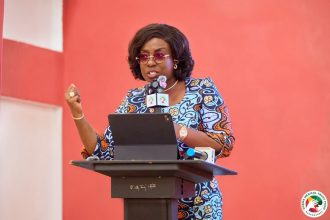
For her part, the WFP Country Director, Ms Aurore Rusiga, stated that the partnership offers a practical solution to the persistent challenge of post-harvest losses.
She explained that WFP is collaborating with institutions such as the Gratis Foundation and the Mastercard Foundation to reinforce fabrication hubs in various regions, ensuring the intervention delivers long-term benefits.
She further indicated that the initiative supports the government’s Feed Ghana Programme, especially its mechanisation agenda aimed at modernising agriculture and enhancing national food security.