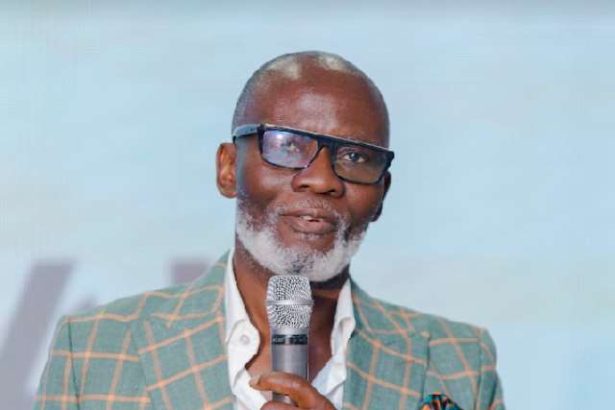
Africa’s failure to translate decades of integration rhetoric into action is putting the continent’s future at risk, according to Gabby Asare Otchere-Darko, Founder and Executive Chairman of the Africa Prosperity Network (APN).
Addressing political and business leaders at the 2026 Africa Prosperity Dialogues in Accra, Mr Otchere-Darko warned that soaring youth unemployment—amid a rapidly growing population—poses the single biggest threat to Africa’s stability, growth and long-term prosperity.
Speaking during the Presidential and Business Leaders’ Dialogue on day three of the forum, he argued that Africa’s tightly guarded borders are no longer symbols of sovereignty but barriers strangling opportunity for the continent’s one billion young people.
“You cannot have sovereignty when you don’t have economic leverage,” he said. “If we don’t open our borders and enable our young people to trade, innovate, and move freely, we are limiting the future of Africa.”
The dialogue, held at the Accra International Conference Centre on Friday, 6 February 2026, was themed “Empowering SMEs, Women & Youth in Africa’s Single Market: Innovate. Collaborate. Trade.”
More Read

Mr Otchere-Darko traced Africa’s integration journey through a series of landmark commitments, including the establishment of the Africa Standards Organization in 1977, the Economic Community of Africa in 1991, and the African Continental Free Trade Area (AfCFTA) in 2018. Yet, he said, these milestones have failed to deliver meaningful change on the ground.
According to him, many of the protocols underpinning continental integration—particularly the Free Movement Protocol—remain stalled, unratified or poorly implemented.
“The story is always the same,” he said. “Leaders meet, sign treaties, then return home. Two years later, they meet again to sign the same protocols. Enough is enough. Our borders today restrict the substance of our sovereignty. True sovereignty comes from economic power, not arbitrary barriers.”
He warned that Africa is fast approaching a demographic tipping point. By 2040, he noted, an estimated 1.3 billion young Africans will be entering the workforce, placing enormous pressure on governments to create jobs, expand markets and unlock industrial growth.
“Our economy is big enough to create jobs for them, but we must act decisively,” he cautioned. “We cannot leave a generation frustrated and unproductive. Opening borders, enabling trade, and fostering continental collaboration is no longer optional—it is an urgent necessity.”
Mr Otchere-Darko also drew attention to global economic shifts, contrasting Africa’s internal fragmentation with developments elsewhere. While Europe and the United States are tightening borders to protect mature economies, he said Africa—despite its size and potential—continues to erect internal barriers against itself.
“Two weeks ago, the European Union signed a free trade agreement with India, population 1.5 billion,” he observed. “Africa has the same population and a growing workforce. Our borders should not block our progress.”
He concluded with a call for African governments, private sector leaders and development partners to move beyond declarations and summits, insisting that implementation—not promises—will determine whether Africa’s youth become an asset or a liability.
According to him, the continent’s future hinges on urgent action to unlock mobility, expand trade, empower young people and transform Africa into a truly integrated economic bloc.