
Gambia’s Minister for Interior, Abdoulie Sanyang, has led a high-level delegation of senior government officials on a two-day working visit to Ghana to assess the technological and manufacturing capacity of Margins ID Group, as part of preparations for the rollout of The Gambia’s National Identification Project.
The visit, which took place from 2 to 4 February 2026, forms part of the active implementation phase of a Public–Private Partnership (PPP) between the Gambian government and Margins ID Group, a Ghanaian-owned technology company with more than 35 years’ experience in delivering secure identity solutions across Africa.

The delegation, which included the Permanent Secretary of the Ministry of Interior, Matar Ceesay, and representatives of the Immigration and Police Departments, toured Margins ID Group’s state-of-the-art technology and smart manufacturing facilities.
The visit underscored the project’s national importance, which aims to establish a comprehensive, fully integrated biometric national identification ecosystem tailored to The Gambia’s specific needs.
During the tour, the Gambian officials visited subsidiaries of Margins ID Group, including Margins ID Systems Applications Limited (MIDSA) and Intelligent Card Production Systems (ICPS). They were taken through the company’s end-to-end operational chain, spanning software development, biometric enrolment, data verification, and secure smart card production.

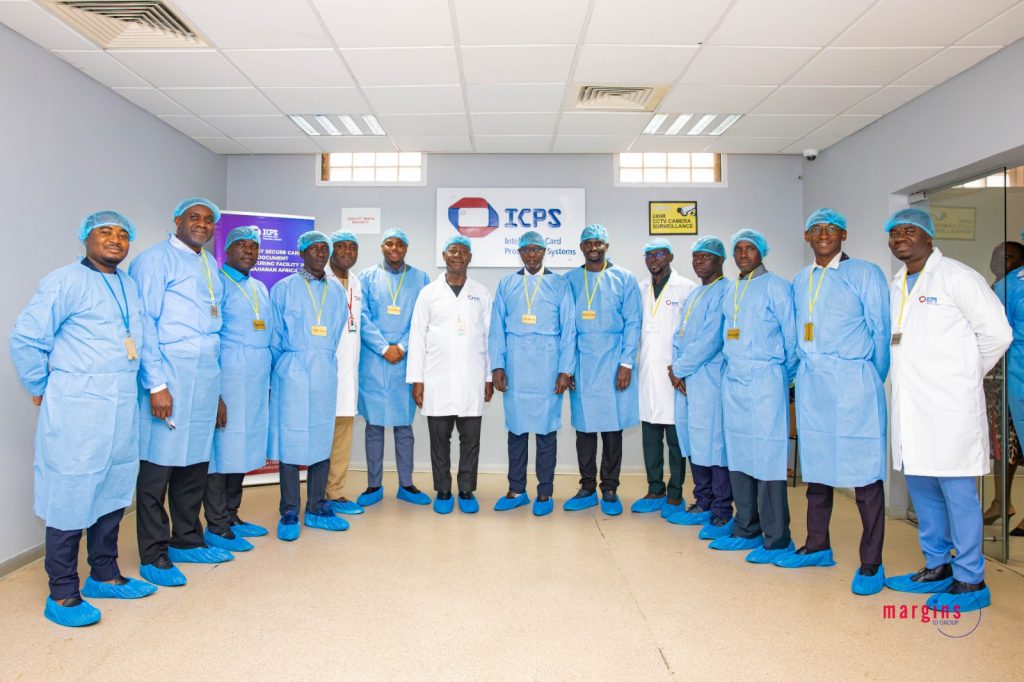
The demonstrations highlighted Margins ID Group’s capacity to deliver integrated identity solutions under one roof, positioning the firm as a “one-stop shop” that supports resilient, interoperable national identification systems.
Founder and Chief Executive Officer of Margins ID Group, Moses Baiden Jnr., described the collaboration as a significant step towards deeper African-to-African cooperation, particularly at the sub-regional level.
He noted that the partnership reflected a shared commitment to leveraging home-grown technological expertise to strengthen public service delivery across the continent.

The Gambian National Identification Card, modelled on Ghana’s system, is expected to be a smart card designed for the digital economy and recognised across all ECOWAS member states.
Officials say the initiative will enhance service delivery, improve security and support regional integration through interoperable identity infrastructure.
Mr Sanyang expressed confidence in Margins ID Group’s technical capabilities, citing its advanced verification systems and interoperable databases designed for use across multiple sectors.
Referring to the contract signed on 19 January 2026, he said the project emphasised sustainability and long-term functionality, adding that Margins ID Group stood out as a provider capable of managing every stage of identity development and management.
As part of the visit, the delegation also engaged with key public institutions in Ghana, including the National Identification Authority (NIA) and the Driver and Vehicle Licensing Authority (DVLA), to draw lessons from Ghana’s experience.
Executive Secretary of the NIA, Wisdom Yayra Deku, shared insights from Ghana’s national identification journey, stressing the importance of a strong legal framework, institutional coordination, and sustained citizen engagement to ensure the long-term success of such projects.
The conclusion of the visit is a major step forward in implementing The Gambia’s National Identification Project, signalling both institutional alignment and technical readiness.
Officials on both sides say the engagement has laid a solid foundation for the next phases of the project.
Margins ID Group, which is certified to international standards including ISO and Intergraf and is a member of the International Card Manufacturers Association (ICMA), says its work contributes to achieving Sustainable Development Goal 16.9, which seeks to ensure legal identity for all.
With the partnership now firmly underway, The Gambia is expected to join a growing number of African countries adopting smart identification systems, setting the pace for future regional collaborations in secure digital identity