By Patrick Biddah
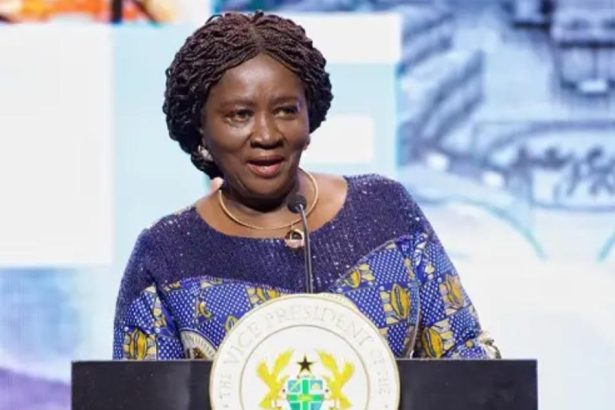
Vice President Professor Jane Naana Opoku-Agyemang has warned that persistent barriers confronting women and young entrepreneurs threaten Africa’s economic transformation and must be urgently addressed if the continent is to realise the full benefits of its single market.
Speaking at the Africa Prosperity Dialogues (APD) 2026 in Accra, she said Africa’s future growth agenda would remain incomplete if women, youth and small and medium-sized enterprises (SMEs) continue to face obstacles to finance, skills development, mobility and access to markets.
“A future that excludes young people, women and small enterprises is not one we can afford,” the Vice President stated, stressing that inclusive growth must move from policy rhetoric to measurable impact for ordinary Africans.
Addressing the forum under the theme “Empowering SMEs, Women & Youth in Africa’s Single Market: Innovate. Collaborate. Trade,” Prof. Opoku-Agyemang noted that although SMEs generate over 80 per cent of employment across the continent, fewer than 20 per cent participate in export trade, largely due to structural and institutional constraints.
More Read

She further pointed out that women make up nearly half of Africa’s workforce, while young people account for more than 60 per cent of the population, yet many remain locked out of opportunity.
“These gaps, if left unaddressed, will keep our economies trapped in low-productivity models and push our brightest talents into migration,” she warned.
The Vice President reaffirmed Ghana’s strong support for the African Continental Free Trade Area (AfCFTA), describing it as a historic opportunity with a market of 1.3 billion people, but cautioned that the agreement would fall short unless women-led and youth-led businesses are deliberately integrated into cross-border trade.
She said Ghana’s development strategy is aligned with this vision, highlighting the government’s 24-hour economy policy as a key intervention designed to expand productive hours, create jobs and open new opportunities for SMEs, women and young entrepreneurs.
According to her, the 24-hour economy, together with the government’s big-push infrastructure programme, aims to reduce bottlenecks, improve competitiveness and position Ghana as a regional hub within ECOWAS and the African Union.
Prof. Opoku-Agyemang called on African governments to pursue long-term development policies, strengthen development finance institutions and accelerate industrialisation to remove barriers that limit enterprise growth and innovation.
“Africa must unite. This is not about erasing sovereignty; it is about organising our sovereignty in service of shared prosperity,” she said, urging participants to ensure that APD 2026 delivers concrete actions that translate into jobs, thriving businesses and improved living standards across the continent.