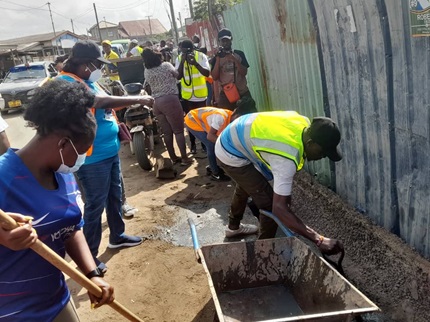
President John Dramani Mahama will tomorrow, Saturday, September 6, relaunch the National Sanitation Day (NSD) programme in a renewed push to mobilise stakeholders in the fight against filth engulfing the country.
The event, scheduled for the Institute of Local Government Studies in Madina, Accra, will bring together more than 70 waste management companies, metropolitan, municipal and district chief executives (MMDCEs), and other key actors in sanitation and environmental management.
Filth has become a blight on the nation’s major cities, with Accra worst affected. Heaps of refuse are often left to rot on major roads, corners and open spaces, sharing the streets with roaming livestock and obstructing traffic and pedestrians.
The reintroduction of NSD, under the Clean Ghana Agenda, comes more than a decade after the initiative was first launched by President Mahama in 2014. The scheme, which designated the last Saturday of every month for nationwide clean-up exercises, was abandoned following the change of government in 2016.
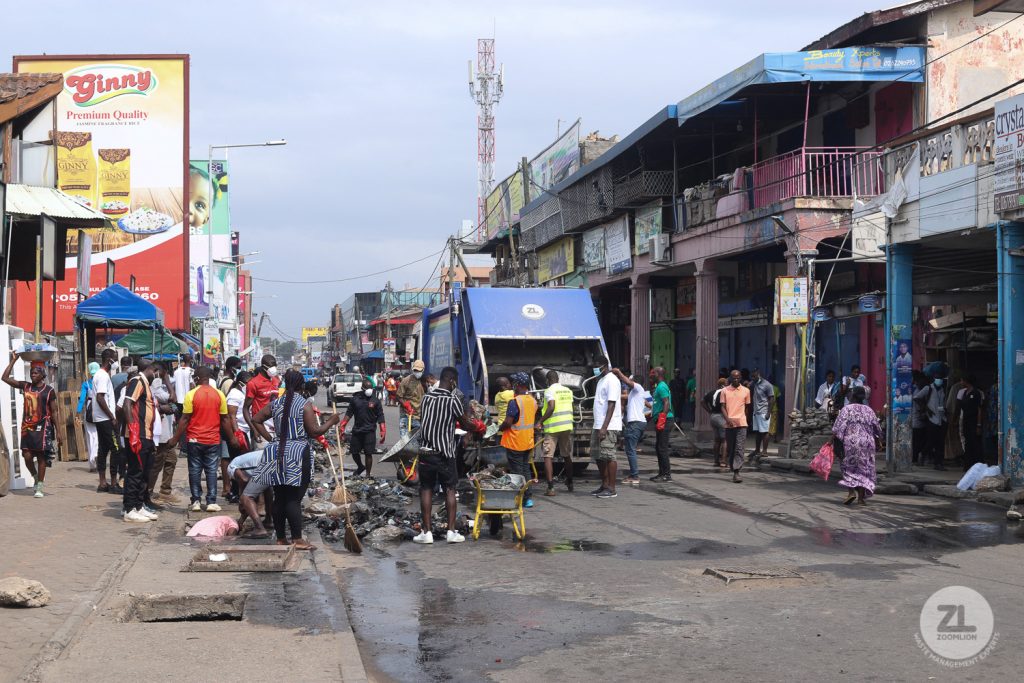
Now revived under the Reset Ghana Agenda, the NSD seeks to restore discipline in public spaces, empower local government structures, and foster active citizen participation and accountability in sanitation management.
More Read

Ahead of tomorrow’s relaunch, the Minister of Local Government, Chieftaincy and Religious Affairs, Ahmed Ibrahim, directed all metropolitan, municipal and district assemblies (MMDAs) to begin immediate clean-up of public spaces, ceremonial streets and drains.
“In exercising the supervisory authority of the Ministry of Local Government, I hereby direct all MMDAs to ensure that all public spaces, ceremonial streets and visible nuisances within your jurisdiction are cleared by 8:00 a.m. every day, beginning tomorrow, 4 September 2025,” he declared at a media briefing in Accra on Wednesday.
Mr Ibrahim warned that MMDCEs risk losing their positions if they fail to enforce sanitation by-laws and rid their jurisdictions of filth. “Your performance as Chief Executive will be judged directly on your results in the cleanliness of your cities and towns,” he stressed.
The minister further announced that the first six months of the NSD would serve as a performance benchmark, requiring assemblies to progressively reduce the time taken to clear waste and demonstrate sustained results in sanitation management.
He added that excuses of inadequate resources would no longer be tolerated, disclosing that 80 per cent of the District Assembly Common Fund (DACF) had already been released to the assemblies to enable them to undertake sanitation functions.
“I am convinced that districts now have the required resources to undertake their critical environmental sanitation functions to keep our cities and towns clean at all times,” he said.
Additional accountability measures include a dedicated sanitation hotline to allow citizens to report nuisances directly to the ministry, as well as mandatory monthly reports by assemblies to their respective Regional Coordinating Councils for onward submission to the ministry.
Deputy Minister of Food and Agriculture, John Dumelo, Members of Parliament, MMDCEs from the Greater Accra Region, and sanitation stakeholders attended the briefing in support of the President’s renewed sanitation drive.
Mr Ibrahim described the reintroduction of NSD as a defining moment in the national quest for environmental sanctity. “This is a test of our seriousness as a people, our commitment to public health, and our sense of national pride,” he said.