By Patrick Biddah
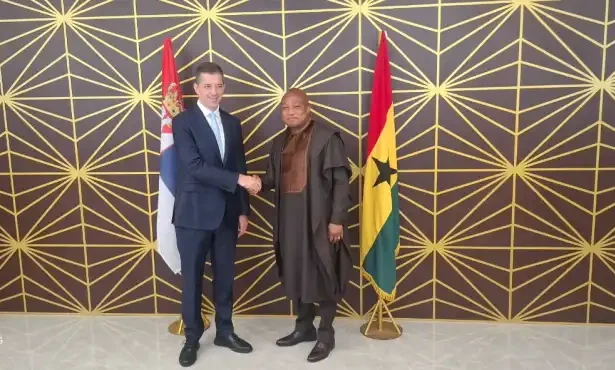
Ghana and Serbia have agreed to embark on a major economic partnership centered around lithium development, artificial intelligence, and expanded trade, marking a renewed phase in bilateral relations driven by innovation and sustainable industrialization.
Ghana’s Foreign Minister, Samuel Okudzeto Ablakwa, announced at a joint press briefing that both countries would collaborate on lithium exploration and processing, tapping into Ghana’s newly discovered deposits and Serbia’s established industry, which holds 11% of the world’s lithium reserves.
“This partnership is not just about extraction,” Ablakwa said. “It is about how lithium becomes a catalyst for AI transformation, battery innovation, and smart energy solutions.”
Ghana aims to leverage this collaboration as part of its broader economic agenda, which includes the $1 billion Innovation Hub, $50 billion FinTech support package, and the President’s One Million Coders programme.
More Read
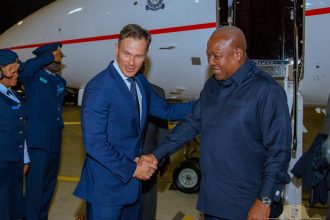
Foreign Minister H.E. Marko Đurić praised Ghana’s strategic vision, especially the proposed 24-hour economy policy, which aims to expand economic activity across all sectors around the clock.
“I was truly inspired by Ghana’s 24-hour economy plan,” Đurić said. “This is the kind of bold thinking that drives fast growth. Serbia sees this as an opportunity to link our businesses and support Ghana’s transformation.”
The ministers also emphasized the importance of boosting trade between Ghana and Serbia, which they acknowledged as currently underwhelming.
With Ghana serving as the gateway to the 1.4 billion-person African Continental Free Trade Area (AfCFTA), both sides agreed to mobilize their private sectors for deeper commercial engagement.
“We want Serbian businesses to see Ghana not just as a partner, but as a launchpad to the entire African market,” said Ablakwa.
Đurić echoed that sentiment, stating, “Ghana is a key regional ally with a future-focused government. The foundation is strong, and the opportunities are enormous.”
The partnership extends beyond trade and lithium to technology, where both nations will exchange knowledge in artificial intelligence, aiming to integrate AI applications into lithium value chains and digital services.