Former Vice President, Dr Mahamudu Bawumia, has asserted that the key to overcoming Africa’s longstanding development challenges, lies in a “smart formalisation” strategy, a digitally driven approach to transforming public administration, economic systems, and service delivery.
Delivering the keynote address at the Cambridge Africa Business Conference, themed, ‘Africa’s Digital Transformation: Building Resilient Economies Through Innovation’, on Saturday, May 17, 2025, Dr Bawumia, lamented that after more than 60 years of independence, many African nations continue to grapple with deep-rooted problems that stifle productivity and progress.
He outlined significant challenges, including the absence of unique identification systems for citizens, the lack of a functional national property address system, a large informal sector reliant on cash transactions, widespread financial exclusion, the absence of individualised credit scoring, high interest rates, fragmented and manual government databases, inefficiencies in healthcare delivery, limited rural healthcare access, and poor revenue mobilisation due to weak tax compliance.
According to Dr Bawumia, these conditions have led to low productivity, high unemployment, and persistent poverty across the continent.
“Let me quickly dive into what I believe presents the greatest opportunity to surmount these challenges and turn them into progress,” he said.
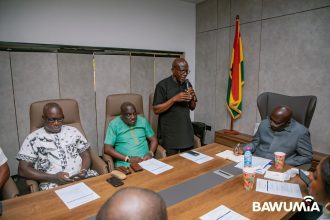
“The solution will have to be one that accelerates Africa’s development… In short, it is what I term ‘smart formalisation’. In this regard, digital transformation is not just a policy aspiration; it is a necessity for resilience.”
Dr Bawumia, explained that, “smart formalisation” entails building integrated systems that enable governments to better understand their citizens and interact with them efficiently and affordably.
He emphasised that this approach creates a “virtuous cycle” in which governments provide improved services, citizens engage more transparently and securely, and development is catalysed.
Drawing parallels with the post-Second World War development paths of nations in the Global North, he noted that modern technologies, including blockchain, artificial intelligence, and mobile computing, offer African countries the opportunity to leapfrog outdated systems and adopt more innovative, more inclusive economic models.
He, therefore urged African governments to fully embrace digital transformation, not merely as a modernisation effort but as a strategic response to deeply entrenched structural challenges.
Dr Bawumia, expressed confidence that the continent could foster inclusive growth, enhance public service delivery, and build resilient economies through “smart formalisation.”
Dr Bawumia, who has recently been engaged in international engagements, also addressed the International Democrat Union (IDU) Forum in Brussels. He predicted a shift in Africa’s trade orientation as rising global tariffs, particularly from the United States, begin to impact the continent’s export-reliant economies.
He argued that the new wave of protectionism would prompt African countries to pursue greater self-sufficiency and strengthen regional trade ties.
Citing recent US tariff increases, Dr Bawumia remarked: “The US has increased its average tariff rate from about 2.4% to 10% — the largest increase since 1943. The impact of this will not be insignificant.”
Although Africa’s overall trade exposure to the US remains relatively limited, just 6.5% of exports and 4.4% of imports involve the US, Dr Bawumia pointed out the vulnerability of specific countries.
He cited Lesotho as an example, explaining that the country sends approximately 50% of its exports, primarily textiles, to the US under the African Growth and Opportunity Act (AGOA). He warned that the new tariff regime threatens to erode those gains.
“AGOA is essentially going to collapse under these tariffs,” he stated.
As a result, Dr Bawumia anticipates a significant shift in trade strategies across the continent, with African countries increasingly turning inward for solutions.
“What you’re going to see in Africa, as you’re seeing across the world, is more clamour for self-reliance. And you’re going to see more political space being created for intra-African trade to deal with this,” he said.
Dr Bawumia cautioned policymakers against relying on tariffs to correct trade imbalances, arguing that such deficits are fundamentally macroeconomic in nature and cannot be resolved through trade policy alone.
He criticised what he described as a growing disregard for economic history and foundational principles.
“One of the things policymakers are failing to do is to learn from both history and economics,” he said.
Using global trade data to illustrate the scale of imbalances, Dr Bawumia observed that Africa accounts for just 2.5% of global exports, compared to 2.9% of imports. In contrast, Asia contributes 43% of global exports and 38% of imports; Europe, 38% and 51% respectively; and the United States exports 8% and imports 14%.
“These are clear trade imbalances,” he noted. “But we know from economics that you cannot fix a trade deficit with tariffs — it just doesn’t work.”
He explained that a country’s trade balance is intrinsically linked to broader macroeconomic conditions, particularly the relationship between national savings and investment.
“Trade deficits stem from underlying structural economic issues, not merely from trade policy weaknesses,” he said.
“If you look at the national income identity, where income equals consumption, investment, government spending, plus exports minus imports it simplifies to a truism: your trade deficit (exports minus imports) must equal the difference between your national savings and investment.
“So, for any country that spends more than it saves, a trade deficit is inevitable. The deficit is a macroeconomic problem. It’s not a trade policy issue, and you cannot solve that macroeconomic problem with tariffs,” Dr Bawumia concluded.