

President John Dramani Mahama has confirmed payment of $500 million to the World Bank, restoring a facility linked to energy reforms.
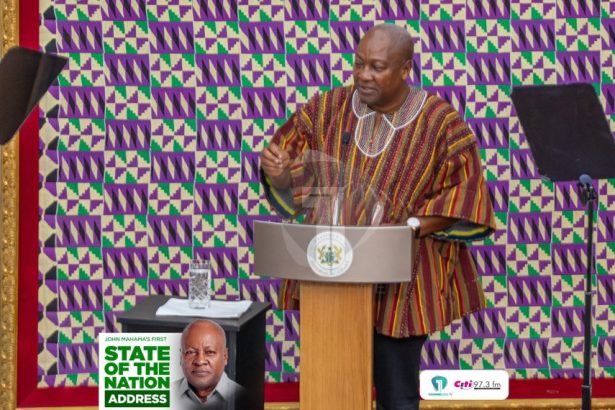
He made the disclosure during the State of the Nation address on Friday, 27 February, in Parliament of Ghana, saying the move reinforces Ghana’s financial credibility.
Mahama stated that the facility, originally designed to guarantee investments in the offshore Cape Three-Point field, had been exhausted after years of non-payment for gas consumed. “We have fully repaid and restored the $500 million guarantee, including interest,” he told lawmakers.
Turning to the energy sector, the president said government inherited an industry burdened by an 80 billion cedi debt and liquidity challenges that disrupted power generation. He disclosed that all outstanding gas invoices of about $500 million have now been settled and power purchase agreements renegotiated, delivering $250 million in savings and restructuring $1.1 billion of legacy debt for payment between 2026 and 2028.
“We are paying for every gas we are consuming today,” Mahama said, adding that provisions in the 2026 budget will ensure timely energy payments to prevent new arrears.
More Read

Distribution losses remain a concern, with roughly 25 per cent of electricity generated unaccounted for. Government has approved private sector participation in billing and collections under a multiple lease concession model aimed at reducing revenue leakages and strengthening the cash waterfall mechanism.
Investment in oil and gas continues. Agreements have been signed for $2 billion in additional investment in the Jubilee field and $1.5 billion in the OCTP block, including plans to drill up to 20 new wells. Officials say the projects will boost production and support energy security.
Renewable energy initiatives are advancing as part of efforts to diversify the energy mix. Installed solar capacity now stands at 250 megawatts, representing 5 per cent of generation. A 200 MW solar project at the Dawa Industrial Zone and mini-grids for island communities are under development, with the African Development Bank committing $100 million for renewable mini-grids.
Beyond energy, the president highlighted economic gains. Reserves have risen to $13.8 billion, covering 5.7 months of imports, while the economy has surpassed the $100 billion mark. Fiscal reforms, including abolition of certain taxes and adjustments to VAT, are said to have returned 6 billion cedis to citizens and reduced the effective VAT rate to 20 per cent.
Interest rates have fallen to between 18 and 20 per cent, improving credit access for businesses. Data from the Ghana Statistical Service indicate more than one million jobs were created in 2025 and nearly one million people escaped multidimensional poverty.
The president defended reforms in the cocoa sector, arguing that adjustments to producer prices were necessary to sustain the industry and prevent additional debt. “Failure to do this would have meant borrowing billions in unplanned expenditure,” he said.
Legislative measures are also planned to strengthen procurement and governance. Government intends to ban sole-source contracts except in exceptional cases and require parliamentary approval before state assets are leased or sold. A Value for Money Office Bill has been laid before Parliament to curb cost overruns and waste.
Energy sector rehabilitation continues. The Tema Oil Refinery has resumed crude processing after years of inactivity, while reforms in distribution and payment mechanisms aim to stabilise the industry.
Government is also advancing its 24-hour economy initiative through the 24-hour Economy Authority. A budget allocation of $110 million has been set aside for implementation, with partnerships planned via the Development Bank of Ghana and the Ghana Infrastructure Investment Fund to attract investment and deepen value chains.
Mahama added that the reforms seek to break cycles of economic instability and restore growth. He reiterated government’s commitment to reliable energy and sustainable development, saying the difficult decisions are aimed at securing long-term prosperity.