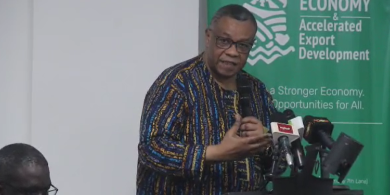
Presidential Advisor on the 24-Hour Economy, Goosie Tanoh, has cautioned against expecting Ghana’s 24-hour economy programme to transform the country’s industrial sector overnight, saying the initiative is designed to address deep-rooted production and supply-chain constraints before industries can operate at significantly higher capacity.
Mr Tanoh said the programme is not simply about extending the operating hours of factories and businesses but about systematically rebuilding Ghana’s productive system, improving agricultural output, fixing supply chains, mobilising private capital and creating the conditions for industries to operate consistently.
Speaking at a media engagement with journalists in Accra on Wednesday, August 19, 2026, he said Ghana could not realistically move industries from low capacity utilisation to full production without first addressing the constraints that have kept businesses from operating efficiently.
“We all want the economy to move to a level of capacity utilisation that allows factories to operate at 90%, 100%, and to invest in new production lines,” he said.
“But you can’t leap from 10% capacity utilisation to 100% capacity utilisation in one year.”
More Read
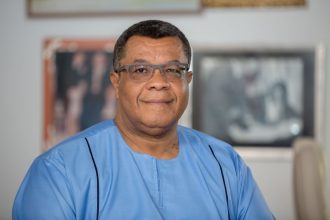
According to Mr Tanoh, the government is therefore focused on identifying and resolving the bottlenecks that prevent businesses from producing at scale, rather than simply asking them to operate around the clock.
Mr Tanoh said the 24-hour economy is being conceived as a “systematic reconstruction” of Ghana’s productive system, with interventions spanning agriculture, manufacturing, logistics, infrastructure and access to finance.
He used the soybean processing industry to illustrate the type of structural problem the programme is seeking to address.
He said some processors with existing factory capacity had been forced to shut down because they could no longer source soybeans at prices that made production commercially viable.
When soybean prices were low, he explained, processors could afford to purchase the commodity and operate their crushing facilities. However, when prices increased, the same factories could no longer operate profitably.
Mr Tanoh said the solution was therefore not simply to reopen the factories or compel them to work longer hours.
“Our role is to make sure that the supply of soybeans throughout Africa is such that it can feed the factories consistently,” he said.
He said the government wanted to ensure that raw materials were available at prices that would allow processors to operate continuously.
“Because part of the reason why they don’t have the soybeans, or they have the soybeans but cannot use it, is because of prices. And that price is a function of supply.”
He said supply was itself dependent on the efficiency of the wider supply chain.
“Supply is a function of supply chain,” he said.
Mr Tanoh identified the cost of moving agricultural produce from farms to commercial processors as another major obstacle to industrial expansion.
He said the logistics cost associated with moving soybeans from the farm to commercial channels was about 60%, compared with a global average of 50%.
“To move soybean from farm to commercial, the cost input from logistics is about 60%. The global average is 50%,” he said.
“This is what the programme is designed to do: to transform supply chains, to improve output on the farm.”
He said improving agricultural yields was equally important because low productivity at farm level ultimately affects the cost and availability of raw materials for industry.
Using soybean production as an example, Mr Tanoh said a farmer producing about 900 kilogrammes per hectare would price the commodity based on that level of production rather than the higher yield that could potentially be achieved.
“If a farmer grows soybean and gets 900 kilogrammes per hectare, and he should be getting four to five, six [tonnes], he’s going to price his product according to the 900 kilogrammes,” he said.
But with improved productivity, he said, the farmer could produce more, lowering the cost per unit and making the commodity more affordable to processors.
“If he grows soybean at six [tonnes], the price will go up [in terms of production volume]. And therefore the industry can buy. We can all buy cheaper vegetables,” he said.
The increased availability of affordable raw materials, he said, would allow industries to process more and operate consistently.
“So it’s a systematic reconstruction of our productive system,” Mr Tanoh said.
“That allows us to generate the output and the services that create efficiency, productivity and our customers.”
Mr Tanoh said the government does not intend to rely solely on public funds to finance the transformation envisaged under the programme.
Instead, he said, the strategy is to use limited government resources to develop projects sufficiently well to attract private capital.
He said the programme had already demonstrated its ability to leverage approximately US$318 million in seed funding to execute projects valued at about US$3.5 billion.
“We’re looking at a very successful [record] in leveraging the original seed money of $318 million to execute projects of $3.5 billion,” he said.
He said the government hoped to use that track record to attract additional financing for infrastructure under the 24-hour economy.
“We’re hoping that through that track record, we’ll also be getting some of that funding to be able to support this infrastructure,” he said.
Mr Tanoh said the programme is working with government entities and project developers to identify projects that can eventually attract financing.
He stressed that government’s role is largely to provide the administrative and technical support required to prepare projects for private investment.
“The only support government gives us is our artificial costs,” he said, referring to the administrative and technical expenses involved in project development.
He cited expenditure on consultants, computers, vehicles and other requirements necessary to develop projects.
Mr Tanoh said the programme has already mobilised companies around projects valued at about US$5.5 billion.
He cited projects valued at approximately US$1.45 billion and US$1.8 billion, alongside renewable energy and other infrastructure projects.
He said the scale of the investments demonstrates the potential to use the private sector to finance the programme’s ambitions.
“Being a young programme, because of the credibility of the economies that we are running, we’re able to mobilise companies for $5.5 billion,” he said.
However, he cautioned against assuming that announcing a project meant it was immediately ready for implementation.
He said major projects require extensive due diligence, including verification of the developer’s equity contribution and the mobilisation of debt.
“Apart from the fact that the project owners have the equity, because we have to verify whether they have the equity or not before we sign,” he said.
Using a US$1.45 billion solar project as an example, he said the programme would first ensure that the developer had substantial assets before working with the company to mobilise debt.
“If you’re doing a project like solar, which is $1.45 billion, you are making sure the person who’s doing it has at least more than $500 million assets. Then you work together to raise the debt,” he said.
He added that investors would not normally finance projects entirely from their own capital.
“Nobody will pick up $1.5 billion, put it in their account. They also need the debt,” he said.
Mr Tanoh also explained why the Secretariat has not publicly announced every project and financing commitment it is pursuing.
He said the programme has deliberately maintained a relatively low public profile because projects must go through development, data collection, analysis, negotiations and financial structuring before implementation.
“What we’ve done is being very quiet about what we’re doing,” he said.
He said the decision was informed by previous experiences where projects were announced before they were sufficiently developed.
“By the time we put a sign on it, it means it’s actually going to happen,” he said.
The objective, he stressed, is to ensure that projects are not announced merely for political publicity.
“Not because we wish it. Not because we’re sentimental. Not because we want to score political points. But to make sure that the actual project will be executed,” he said.
He said the Secretariat remains cautious about announcing financing commitments until the institutions involved have completed their own processes.
“We just received attention, I can’t mention the amount, for our poultry programme,” he said.
“But we are not going to announce it until we are sure that those banks who are giving attention are ready to discuss.”
He added that private companies and financial institutions have their own protocols that must be respected before projects are publicly announced.
Mr Tanoh said the 24-hour economy is also developing an ecosystem to address one of the major challenges facing Ghanaian businesses — access to finance.
He said the ecosystem includes an SME lending platform, an SME securitisation fund, a credit guarantee scheme and other support mechanisms.
“We built a complete ecosystem,” he said.
The goal, he explained, is to make about 1,000 SMEs bankable every year, covering businesses at different levels of development.
“And now make sure that every year from next year, you can bank 1,000 SMEs,” he said.
He said the businesses would range from smaller enterprises to companies operating at the US$10 million to US$20 million level.
He described the approach as deliberate and carefully structured rather than a short-term intervention.
“It’s deliberate. It’s careful,” he said.
Mr Tanoh also disclosed a long-term employment target under the programme, saying the ultimate objective is to reduce the unemployment rate, which he cited at 30.7%, to below 5% by 2034.
He said this would require the 24-hour economy to be treated as a national development programme that extends beyond a single four-year political cycle.
“Our ultimate target is that by 2034, the unemployment rate must drop from 30.7% now to below 5%,” he said.
“And if we adopt this as a programme that goes beyond a four-year political cycle, by 2034 will be below 5% in terms of unemployment.”
He acknowledged that extremely low unemployment could eventually create labour-market pressures, saying there is a level of unemployment that an economy needs to maintain.
“There is a certain unemployment ratio that you have to maintain,” he said.
However, he maintained that the broader objective is to build an economy capable of generating sustainable employment through increased production and investment.
Mr Tanoh also clarified that the Secretariat has no jurisdiction or oversight responsibility over the proposed 24-hour markets being developed across the country.
He said the markets are expected to be established in 262 districts and financed through the District Assemblies Common Fund, with implementation handled by the Ministry of Local Government and the district assemblies.
Despite carrying the 24-hour branding, he said the Secretariat has no authority over their location or implementation.
“Although they use a 24-hour logo, we have no control over the markets,” he said.
“We are not allowed to decide where it goes, and so on and so forth.”
He said the use of the 24-hour branding has created confusion and resulted in the Secretariat being sued several times over projects for which it has no responsibility.
“So if people sue 24-hour Economy Authority, we will [be] sued four or five times for something that we have no responsibility for,” he said.
He disclosed that the Secretariat’s lawyer is preparing a motion in November to have it removed from the list of defendants.
“Our lawyer is moving a motion in November to get us to remove from the defendant’s list, because we have no jurisdiction, we have no status in the matter,” he said.
Mr Tanoh nevertheless said the markets could contribute to the broader objectives of the programme if they are developed with modern facilities, particularly cold-chain infrastructure.
“If those markets are established and have the modern facilities that they will have, and of course, especially cold chain facilities and so on, it will contribute to the supply chain efficiency we want to achieve,” he said.
He said cold-chain infrastructure could help reduce the significant post-harvest losses suffered by farmers and businesses dealing in perishables.
“If you have cold chain facilities, then your vegetables, your perishables and so on have somewhere to be stored so that we don’t lose or add to the 30% to 40% post-harvest losses that we have within the supply chain,” he said.
Mr Tanoh said the media also had a role to play in helping the public understand the time required to transform an economy.
He urged journalists and editors to assess the programme from a developmental perspective rather than through the lens of immediate political results.
“All of us in the media must begin to think developmentally,” he said.
“We’re starting from point A to point B.”
He questioned how Ghana could reasonably expect industries that have operated for decades to be transformed within a single year.
“How long have our industries been operating? Since 1967,” he said.
“How many years? 53 plus 56… 70 years. You want us to do what the industries have been able to do in 70 years?”
For Mr Tanoh, the test of the 24-hour economy is therefore not whether factories simply remain open for longer hours, but whether Ghana can build the supply chains, infrastructure, financing structures and productive capacity required for those factories to operate profitably and consistently.
“It’s not very sexy,” he said of the work involved.
“Because it’s high tech. It’s structuring, developing, talking to banks.”
He said much of the programme’s work happens away from public attention because it involves the technical processes necessary to make projects bankable and executable.
The programme, he said, is ultimately intended to move Ghana from low productive capacity to an economy characterised by higher industrial output, stronger supply chains, increased private investment and sustainable employment.
“It’s a systematic reconstruction of our productive system,” Mr Tanoh reiterated.