……Through affordable financing, greater market access
Vice President Professor Jane Naana Opoku-Agyemang has reaffirmed the government’s commitment to transforming women-owned businesses from small-scale enterprises into major players in Ghana’s industrial and manufacturing sectors, stressing that women must be empowered to establish factories, expand production and compete effectively in both domestic and international markets.
She said Ghana’s economic transformation would depend significantly on the ability of women entrepreneurs to move beyond traditional small-scale trading into commercial production, agro-processing, manufacturing and industrial supply chains.
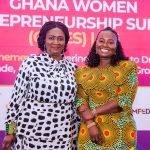
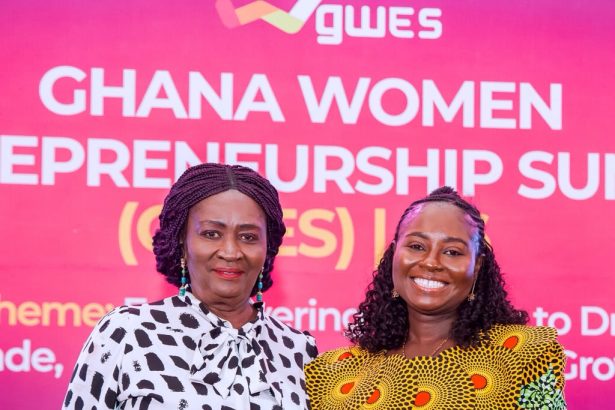
The Vice President made remarks at the opening of the 5th Ghana Women Entrepreneurship Summit (GWES 2026), organized by the Ghana Enterprises Agency (GEA) under the theme “Empowering Women to Drive Trade, Innovation and Industrial Growth”.
The event, attended by the Chief Executive Officer of the GEA, Margaret Ansei, brought together government officials, development partners, financial institutions, industry leaders and women entrepreneurs to explore practical strategies for strengthening women’s participation in Ghana’s economic development.
More Read
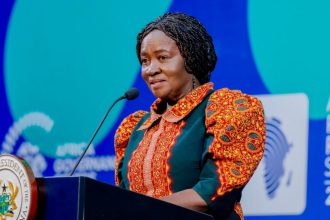
Addressing participants, Prof. Opoku-Agyemang emphasized that women entrepreneurs remained central to the government’s ambition to increase domestic production, promote value addition, strengthen industrial development and create sustainable employment opportunities.
“Ghana’s economic transformation depends on increasing production, processing more of what we grow, and building stronger links between local enterprises and larger industries. Women are central to this effort,” she declared.
According to her, Ghana must deliberately create opportunities for women-owned businesses to graduate from micro and small-scale operations into commercially viable enterprises capable of supplying major industries and competing in international markets.
She stressed that women should not be confined to traditional trading activities but must be supported to establish factories, develop manufacturing businesses and participate meaningfully in the country’s industrial transformation.
The Vice President explained that strengthening women’s participation in productive sectors would not only improve their economic circumstances but also contribute to national industrialization, job creation and sustainable economic growth.
She therefore called for deliberate interventions to remove the structural barriers preventing women entrepreneurs from expanding their businesses and accessing larger markets.
Prof. Opoku-Agyemang identified limited access to affordable financing as one of the major obstacles confronting women-owned businesses, particularly those seeking to expand production and undertake larger commercial operations.
She highlighted the proposed Ghana Women’s Development Bank as a significant government intervention intended to address longstanding financing difficulties and improve women’s access to financial services.
The initiative, she explained, forms part of the government’s broader commitment to creating a more supportive environment for women entrepreneurs and ensuring that promising businesses are not constrained by inadequate capital.
However, the Vice President cautioned that access to finance alone would not guarantee the success of women-led enterprises unless accompanied by practical business development support.
She emphasized the importance of equipping women entrepreneurs with the technical knowledge, management skills and production capabilities required to compete in increasingly demanding markets.
According to her, businesses seeking to supply supermarkets, major industries and export markets must meet established requirements relating to product quality, packaging, safety and regulatory compliance.
She therefore urged institutions responsible for enterprise development to strengthen programmes that help women-owned businesses improve their operational standards and become more competitive.
The Vice President maintained that connecting women entrepreneurs to larger buyers and industrial supply chains would create opportunities for business expansion while strengthening Ghana’s domestic production capacity.
She added that empowering women to participate more actively in manufacturing, agro-processing and other productive sectors would contribute significantly to the government’s broader economic transformation agenda.
In her welcome address, the GEA boss, Margaret Ansei, drew attention to the persistent financial challenges confronting women entrepreneurs, particularly the difficulty of securing sufficient working capital to execute large contracts.
She observed that although many women-owned businesses have the capacity and determination to expand their operations, inadequate financing often prevents them from capitalizing on emerging commercial opportunities.
Ms Ansei explained that one of the most pressing challenges arises when women entrepreneurs secure substantial orders but lack the immediate funds required to purchase raw materials, pay suppliers and meet production costs.
The situation, she said, becomes particularly difficult because major buyers often operate on extended payment terms, while suppliers demand immediate payment for goods and services.
This mismatch between incoming payments and operational expenses creates serious cash-flow difficulties for businesses attempting to expand production.
Consequently, some women entrepreneurs struggle to fulfil large orders, execute contracts or maintain consistent production despite having access to potentially profitable markets.
Ms Ansei stressed that the situation required urgent attention from financial institutions, policymakers and organizations responsible for supporting enterprise development.
She called for innovative and affordable financing arrangements that reflect the practical realities of women-owned businesses rather than relying exclusively on conventional lending requirements that many entrepreneurs find difficult to satisfy.
According to her, improving access to working capital would enable women entrepreneurs to honour contractual obligations, expand production, employ more workers and take advantage of opportunities within Ghana’s growing industrial and commercial sectors.
The GEA Chief Executive Officer also emphasized the importance of stronger institutional collaboration in addressing the challenges confronting women-led enterprises.
She urged financial institutions, development partners, government agencies and private sector organizations to work together to develop sustainable interventions that would improve business competitiveness and facilitate market expansion.
Beyond financing, Ms Ansei identified improved market access as another critical requirement for the sustained growth of women-owned businesses.
She stressed that entrepreneurs must be supported to establish stronger commercial relationships with larger companies, supermarkets, manufacturers and international buyers.
Such partnerships, she explained, would help women-owned enterprises secure reliable markets for their products, improve production planning and develop the capacity to meet larger orders.
She also underscored the importance of business development services, technical assistance and institutional support in helping entrepreneurs improve product quality, adopt innovative production methods and strengthen their management systems.
The GEA boss maintained that empowering women entrepreneurs required a comprehensive approach that combined affordable financing, technical capacity building, market access and sustained institutional collaboration.
She expressed confidence that stronger partnerships among stakeholders would help unlock the considerable economic potential of women-led enterprises and enable them to contribute more significantly to national development.
The 5th Ghana Women Entrepreneurship Summit provided a platform for policymakers, business leaders, financial institutions, development partners, and entrepreneurs to examine practical measures to expand women’s participation in trade, innovation, and industrial development.
Discussions centred on the structural barriers confronting women-owned enterprises and the need for coordinated interventions to improve their access to financing, technology, business development services and commercial opportunities.
The summit also highlighted the importance of positioning women entrepreneurs to benefit from emerging opportunities in manufacturing, agro-processing, value addition and industrial supply chains.
Participants acknowledged that women-owned businesses could play a more substantial role in Ghana’s economic transformation if provided with the necessary financial resources, technical expertise and access to competitive markets.
The gathering further reinforced the need for sustained collaboration among the government, the private sector, financial institutions, and development partners to create an enabling environment for women-led enterprises.
As the government pursues policies aimed at expanding domestic production, promoting industrialization and generating employment, the role of women entrepreneurs is expected to remain central to efforts to build a more inclusive and productive economy.
The GEA, which is mandated to promote the development of micro, small and medium-sized enterprises (MSMEs), reiterated its commitment to strengthening enterprise development, improving business competitiveness and supporting job creation.
The Agency indicated that it would continue collaborating with relevant stakeholders to expand opportunities for women entrepreneurs, strengthen their business capacities and position them to participate more effectively in Ghana’s trade, innovation and industrial development.
The summit ultimately underscored the importance of moving beyond recognizing women’s contributions to the economy towards providing the practical financial, technical and institutional support required to transform their businesses into competitive and sustainable enterprises.