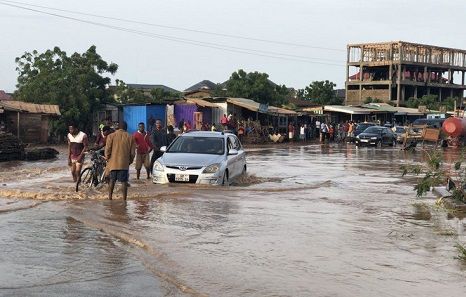
Several parts of Accra, as usual, experienced flooding yesterday, Sunday, 29 March 2026, following heavy rains that left major roads inundated and disrupted movement.
The downpour swept across other parts of the country in the early hours, beginning around 3:30 am and continuing into the morning. This was in line with earlier forecasts by the Ghana Meteorological Agency (GMet).
The rains, which were steady and intense in several regions, followed a period of unusually scorching heat, dry conditions, low humidity and dusty winds akin to the harmattan.
Low-lying areas in the Greater Accra, Ashanti and Central Regions were particularly affected, with reports of waterlogging in several communities.
GMet had earlier warned of the likelihood of significant rainfall over the weekend, urging the public to take the necessary precautions.
More Read
Affected areas included Dansoman, Weija, Kasoa Old Barrier, Mallam Junction, Kaneshie, Accra Central, Circle, the Dansoman Junction enclave, and other parts of the Greater Accra Region.
Residents and commuters reported that sections of roads in these areas were submerged, making it difficult for both vehicles and pedestrians to move freely. In some locations, traffic built up as drivers struggled to navigate through the floodwaters.
The flooding is believed to have been triggered by intense rainfall, which overwhelmed drainage systems in parts of the capital and surrounding communities.
Although no casualties had been officially reported, some residents expressed concern about the recurring flooding in these areas, particularly during periods of heavy rain.
Authorities are yet to issue an official statement on the extent of the damage, as residents continue to assess the impact on homes, businesses and transport.
The incident adds to ongoing concerns about urban flooding in Accra, especially in low-lying communities prone to waterlogging during the rainy season.
The Meteorological Agency later issued a strong warning of possible flash floods across parts of the country, as widespread rains and thunderstorms were expected to intensify on Sunday morning.
According to a 24-hour impact-based forecast released by the agency, rainstorms that began earlier are expected to spread across most parts of Ghana, bringing varying degrees of rainfall and thunderstorms throughout the day.
The morning hours are likely to see significant rainfall activity across several regions, raising concerns about flooding, particularly in low-lying and flood-prone communities.
The agency cautioned that flash floods are “imminent” in vulnerable areas, urging residents to remain vigilant and take the necessary safety measures.
“Caution: Flash floods are imminent in low-lying and flood-prone areas. The general public is hereby advised to take all necessary precautions and stay safe,” the forecast stated.
Urban centres with poor drainage systems are especially at risk, as intense downpours within short periods could overwhelm gutters and waterways, leading to flooding of roads and homes.
The forecast indicates that while rain will dominate the morning, parts of southern Ghana may experience intermittent sunshine later in the day. However, the middle belt, transition zones and northern sectors are expected to experience scattered thunderstorms from late afternoon into the night.
Temperatures are projected to range between 23°C and 39°C nationwide, with the northern sector expected to record the highest temperatures.
Meteorologists also highlighted the possibility of strong winds, localised storms and reduced visibility in some areas, which could affect transport and outdoor activities.
Residents have been urged to avoid walking or driving through floodwaters, clear drains and gutters to allow water to flow freely, secure loose structures and property against strong winds, and stay updated on official weather reports.
Motorists have also been advised to exercise caution, particularly during heavy downpours, as roads may become slippery and visibility may be poor.
The agency emphasised the importance of preparedness, noting that early warnings are critical in preventing loss of life and property.
With the rainy season gradually intensifying, authorities are calling on communities, local assemblies and emergency services to remain on high alert and respond swiftly to any incidents.
As Ghana braces for another round of rainfall, the message from forecasters is clear: stay alert, stay prepared, and stay safe.