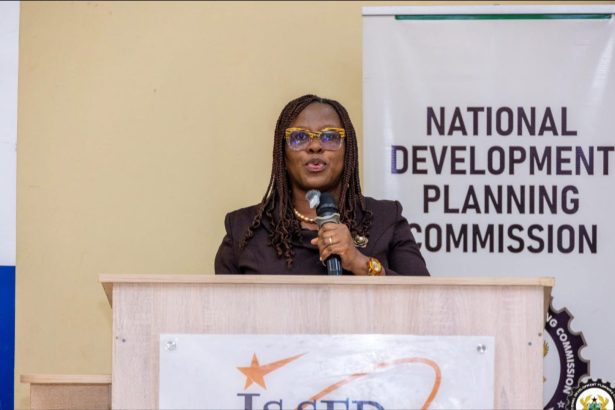
The Director-General of the National Development Planning Commission (NDPC), Dr Audrey Smock Amoah, has challenged planners and budget officials to move Ghana’s gender equality commitments beyond policy statements and into actual decisions on the allocation of public resources.
She said the real test of gender-responsive governance was whether public spending was reaching the people and communities that needed it most.
“The challenge before us is to move from policy commitment to practical implementation,” Dr Amoah said.
She was speaking on Monday, August 31, 2026, at a three-day capacity-building workshop organised by the NDPC in partnership with the African Institute for Development Policy (AFIDEP) at the Institute of Statistical, Social and Economic Research (ISSER) Conference Centre at the University of Ghana.
The workshop brings together planning, budget and gender officers from Metropolitan, Municipal and District Assemblies (MMDAs) in the Greater Accra Region, alongside representatives of relevant national and regional institutions.
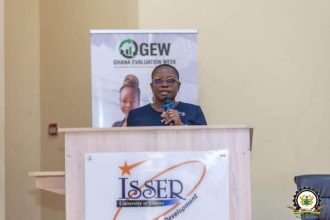
Dr Amoah said the need to examine public spending through a gender lens was particularly important because women constitute more than half of Ghana’s population and make up 53 percent of the country’s labour force, yet continue to face unequal access to economic opportunities and decision-making.
She urged officials to critically assess how public resources are distributed and whether government interventions are responding to the different needs of women, men, girls and boys.
The three-day training focuses on the practical application of the NDPC’s Gender-Responsive Planning and Budgeting Toolkit, which is intended to help officials incorporate gender considerations throughout the planning and budgeting cycle.
Speaking on behalf of AFIDEP, Dr Maame B. Peterson said the training had been deliberately designed to be practical, with participants working with actual planning and budgeting documents from their respective districts and regions.
She said decisions on public resource allocation have different implications for different groups and therefore must be examined through a gender lens.
“How money moves, who it reaches, and who it actually serves is not a neutral question. It is a question of fairness,” Dr Peterson said.
She explained that the training curriculum was developed through collaboration between AFIDEP, NDPC, the Ministry of Finance and the Ministry of Gender, Children and Social Protection, following an assessment of gaps in gender-responsive planning and budgeting at the regional and district levels.
Dr Peterson also urged participants to be candid about the challenges they face in applying gender-responsive approaches.
“Come with your own questions, not the polite ones,” she said, stressing the need for open discussions that reflect the realities officials encounter in their respective institutions.
The training forms part of efforts by the NDPC and its partners to strengthen the capacity of institutions to integrate gender considerations into development planning and public budgeting at the sub-national level.