Kenya has reportedly approved a controversial request by the United States to establish an Ebola quarantine facility on its soil for Americans exposed to the deadly virus, as the World Health Organization (WHO) scrambles to contain a worsening outbreak in the Democratic Republic of Congo (DRC).
The move, which has already triggered outrage among sections of the Kenyan public and civil society groups, comes as WHO Director-General Tedros Adhanom Ghebreyesus heads to the epicentre of the outbreak in eastern Congo amid fears the disease is spreading faster than global containment efforts.
According to Reuters, U.S. officials confirmed on Thursday that Kenya had authorised the use of land at an air force base in Laikipia, central Kenya, for the establishment of a quarantine facility expected to become operational on Friday.
The facility will initially accommodate up to 50 people and will reportedly be staffed by members of the U.S. Public Health Service.
The decision has sparked fierce debate in Kenya, with critics questioning why the United States is unwilling to quarantine potentially exposed citizens on American soil.
More Read
“Kenya is a sovereign republic, not a geopolitical isolation ward,” Davji Bhimji Atellah, Secretary General of Kenya’s Medical Union, declared in a strongly-worded post on X.
A Kenyan legal advocacy organisation, the Katiba Institute, has already filed a lawsuit challenging the U.S. request.
The latest Ebola outbreak, linked to the rare Bundibugyo strain for which there is currently no approved vaccine or treatment, has become the third-largest Ebola outbreak ever recorded.
Health authorities in Congo and neighbouring countries are racing against time to contain the virus through aggressive testing, isolation and surveillance measures, but international agencies warn the response is already dangerously behind schedule.
The WHO has since declared the outbreak a Public Health Emergency of International Concern.
“Sixteen times, this country has defeated Ebola. The 17th will be no different. But we must act now, together,” Tedros posted on X ahead of his trip to Congo.
Tedros is expected to arrive in Kinshasa before travelling to Ituri province in northeastern Congo, where the first cases were detected and where the virus has reportedly been circulating for weeks.
Meanwhile, countries around the world are tightening travel restrictions in a desperate attempt to stop the disease from crossing borders.
The United States has imposed some of the harshest measures, temporarily banning the entry of green card holders who have recently travelled to Congo, Uganda or South Sudan.
However, some global health experts warn that Washington’s aggressive quarantine measures could discourage international volunteers and medical workers from joining the Ebola response effort in Africa.
Craig Spencer, an American doctor who survived Ebola after being infected during the 2014–2016 West Africa outbreak, criticised the policy, warning that it could undermine efforts to recruit emergency health personnel.
“We need a cavalry to help support the on-the-ground response if we have any hope of ending this outbreak,” Spencer wrote in a blog post.
Latest WHO figures show that since the outbreak was confirmed in mid-May, there have been 1,077 suspected Ebola cases, including 121 confirmed infections.
The outbreak has also recorded 246 suspected deaths and 17 confirmed fatalities, although health officials fear the actual numbers could be significantly higher.
WHO announced on Thursday that testing capacity in Congo was being expanded in collaboration with the country’s national medical research institutions.
But concerns are mounting over dwindling international financial support.
Jean Kaseya, Director-General of the Africa Centres for Disease Control and Prevention (Africa CDC), revealed that the $500 million initially pledged globally to support the Ebola response had dropped to approximately $290 million.
“How can we commit millions today and tomorrow be told it was a mistake?” he asked while criticising Western travel restrictions imposed on African travellers.
Aid agencies are also battling logistical nightmares on the ground.
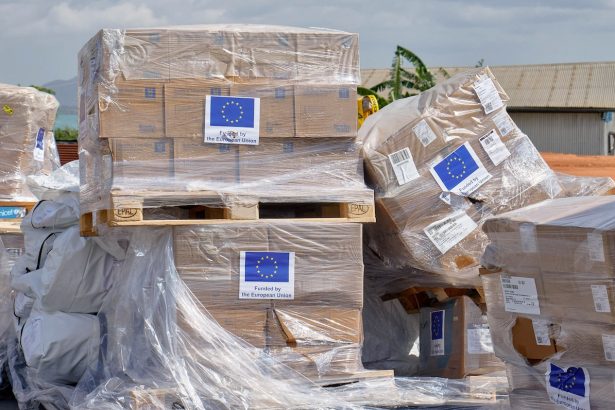
The United Nations peacekeeping mission in Congo, MONUSCO, confirmed it had transported nearly five tonnes of medical supplies into Ituri province on Thursday.
However, humanitarian officials say continued restrictions on flights into Bunia — the provincial capital — are severely disrupting emergency operations.
Medical teams are additionally facing resistance from some local communities where misinformation and denial of the disease have fuelled attacks on health facilities.
The crisis is further complicated by the volatile security situation in eastern Congo, where several armed groups, including Rwanda-backed M23 rebels, continue to operate across parts of North and South Kivu provinces.
As the outbreak worsens, global health authorities fear the combination of delayed funding, travel restrictions, conflict and mistrust could push the region closer to a full-scale humanitarian catastrophe.