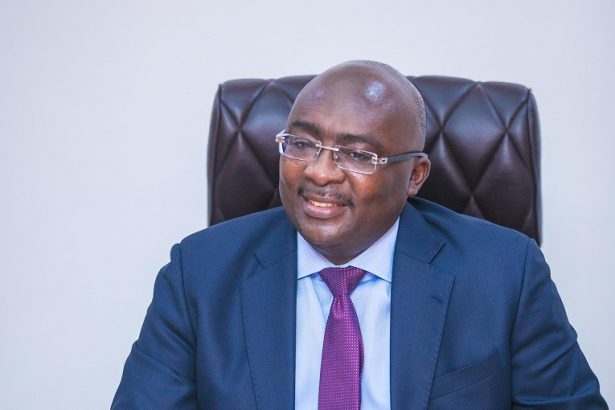
New Patriotic Party (NPP) flagbearer and former Vice President Dr Mahamudu Bawumia has pledged to restore fertiliser subsidies and make agriculture a national security priority if elected President in 2029.
He said his proposed administration would focus on increasing domestic food production, particularly rice, to reduce Ghana’s reliance on imported food.
Dr Bawumia made the pledge during an engagement with farmers at Asutuare and Akuse in the Shai Osudoku constituency, a day after Finance Minister Dr Cassiel Ato Forson presented the 2027 Budget to Parliament.
He said restoring fertiliser subsidies would be among the agricultural policies he intends to include in his manifesto.
“We have to bring back the subsidy of fertiliser for the farmers. And so all these are policies that we can learn and that when I set in motion with my manifesto I will factor all these policies,” he said.

Dr Bawumia said food production would be treated as a national security issue under his proposed government, arguing that Ghana must develop the capacity to feed itself.
“I want to assure you that my government will treat agriculture as a matter of national security for Ghana. Because when it comes to food we should depend on ourselves. Because if you are depending on other people to eat then you are in trouble,” he said.
He urged the government to give greater attention to rice production and the agricultural sector, saying the country needed to strengthen its domestic food supply.
The former Vice President also promised significant improvements in farmers’ livelihoods if he wins the 2029 presidential election.
“If I am given the nod as president in 2029 there will be a drastic change in your livelihood,” he told the farmers.
His comments come as the 2027 Budget makes provision for GH¢2.9 billion for the Ministry of Food and Agriculture, including GH¢515 million for fertiliser and certified seeds for grains, vegetables, roots and tubers.
The government has also announced plans to invest US$3 billion in commercial agriculture under its four-year New Economy Programme, with rice among eight priority agricultural value chains.