The Ghana Ports and Harbours Authority (GPHA) has rejected claims that congestion at the Tema Port is solely responsible for the recent increase in cement prices.
The Authority said the cost of bringing clinker and cement through the port is influenced by several operational and commercial factors and cannot be attributed to congestion alone.
The clarification follows a statement by the Chamber of Cement Manufacturers, Ghana (COCMAG), which linked the recent rise in cement prices to congestion at the Tema Port.
GPHA said its allocation of berths is influenced by safety and hygiene requirements, particularly because food cargo such as rice and wheat must be handled separately from cement and clinker.
The Authority explained that Terminals 1 and 2 are multipurpose facilities that handle food products, steel and other general cargo, while Berths 3, 13 and 14 have been designated as common-user berths for cement and clinker.
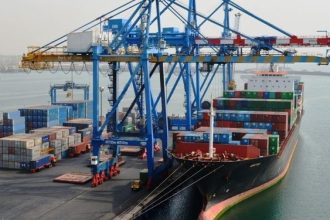
It said those berths are shared by several cement companies and therefore cannot be allocated exclusively to a single importer.
GPHA also pointed to recent dredging works at the port, saying the cement industry stands to benefit from improved vessel access.
According to the Authority, Berth 13 now has depths of up to 14 metres, while Berth 14 can accommodate vessels with drafts of up to 12 metres. The improved depths, it said, could allow cement companies to receive larger vessels and benefit from economies of scale.
GPHA said cement manufacturers were informed ahead of the dredging project about its duration and the need to plan vessel arrivals and berthing schedules accordingly.
It further noted that cement and clinker can also be handled at the Port of Takoradi, giving manufacturers another option within Ghana’s maritime logistics network.
The Authority said companies should therefore consider a combination of factors, including vessel size, port selection, discharge arrangements and inland transportation, when planning their operations.
GPHA identified cargo evacuation as another major factor affecting the time vessels spend at the port.
It said a vessel carrying about 40,000 tonnes of clinker could depend on a limited number of trucks to move the cargo to factories outside the port.
Where trucks are insufficient or delayed by traffic, the discharge process slows down and vessels can occupy berths for between seven and 10 days.
According to GPHA, prolonged berth occupancy reduces the availability of berths for other vessels and adds pressure to port operations.
The Authority also disclosed that it is modernising the handling of cement and clinker at the Tema Port.
It said it is working towards more efficient cargo-handling systems that will reduce reliance on traditional grabs and hoppers.
GPHA has urged cement companies to invest in and adopt the new technology as it is introduced, saying improved handling systems should increase discharge rates, shorten vessel turnaround times and optimise berth utilisation.
The Authority said improving port efficiency requires cooperation from all stakeholders, including proper vessel planning, sufficient trucking capacity, efficient discharge operations and timely evacuation of cargo.
GPHA maintained that the factors influencing cement prices extend beyond port congestion and urged stakeholders to consider the entire logistics and supply chain before attributing price increases to delays at the port.
The Authority said it remains committed to working with cement manufacturers and other stakeholders to improve berth utilisation, cargo evacuation and the overall efficiency of Ghana’s ports.