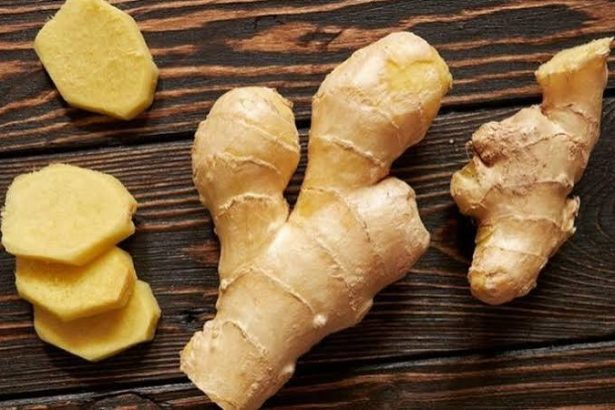
Ginger prices have surged by more than 100 per cent over the past year, emerging as the fastest-rising consumer item in June 2026, even as several major food staples recorded significant price reductions, according to the latest inflation data.
Figures from the Ghana Statistical Service’s Consumer Price Index (CPI) report show ginger recorded an annual inflation rate of 102.5%, followed by shrimps at 90.8% and mangoes at 87.2%, reflecting sharp increases in selected food commodities.
Other items that recorded notable price hikes include bananas (47.8%), avocado pears (43.8%) and fresh coconuts (39.3%), contributing to ongoing variations in household food costs.
The report identified ginger as one of the key contributors to headline inflation, accounting for 7.0%, while transport fares, particularly buses and “trotro”, remained the largest driver at 10.5%. Rent and secondary school fees followed at 8.4% and 7.2% respectively.
However, several staple foods recorded substantial price declines over the same period. Kontomire (alefu) fell by 38.0%, followed by garden eggs (33.1%), maize (32.1%), millet (23.0%), pawpaw (22.4%) and beans (21.3%).

Although food inflation increased marginally to 3.9% in June from 3.3% in May, the Statistical Service indicated that food contributed 31.5% of headline inflation, compared with 68.5% from non-food items.
Overall, Ghana’s year-on-year inflation rose to 5.3% in June, up from 3.7% in May, even as monthly inflation slowed to 0.2%, suggesting a moderation in price pressures during the period.
The Statistical Service summarised the data by noting that food inflation is rising but not the main driver of headline inflation, with ginger topping gains while kontomire recorded the steepest decline.