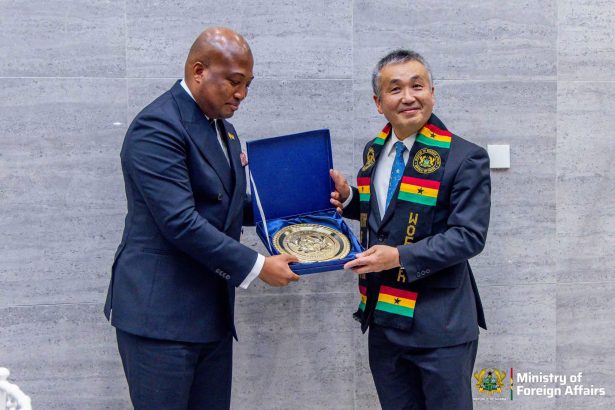
Ghana and Japan are exploring deeper cooperation in space science and technology as Ghana seeks to strengthen its capacity to use satellite technology and space data for national development.
The renewed discussions formed part of a visit to Ghana by Japanese astronaut and Asia Pacific Chief Technology Officer of Axiom Space, Dr Koichi Wakata, who is in the country from September 15 to 19, 2026.
Foreign Affairs Minister Samuel Okudzeto Ablakwa hosted Dr Wakata at a dinner at the Ministry of Foreign Affairs in Accra on Tuesday, September 15, following a courtesy call on the Minister.
Mr Ablakwa said Ghana was ready to coordinate international partnerships that support its national and strategic objectives, stressing that space exploration required collaboration among countries, scientists, engineers and institutions.
He said Ghana would continue strengthening its relationship with Japan to create opportunities for cooperation in space science, technology and innovation.
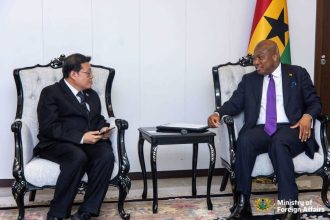
The Japanese Ambassador to Ghana, Hiroshi Yoshimoto, said Dr Wakata’s visit provided an opportunity for the two countries to build on Japan’s previous support for Ghana’s space programme.
Japan supported the launch of Ghana’s first satellite, and the Ambassador said the two countries could now explore areas where their respective strengths could complement each other.
He expressed Japan’s readiness to deepen collaboration with Ghana in science, technology and space-related fields.
The Chief Director of the Ministry of Foreign Affairs, Ambassador Khadija Iddrisu, said space technology was already contributing to critical areas of national development, including communications, agriculture, environmental monitoring, disaster management and national security.
She said Ghana needed to take practical steps to build the capacity required to fully harness satellite technologies and data.
The University of Ghana is also expected to play a role in strengthening the cooperation. Its Vice-Chancellor, Professor Nana Aba Appiah Amfo, said the university was ready to expand its existing partnership with Japan in research, science, technology and capacity development.
She cited the Noguchi Memorial Institute for Medical Research and other initiatives as examples of Japan’s contribution to Ghana’s academic and research development.
Dr Wakata, who has spent a cumulative 504 days in space across five space flights, encouraged young Ghanaians to pursue careers in science, technology and engineering.
He said international cooperation and supportive frameworks were critical to turning scientific ideas into practical achievements.
Dr Wakata also highlighted sustainability in space, including resource recycling aboard the International Space Station and the growing challenge of space debris.
He is expected to engage Ghanaian students during his visit, including students of Presbyterian Boys’ Secondary School (PRESEC), Legon, winners of the 2026 National Science and Maths Quiz.
Ghana and Japan will mark 70 years of formal diplomatic relations in 2027, with both sides seeking to use the longstanding relationship to open new opportunities in science, research, technology and innovation.