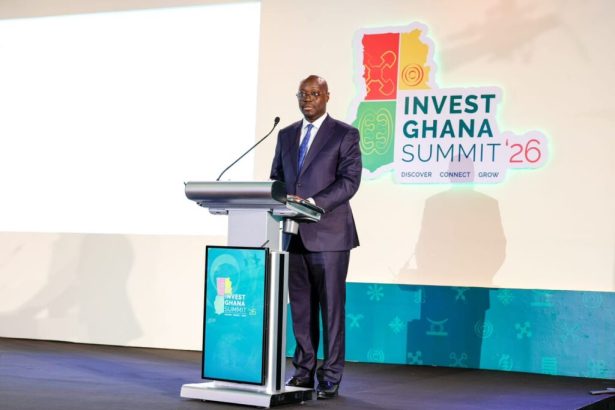
Finance Minister Dr Cassiel Ato Forson has outlined investment opportunities across agriculture, energy, manufacturing and critical minerals, urging businesses to position themselves to benefit from government’s planned US$10 billion public investment programme over four years.
The programme, which forms part of President John Dramani Mahama’s New Economy agenda, is expected to support production, business expansion and job creation, with more than US$2.5 billion earmarked for 2027.
Speaking at the Invest Ghana Summit in Accra on November 16, Dr Forson said government investments in power, irrigation and transport infrastructure would create conditions for businesses to expand and produce more goods locally.
“Ghana is ready to produce more at home and sell more to the world,” he said, inviting local and foreign investors to identify projects that could serve the domestic market and the wider African region.
In agriculture, he identified opportunities in irrigation, storage, rice milling and packaging, particularly around planned rice hubs. He said government was proposing that public institutions procure Ghana-grown rice and other staples, creating a potential market for local processors able to meet quality and supply requirements.
More Read
The energy sector also presents opportunities, he said, with companies needed to develop solar and battery storage systems, supply equipment and maintain industrial power infrastructure.
“A second shift means more output and more jobs,” Dr Forson said, arguing that reliable electricity would enable factories to make better use of existing machinery and increase production.
He also pointed to plans for a critical minerals processing enclave in the Western Region, where investors could establish facilities to process Ghanaian manganese and bauxite into higher-value products.
Other opportunities include garment and pharmaceutical manufacturing, tourism, creative arts and technology. He said local manufacturers could supply uniforms, protective clothing and medicines, while technology firms could support cross-border payments, logistics and access to customers.
Dr Forson urged investors to factor in the African Continental Free Trade Area (AfCFTA) when planning production capacity in Ghana.
“Your first customer may be in Ghana. Your next market could be anywhere on the continent,” he said.
He said macroeconomic stability and access to affordable finance would underpin the programme, adding that fiscal discipline was necessary to sustain investor confidence and support long-term business decisions.
“Fiscal discipline will protect the stability that allows you to price a contract, finance a factory and invest for the long term,” he said.
The Minister encouraged Ghanaian businesses to pursue expansion plans and called on international investors to partner with local firms. He also urged banks and development finance institutions to work with businesses to identify financing for viable projects.
“I would like you to leave Accra with a partner you can call, a project you can examine and a meeting in the diary,” he said.
“Invest in Ghana, produce here and grow with us.”