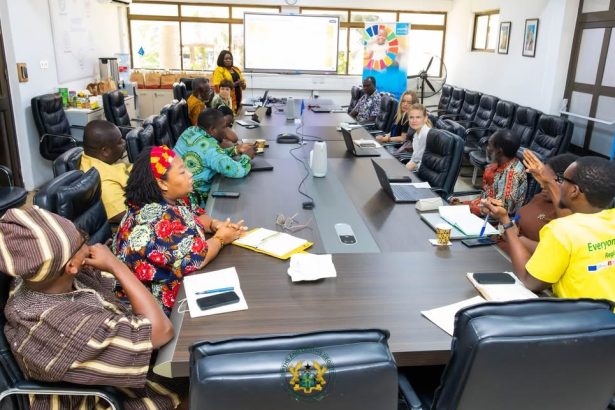
UNICEF Ghana and the Births and Deaths Registry have begun reviewing findings from an evaluation of Ghana’s birth registration system, with a focus on recommendations to improve the registration process and ensure more children receive legal identity.
The review took place at an Evaluation Reference Group meeting at the UNICEF Conference Hall, where officials examined findings from the 2026 Formative Evaluation of Birth Registration ahead of a planned validation exercise.
The evaluation forms part of a broader assessment of Ghana’s Civil Registration and Vital Statistics (CRVS) system, which maintains official records of births and other vital events.
Officials from the Registry, including its Administrator, Head of Records and representatives of the Project and Public Relations offices, participated in discussions on the report and provided technical input on its findings and recommendations.
The meeting also brought together representatives from the Department of Social Welfare, Ghana Education Service, the Embassy of Denmark, the Human Trafficking Department of the Ministry of Gender, Children and Social Protection, and the Office of the Head of Local Government Service.
More Read

Birth registration establishes a child’s legal identity and provides an official record that supports access to rights and services. Ghana’s commitment to Sustainable Development Goal 16.9 requires countries to provide legal identity for all, including birth registration, by 2030.
The evaluation is expected to inform efforts to strengthen the country’s registration system and improve the recording of every child born in Ghana.