— Despite projecting GH¢389.2 billion expenditure, finance minister promises better revenue collection
The government of President John Dramani Mahama has announced what amounts to a tax holiday for Ghanaians in 2027, declaring that no new taxes will be introduced in the coming financial year, despite projecting total expenditure of GH¢389.2 billion to finance its ambitious economic transformation agenda.
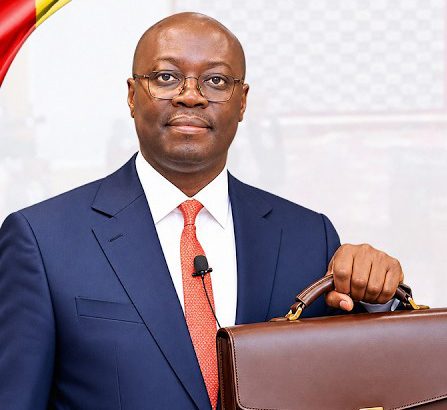
Finance Minister, Dr Cassiel Ato Forson, who announced the decision while presenting the 2027 Budget Statement and Economic Policy to Parliament yesterday, Thursday, November 12, 2026, said the government would rather focus on improving revenue mobilization, plugging leakages, and strengthening tax administration than impose additional financial burdens on households and businesses.
The announcement comes at a time when the government is seeking to balance its ambitious expenditure commitments with efforts to ease the cost of living, stimulate private-sector investment, create employment opportunities, and consolidate the country’s economic recovery.
Under the 2027 fiscal framework, the government projects total revenue and grants of GH¢323.4 billion against expenditure of GH¢389.2 billion, resulting in an overall cash deficit of GH¢65.8 billion.
More Read
The projected expenditure represents 21.6 per cent of Gross Domestic Product (GDP), while expected revenue and grants amount to 17.9 per cent of GDP.
Despite the financing gap, Dr Forson insisted that the government would not resort to introducing new taxes to bridge the deficit.
Instead, he said, the administration would strengthen existing revenue-collection mechanisms, address inefficiencies, and ensure that individuals and businesses pay only what is lawfully due.
“Mr Speaker, since 2025, we have acted to give families breathing space and businesses room to grow. We abolished the E-Levy, the withholding tax on betting and lottery winnings, the COVID-19 Levy, the Emissions (Nwusie) Levy and VAT on motor vehicle insurance,” he told Parliament.
“This 2027 Budget will not introduce any new tax. Our task is to collect what is lawfully due, close the leakages and make the revenue system work better. Taxpayers deserve clear rules, fair treatment and timely decisions.”
The Finance Minister explained that the decision formed part of the government’s broader strategy to create a more predictable and business-friendly tax environment while ensuring fiscal discipline.
According to him, the administration has, since assuming office in January 2025, implemented several measures to reduce the tax burden on Ghanaians, particularly households, small businesses and entrepreneurs.
These include the abolition of the Electronic Transfer Levy, popularly known as the E-Levy, the withholding tax on betting and lottery winnings, the COVID-19 Levy, the Emissions Levy and Value Added Tax on motor vehicle insurance.
The government maintains that removing these taxes has provided financial relief to individuals and businesses while helping to stimulate economic activity.
However, the Finance Minister made it clear that the absence of new taxes would not mean abandoning the government’s revenue targets.
Rather, the Ghana Revenue Authority and other revenue-collecting institutions would be expected to improve compliance, eliminate leakages and strengthen enforcement of existing tax laws.
The announcement is likely to be welcomed by businesses and consumers who have repeatedly complained about the cumulative effects of taxation, high operating costs and pressure on household incomes.
Beyond the decision not to introduce new taxes, the 2027 Budget outlines an ambitious expenditure programme intended to reposition Ghana’s economy towards industrialisation, infrastructure development, job creation and improved public services.
Dr Forson disclosed that direct capital expenditure has been projected at GH¢100.4 billion, representing 5.6 per cent of GDP.
When capital-related transfers to other government units are included, the figure rises to GH¢120.5 billion, making investment spending a major component of the government’s fiscal programme.
Of the GH¢100.4 billion earmarked for direct capital expenditure, GH¢88.4 billion will finance domestically funded projects, while GH¢12 billion will support externally financed projects.
The largest single expenditure item is compensation of employees, estimated at GH¢104.1 billion.
This comprises GH¢92.6 billion for wages and salaries and GH¢11.5 billion for social contributions, pensions and gratuities.
Interest payments on public debt are projected at GH¢61 billion, made up of GH¢51.5 billion in domestic interest obligations and GH¢9.5 billion in external interest payments.
Statutory and earmarked transfers are expected to consume GH¢76.5 billion.
The government has also allocated GH¢17.2 billion for other expenditure, including energy sector shortfalls and transfers associated with the Ghana Gold Board (GoldBod).
An additional GH¢13.9 billion has been set aside to clear legacy arrears, including GH¢4.3 billion owed to Independent Power Producers (IPPs).
Goods and services will receive GH¢13.7 billion, while social benefits have been allocated GH¢2.3 billion.
The Finance Minister said the expenditure framework reflected the government’s determination to shift public spending towards productive investments capable of generating long-term economic returns.
Education and healthcare feature prominently in the government’s spending priorities for 2027.
The education sector has been allocated GH¢48 billion, making it one of the largest beneficiaries of the budget.
The amount includes GH¢11.2 billion for the Ghana Education Trust Fund (GETFund) and GH¢1.37 billion towards eliminating the double-track system in senior high schools.
The health sector follows with GH¢40.3 billion, including GH¢10.2 billion for the National Health Insurance Scheme (NHIS).
A further GH¢6.8 billion has been earmarked to commence construction of 11 new hospitals across the country.
The government believes these investments will help improve access to healthcare, strengthen educational infrastructure and enhance human capital development.
Social protection programmes have also received attention, with the sector responsible for Gender and Social Protection allocated GH¢3.4 billion.
Of this amount, GH¢2.1 billion has been earmarked for the Ghana School Feeding Programme, while GH¢1.1 billion will support the Livelihood Empowerment Against Poverty (LEAP) programme.
These interventions are intended to protect vulnerable households and improve access to basic social services.
A major highlight of the 2027 Budget is the allocation of GH¢30 billion to the government’s flagship New Economy Programme.
The initiative forms part of President Mahama’s broader agenda to transform Ghana’s economic structure by promoting industrial production, value addition, exports and employment creation.
Another GH¢29.8 billion has been earmarked for the Big Push infrastructure programme, including GH¢28 billion from the central government budget.
The Big Push is expected to accelerate the construction and rehabilitation of critical infrastructure, particularly roads, to support economic activity and improve connectivity across the country.
The Roads and Highways sector has separately been allocated GH¢11.3 billion.
The Energy and Green Transition sector will receive GH¢3.1 billion, alongside a separate GH¢13 billion provision to address energy sector payment shortfalls.
Agriculture has been allocated GH¢2.9 billion, while the Works, Housing and Water Resources sector will receive GH¢2.5 billion.
The government is also projecting substantial expenditure on security, decentralisation and youth development.
The Local Governance sector has been allocated GH¢17.6 billion, including GH¢10.8 billion for the District Assemblies Common Fund.
The Interior sector will receive GH¢15.5 billion, while Defence has been allocated GH¢10.1 billion.
Youth Development has been earmarked GH¢3.5 billion.
According to the Finance Minister, these allocations are intended to support economic transformation while strengthening public institutions and improving service delivery.
Meanwhile, Dr Forson has announced that the much-anticipated Women’s Development Bank will commence operations in early 2027, following the successful provision of its initial capital.
The bank, a major campaign promise of the governing National Democratic Congress (NDC), is intended to provide affordable financing to women entrepreneurs, traders and businesses owned or operated by women.
Presenting the budget, the Finance Minister confirmed that the government had completed the capitalisation arrangements necessary to establish the institution.
“I am happy to report that we have successfully capitalised the Women’s Development Bank, and the bank will be operational beginning early next year,” he announced.
The latest timeline represents a shift from an earlier indication that the institution would commence operations before the end of 2026.
In June this year, Dr Forson disclosed that the government had deposited GH¢400 million into an escrow account at the Bank of Ghana as the initial capitalization fund for the proposed bank.
The funds were intended to facilitate the regulatory assessment and licensing processes required before the institution could begin operations.
Vice President Professor Naana Jane Opoku-Agyemang has also disclosed that the Women’s Development Bank Committee has completed its assignment and submitted an application for a banking licence to the Bank of Ghana.
The proposed institution is expected to improve access to credit for women, particularly those operating small and medium-sized enterprises who frequently encounter difficulties obtaining affordable financing from conventional financial institutions.
However, the government’s assurances and ambitious expenditure projections have failed to impress the Minority in Parliament, which has accused the Mahama administration of relying on slogans and favourable economic statistics without delivering tangible improvements in the lives of ordinary Ghanaians.
Minority Leader, Alexander Afenyo-Markin, dismissed the 2027 Budget as another exercise in political sloganeering, insisting that the government’s claims of economic stability had not translated into meaningful employment opportunities.
Speaking to journalists shortly after the budget presentation, the Effutu Member of Parliament accused the NDC administration of failing to address unemployment and the rising cost of living.
“Let Ghanaians know that this NDC government is a sloganeering government. What they came to do was to subject us to another round of slogans and no jobs,” he declared.
“You cannot rebrand unemployment. They cannot slogan away the cost of living.”
Mr Afenyo-Markin argued that Ghanaians were more interested in jobs and improvements in their living conditions than government announcements about economic indicators and transformation programmes.
According to him, the administration had failed to provide convincing evidence of the number of jobs created since assuming office.
“They haven’t been able to tell us how many jobs they have created. Ghanaians want jobs, jobs, jobs. We are not interested in data. We are not interested in a paper economy. We are not interested in what they call a New Economy,” he stated.
The Minority Leader also questioned the government’s ability to meet outstanding financial obligations to public sector workers, even as it announced plans to honour payments to bondholders affected by the Domestic Debt Exchange Programme (DDEP).
He acknowledged the announcement concerning DDEP bondholders as a positive development but challenged the government to demonstrate similar commitment to other outstanding obligations.
“They claim that they have money to pay domestic debt exchange programme bondholders, those whose savings were postponed and whose payments were deferred. They say they have money to pay. That is good news. We welcome that,” he said.
“But the question is: where is the money to pay JUSAG, the money to pay teachers, the money to pay nurses, and the money to recruit?”
He was referring to outstanding financial commitments involving the Judicial Service Staff Association of Ghana (JUSAG), teachers, nurses and prospective recruits into the public sector.
Mr Afenyo-Markin further accused the government of failing to fulfil major campaign promises, including the operationalization of the Women’s Development Bank and the implementation of the 24-hour economy initiative.
He maintained that the government’s economic policies should be judged by their practical impact on employment, household incomes and business activity rather than the presentation of favourable economic statistics.
The sharp differences between the government and the Minority underscore the political and economic challenges surrounding the implementation of the 2027 Budget.
While the Mahama administration is presenting its decision not to introduce new taxes as evidence of its commitment to reducing the financial burden on Ghanaians, the opposition insists that the real test will be whether the government can create jobs, meet its financial obligations and improve living standards.
The projected GH¢65.8 billion fiscal deficit also means that the government will have to manage its financing requirements carefully while pursuing its ambitious development programmes.
With revenue and grants projected at GH¢323.4 billion, the government’s ability to deliver its spending commitments without introducing additional taxes will depend significantly on improved revenue mobilisation, expenditure discipline and the successful implementation of its economic policies.
For households and businesses, the immediate assurance is that no new taxes are planned for 2027.
However, the broader challenge for the government will be to translate that promise, alongside its GH¢389.2 billion expenditure programme, into sustainable economic growth, employment opportunities, and tangible improvements in the lives of Ghanaians.