The Minority in Parliament has questioned the government’s GH¢110 million allocation to the 24-Hour Economy programme in the 2026 Budget, demanding an account of its implementation before the introduction of a new economic agenda.
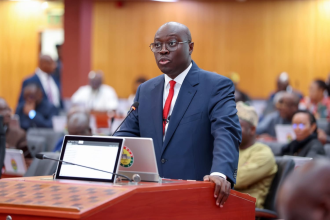
Former Finance Minister and Karaga MP, Dr Mohammed Amin Adam, said the government must explain how much funding it had secured, the number of jobs created and the investments mobilised under the programme.
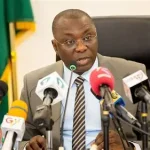
Addressing the media ahead of Thursday’s, November 12, presentation of the 2027 Budget, he argued that the government should demonstrate progress on its existing commitments before seeking public support for another economic transformation plan.
Finance Minister Dr Cassiel Ato Forson is expected to present the 2027 Budget Statement and Economic Policy under the theme ‘New Economy’, outlining a four-year economic transformation programme.
But Dr Amin said the government’s record on the 24-Hour Economy raised questions about its ability to finance and implement the proposed agenda.
More Read
The initiative, launched in July 2025, had a projected investment target of US$4 billion, alongside a government commitment to provide between US$300 million and US$400 million in seed capital.
It was also expected to generate 1.7 million jobs by the end of 2028 through the ‘One Job, Three Shifts, Three Workers’ model.
Dr Amin, however, said the government had yet to raise the projected US$4 billion, while the 2026 Budget provided GH¢110 million for the programme.
He further disputed the use of joint development agreements reportedly valued at US$5.5 billion as evidence of funds mobilised for the initiative.
He maintained that the value of agreements signed could not automatically be treated as financing already secured and disbursed for project execution.
The Minority MP also raised concerns about changes to the 24-Hour Economy markets, which have been redesignated as district economy markets.
He said the original completion target of 2026 had been shifted, with implementation now divided into two phases and completion projected for 2028.
Dr Amin said the government needed to account for the progress of its existing programmes rather than introduce new targets without demonstrating how previous commitments were being fulfilled.
“As the 2027 Budget approaches, the central issue is therefore not whether Ghana needs a new economy. We certainly do. The issue is whether the government has demonstrated the capacity, financing, and policy discipline to deliver one,” he said.
He added that the public deserved a credible economic plan supported by realistic financing, measurable outcomes and accountability.
“Therefore, before announcing a new economy, the government must first account for the promises of the old one,” he said.