The Executive Chairperson of the Africa Governance Centre, Benedicta Lasi, has called on African legislatures to rethink conventional approaches to lawmaking to address the challenges posed by the continent’s rapidly growing population.
She said Africa’s changing demographic profile required forward-looking laws and stronger institutions capable of responding to rising demands for jobs, education, housing, infrastructure and public services.
Speaking at the opening of the Strategic Legislative Governance Forum at the East African Legislative Assembly (EALA) Chambers in Arusha, Tanzania, Ms. Lasi urged parliamentarians to ensure that laws passed today remained relevant to the needs of future generations.
She noted that Africa’s population had increased from approximately 227 million in 1950 to an estimated 1.5 billion today, with projections indicating it could reach 2.5 billion by 2050.
According to her, the figures underscored the urgency for governments to prepare public institutions and economic systems for a much larger, younger and increasingly interconnected population.
She challenged legislators to examine whether existing laws and regulatory frameworks were suited to Africa’s emerging demographic and economic realities.
Ms. Lasi linked the population challenge to the structure of African economies, particularly the prevalence of informal employment, and called for policies that would enable businesses to expand, create productive jobs and contribute to sustainable economic growth.
She stressed that formalising businesses required more than legislation, noting the importance of reliable electricity, access to finance, markets and predictable regulatory systems to enable enterprises to grow.
The Africa Governance Centre chairperson also rejected suggestions that Africans were indifferent to democratic accountability, saying citizens continued to support democratic choice and oppose authoritarian governance.
She said the task before African legislatures was to strengthen democratic institutions to deliver tangible improvements in employment, public services and economic opportunities.
Ms. Lasi cited improvements in border procedures at the Holili–Taveta crossing and along regional freight corridors in East Africa as examples of how coordinated policy and administrative reforms could reduce trade costs and improve efficiency.
She said such gains demonstrated the importance of cooperation among governments and public agencies in removing barriers to regional commerce.
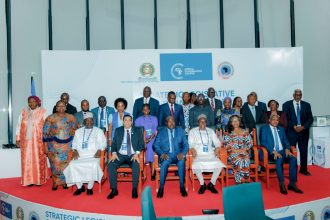
The forum was convened by the Africa Governance Centre in partnership with the East African Legislative Assembly and the Conference of Speakers and Presidents of African Legislatures (CoSPAL) to examine the role of legislative institutions in Africa’s economic transformation.
Discussions focused on the links between long-term national development planning and parliament’s responsibilities for budgeting, investment, regional integration and accountability.
The meeting also saw the launch of the Strategic Legislative Governance Platform by the President of the Pan-African Parliament, Dr Fateh Boutbig.
The platform is expected to promote sustained legislative research, comparative learning and cooperation among African legislatures in support of economic transformation.
Ms. Lasi urged parliamentarians to consider the long-term consequences of their decisions, stressing that laws governing land use, business registration, education, municipal finance and cross-border trade would play a critical role in determining how effectively African countries respond to population growth.
She said the effectiveness of legislatures would ultimately be measured not merely by the laws they enacted, but by their ability to translate democratic accountability into practical outcomes for citizens.