The long-awaited European Union Film Festival Ghana has returned after a five-year break, with this year’s edition officially launched in Accra under the theme, “Peace, Tolerance & Inclusivity.”
The festival, which runs from October 5 to 11, 2026, features 21 films showcasing cinematic works that seek to deepen cultural understanding and strengthen connections between Europe and Ghana.
Screenings and related activities are being held at major cultural venues in Accra, including the Goethe-Institut, Alliance Française and the Austrian Embassy.
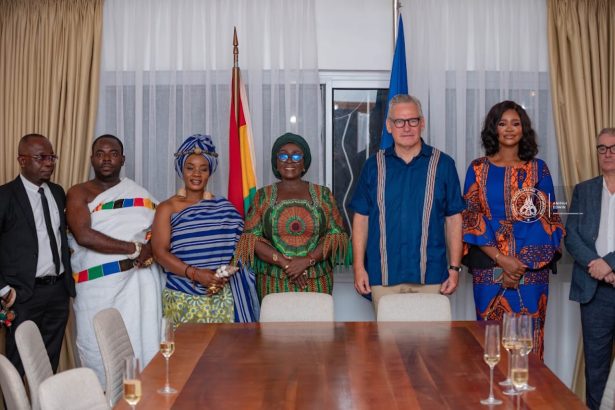
The launch brought together members of the diplomatic corps, filmmakers, creative industry practitioners and stakeholders in the tourism and cultural sectors, including the EU Ambassador to Ghana, Rune Skinnebach, and the Chief Executive Officer of the National Film Authority, Kafui Danku.
Launching the festival, the Minister for Tourism, Culture and Creative Arts, Abla Dzifa Gomashie, said film was a powerful medium for telling stories, preserving memories, shaping identities and connecting people across cultures and borders.
She said Ghana’s culture and creative industries were increasingly being recognised as important contributors to national development through employment, entrepreneurship, tourism and international engagement.
“Our culture is one of our greatest national assets,” she said, adding that creative industries provided opportunities, particularly for young people, to develop their talents and participate meaningfully in the economy.
According to Hon. Gomashie, partnerships between Ghana and other countries, as well as between creative communities and international partners, were essential to creating an environment in which talent and opportunities could flourish.
She welcomed the deepening cultural and creative cooperation between Ghana and the European Union, saying it offered opportunities for co-productions, capacity building, knowledge exchange, technology transfer, cultural dialogue and greater access to international markets for Ghanaian creative works.
Hon. Gomashie also highlighted the revised cultural policy of Ghana and the support provided by the European Union through the Sankofa II project towards its national sensitisation and dissemination.
She encouraged Ghanaian filmmakers and creators to tell Ghanaian stories boldly and authentically while connecting with audiences in the diaspora, across Africa and around the world.
Hon. Gomashie said government would continue engaging practitioners and stakeholders to identify barriers to the growth of the creative sector and explore practical interventions to unlock opportunities.
The EU Ambassador to Ghana, His Excellency Rune Skinnebach, said cinema had a universal power that allowed audiences to see the world through another person’s experience and discover commonalities despite cultural differences.
He said the festival’s focus on peace, tolerance and inclusivity reflected values that were important to Europe, Ghana and the wider world.
Mr. Skinnebach said films could give a voice to people who were not normally heard, challenge assumptions and bring communities together.
He said the European Union was proud to support the festival because culture was not a luxury but a vehicle for bringing communities together, supporting livelihoods and giving young people the freedom to imagine and create their future.
He said EU initiatives, including Sankofa II and Africa-Europe Partnerships for Culture, were supporting Ghanaian artists and creative professionals, including those working in cinema and animation, while creating opportunities for international collaboration and exposure.
The Ambassador said the festival would go beyond film screenings to include engagements with filmmakers, discussions on Ghanaian-European creative collaborations, international markets and funding, filmmaking skills development and networking.
The Chief Executive Officer of the National Film Authority, Kafui Danku, said film had repeatedly proven to be a powerful language through which people could share their experiences.
She said the National Film Authority is working to build a film industry that is creative, sustainable, accessible and commercially viable.
Ms. Danku identified financing as one of the major constraints to the production of quality films and said the establishment of the Film Development Fund was intended to provide dedicated financial support to filmmakers.
She disclosed that more than 100 applications had so far been received from film businesses across the country under the first call for applications, with applicants requesting a combined GH¢95 million.
She said the response demonstrated the level of demand for funding within Ghana’s film industry.
Ms. Danku also announced the development of CinemaTrain, an initiative designed to take cinema beyond traditional cinema spaces and bring film experiences closer to communities across Ghana.
She said the initiative was intended to ensure that the absence of conventional cinemas or geographical location did not determine whether Ghanaians could experience films on the big screen.
According to her, the Film Development Fund and CinemaTrain would address both ends of the film value chain by helping filmmakers produce stories and creating avenues for audiences to watch them.
She further recommended that future editions of the EU Film Festival be hosted on the CinemaTrain platform to make the festival more accessible to communities across the country.
The EU Film Festival Ghana 2026 is expected to provide a platform for cultural exchange while creating opportunities for filmmakers, creative professionals and audiences from Ghana and Europe to connect through cinema.