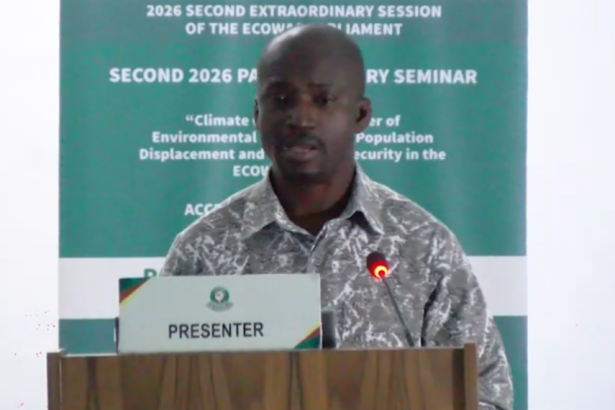
Ghana will need an estimated $22.6 billion by 2030 to implement its climate action plans and strengthen the country’s resilience to the growing impacts of climate change, the Environmental Protection Authority (EPA) has disclosed.
Senior Programme Officer at the EPA’s Climate Change and Ozone Directorate, Dr Derek Sarfo-Yiadom, said the funding requirement emerged from assessments of the country’s climate actions and vulnerabilities.
He disclosed this during a presentation at the 2026 Second Extraordinary Session of the Economic Community of West African States (ECOWAS) Parliament in Accra, where parliamentarians and stakeholders discussed the effects of climate change on communities and livelihoods across West Africa.
Dr Sarfo-Yiadom said Ghana’s climate assessments must go beyond documenting the effects of climate change to identify the people and communities most exposed, the barriers preventing recovery and the gaps undermining effective responses.
“When we put our climate reports together, we came out that we needed $22.6 billion to accomplish our climate actions by the year 2030,” he said.
He said effective climate responses must also identify the institutions responsible for implementation, the budgets available and measurable outcomes that can be assessed.
Dr Sarfo-Yiadom identified early warning systems, improved drainage and climate-resilient infrastructure as some of the interventions needed to protect communities from climate-related risks.
He also pointed to rural livelihoods as a key area requiring attention, particularly through climate services, crop diversification and improved soil and water management.
The EPA official said these measures would be critical to strengthening the ability of vulnerable communities to withstand and recover from climate-related impacts.