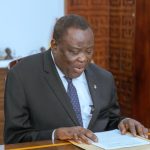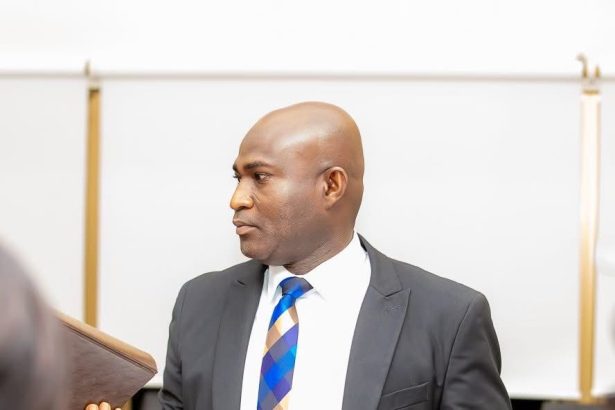
Economist and academic, Dr.Sa-ad Iddrisu, has urged Ghanaian parents not to attach excessive importance to the category or reputation of a senior high school (SHS) their children attend, arguing that determination and individual effort play a greater role in shaping their future.
Dr Iddrisu, made the call in a personal reflection on the ongoing concerns surrounding the Computerised School Selection and Placement System, popularly known as the SHS placement system.
Drawing from his own educational journey, Dr Iddrisu, said he attended E.P. Primary and Junior High School (JHS) in Tamale, neither of which was a Category A institution.
He recalled that his mother, who was a teacher, could not afford to send him to a Category A school such as John Teye in Accra, where some of his cousins attended.
According to him, his aggregate 17 at the JHS level was a disappointment to his mother, who had hoped he would achieve an aggregate six.
More Read
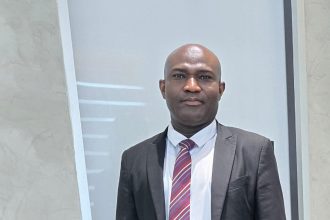
He subsequently gained admission to Ghana Senior High School (Ghanasco), noting that attending a school such as Presbyterian Boys’ Secondary School (Presec) was simply beyond his family’s financial means at the time.
Dr Iddrisu, later proceeded to the University for Development Studies (UDS), Wa Campus, where he was part of the second batch of the Integrated Development Studies (IDS) programme in 2003.
He said UDS was then often regarded as a “rural university”, and some students at institutions such as the University of Ghana, the University of Cape Coast and Kwame Nkrumah University of Science and Technology looked down on students from UDS.
However, he said his subsequent academic and professional achievements demonstrated that the institution or school one attends does not necessarily determine one’s ultimate success.
Today, Dr Iddrisu holds a PhD in Economics from a university in the United States and has extensive international experience in academia and government.
He therefore encouraged parents to be patient when their children do not secure placement in Category A schools.
“The school you attend matters far less than your own determination to make something of your life,” he said.
He noted that students who attend highly regarded secondary schools can still graduate with poor results, while those from less prestigious institutions can excel academically and professionally.
Call for reforms to placement system
While cautioning parents against judging their children’s prospects based solely on the category of their SHS placement, Dr Iddrisu acknowledged that there are legitimate concerns about the current placement system.
He argued that geographical proximity should play a more significant role in determining school placement.
“It makes little sense, for instance, to place a student from Accra in a day school in the north, or a student from Achimota JHS in a day school in Tema,” he said.
He proposed that distance from a student’s home should be a key consideration in the placement process.
He further suggested that students who are placed in schools far from their homes should automatically be given boarding status, irrespective of whether the school is Category A or otherwise.
His daughters’ placement experiences
Dr Iddrisu also used the placement experiences of his own children to reinforce his position.
He disclosed that this year, his daughter, Tipagya, who scored an aggregate 27 in the JHS examination in Tamale, was placed at a secondary school in Agona Swedru.
Rather than discourage her from accepting the placement, he said he encouraged her to go.
He recalled that his other daughter, Kasi, was similarly placed at Krobo Girls in the Eastern Region last year, away from Accra, and he encouraged her to accept the placement as well.
According to Dr Iddrisu, he told both daughters that their primary objective should be to achieve grades that would enable them to progress to university, rather than being overly concerned about the reputation of their secondary school.
He said students from different SHSs would eventually meet at tertiary institutions such as UDS, the University of Ghana, UCC and KNUST, where they would have an opportunity to compete on relatively equal academic grounds.
His message to parents, he said, is therefore to avoid allowing the SHS placement process to become a source of undue anxiety or to determine how they perceive their children’s future prospects.
“Let us stop allowing secondary school placements to determine our children’s futures,” Dr. Iddrisu appealed.