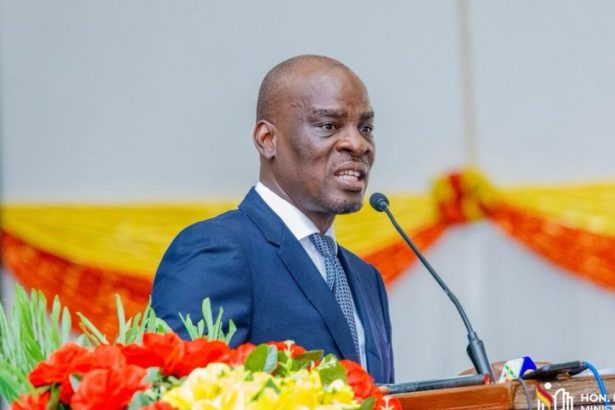
The Minister of Education, Haruna Iddrisu, has rejected claims that the government’s $300 million World Bank loan is being secured to keep the Free Senior High School (Free SHS) programme running, insisting that the facility is aimed at fixing long-standing challenges in the secondary education sector.
The comments come after the Minority in Parliament criticised the loan facility, arguing that it was evidence of the government’s inability to sustain the economy barely months after Ghana exited the International Monetary Fund (IMF) programme.
The Minority had suggested that the government was seeking the World Bank facility to finance the implementation of Free SHS, a claim Mr Iddrisu has dismissed.
Speaking in an interview on Channel One TV on Monday, July 27, the Education Minister said the loan would instead support infrastructure expansion, improve educational quality and help eliminate the double-track system in secondary schools.
He explained that Free SHS had undergone a review and remained a permanent government policy, adding that the World Bank facility was not intended to finance the programme’s operations.
More Read
“We’re borrowing to expand secondary education infrastructure. Don’t forget there was secondary education before Free SHS. We have finished our review; it has come to stay,” he said.
Mr Iddrisu identified infrastructure development, improved feeding arrangements and enhanced learning outcomes as the three major areas receiving government attention within the education sector.
He disclosed that about GH¢3.4 billion has been allocated through the Ghana Education Trust Fund (GETFund) in the 2026 budget to address feeding challenges under the Free SHS programme.
The Minister added that government was also prioritising teacher professionalism, curriculum reforms and greater investment in Science, Technology, Engineering and Mathematics (STEM) education and information technology to improve the quality of graduates.
According to him, the World Bank loan would specifically support efforts to end the double-track system, which he said had affected the amount of teaching and learning time available to students and teachers.
“The World Bank loan is to help us end the double-track system, which didn’t allow for qualitative enhancement in terms of time hours between teachers and students. Within the next 24 months, we should see an end to the double-track system,” he stated.
Mr Iddrisu cited progress at schools including Prempeh College and St Peter’s Senior High School as examples of institutions making strides towards ending the double-track arrangement.