The Inspector-General of Police’s Cyber Vetting and Enforcement Team (CVET) has arrested an Ashanti Region-based woman identified as Mahama Aminat, alias Akosua Serwaa Minat, over allegations of issuing death threats against President John Dramani Mahama in a series of viral social media videos.
This appears to signal a return to a culture of death threats against President Mahama and his family, the most serious of which occurred nearly 11 years ago, when a 36-year-old man, Charles Antwi, was arrested in July 2015 at the Ringway Gospel Centre branch of the Assemblies of God Church in Accra, armed with a pistol, ready to assassinate the then President during a Sunday church service.
The latest development has led to observers lamenting the widespread abuse of smartphones, internet access, and social media has increasingly emboldened some individuals to engage in reckless and unlawful online conduct, often in pursuit of media attention and political relevance.
In a statement shared via Facebook yesterday, Thursday, May 21, 2026, the Police said the suspect appeared in multiple TikTok recordings that have since circulated widely online. In the videos, Aminant allegedly made derogatory remarks about the President and issued threats against his life.
The Police further indicated that the content of the videos went beyond insults, adding that some of the statements were considered inciteful, with alleged calls encouraging others to harm both the President and his wife, Lordina Mahama.
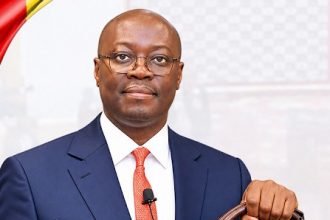
The statement added that, following the emergence and circulation of the videos on social media on Tuesday, May 19, a joint team comprising the IGP’s Cyber Vetting and Enforcement Team (CVET) and the Surveillance Unit of the National Operations Department launched an investigation to trace the source of the recordings.
The suspect was subsequently arrested on Wednesday, May 20, 2026, at Sekyere Zongo in the Sekyere Kumawu District of the Ashanti Region.
Police said she is currently in custody, assisting with investigations, and is expected to be arraigned in the coming days as legal proceedings continue.
Last year, the Ghana Police Service arrested two suspects in connection with a viral TikTok video in which an individual allegedly threatened to kill President Mahama before the end of 2025 and behead the First Lady.
The law enforcement body subsequently launched a full-scale investigation into the threats against the President and his family, and announced on Tuesday, August 12, that the two suspects, identified as Prince Ofori and Yayra Abiwu, were in custody and assisting with ongoing investigations.
Their viral clip, which circulated widely on social media, reportedly contained explicit threats in the Twi language made by a female speaker.
The Police Service confirmed that, while the two individuals had been detained, efforts were underway to identify and apprehend other persons believed to be connected to the video to assist in the investigation. The public was urged to remain calm and allow the Police to conduct investigations without interference.
At the time, just like now, the incident raised serious concerns about the misuse of social media platforms to incite violence and issue threats against high-profile individuals.
The Police stressed their commitment to maintaining law and order and ensuring the safety of all citizens, including the President and his family.
The outcome of the investigation was expected to be made public in the days that followed, but they were granted bail with little heard from the police since.
However, that was not all. In September last year, David Kwodow Prah Afful, also appeared in a viral video threatening to kill the President, Members of Parliament and other government officials if he had access to a gun or cutlass, was sentenced to seven months’ imprisonment.
Afful, popularly known on social media as “Kwame Nkrumah II”, appeared before an Accra Circuit Court where he pleaded guilty to charges of threat of death and offensive conduct conducive to the breach of the peace.
He pleaded with government officials to forgive him for his behaviour.
The Police Service arrested Afful for issuing death threats and inciting violence during a TikTok livestream.
He was arrested at his hideout near Kasoa Market in the Central Region at about 2:20 p.m. on Saturday, September 13.
In the video, Afful allegedly threatened to kill government officials, journalists and civil servants using official green number plates. He was also reported to have threatened to burn marketplaces and encourage others to carry out similar acts.
Following his arrest, the Police stressed, “While it upholds freedom of speech, it will not tolerate statements that incite violence, insecurity, or public disorder.”
Almost 11 years ago, in July 2015, Charles Antwi, then aged 36, was arrested at the Ringway Gospel Centre branch of the Assemblies of God Church in Accra after he was found with a loaded and cocked pistol during a church service and allegedly confessed to repeatedly visiting the church with the intention of assassinating then-President Mahama.
An Accra Circuit Court later found him guilty after he confessed that he intended to kill President Mahama, an offence classified as a second-degree felony. He was subsequently sentenced to 10 years’ imprisonment.
However, he was released from Bureau of National Investigations (BNI) custody on December 30, 2016, after successful legal appeals by human rights lawyer Francis Xavier-Sosu, who overturned Antwi’s initial 10-year sentence.
Charles Antwi had attended the Ringway Gospel Centre, the Assemblies of God church where President Mahama worshipped, when a loaded and cocked pistol was found on him.
Without legal representation, an Accra Circuit Court convicted Antwi and sentenced him to 10 years’ imprisonment for illegal possession of firearms.
The current Member of Parliament for Madina, Francis Xavier-Sosu, who was then a human rights lawyer, challenged the ruling at the High Court, arguing that the sentencing violated due process and failed to take Antwi’s mental health into account.
On August 31, 2015, the Human Rights Court quashed the conviction and ordered that Antwi undergo medical and psychiatric evaluations.
Antwi was later treated for a systematised delusional disorder at the Accra Psychiatric Hospital. Despite medical confirmation of his condition, he remained in BNI custody until further petitions by Lawyer Xavier-Sosu secured his release.
Charles Antwi had carried the gun to the Ringway Gospel Centre branch of the Assemblies of God Church, where President Mahama and his family worshipped.
The incident occurred during a Sunday church service, although the President and First Lady were absent at the time.
According to media reports from the courtroom, Antwi appeared unrepentant and showed no remorse as he was escorted into court by security personnel.
He was charged with possession of firearms without lawful authority contrary to Section 11 of NRCD 9 (1972), but pleaded not guilty. However, he openly admitted in court that he had intended to kill the President.
He further explained that he had travelled to Libya and other countries perceived to be undemocratic and believed Ghana’s democratic governance system had failed to produce meaningful development.
Charles Antwi, who reportedly harboured ambitions of becoming Ghana’s President, said he had conceived plans to topple the presidency during the era of the late Professor John Evans Atta Mills.
He claimed earlier attempts to meet President Mills at the Osu Castle, then the seat of government, had failed.
Following President Mills’ death in July 2012, Antwi said he had hoped to realise his ambition but became frustrated when Mahama assumed office. He subsequently began plotting ways to remove him from power.
For four consecutive Sundays, he reportedly attended the President’s church, waiting for an opportunity to strike. However, his suspicious behaviour on Sunday, July 26, 2015, attracted the attention of security personnel attached to the Chief Justice, who also worshipped at the church.
Investigations later revealed that Antwi had planned to execute the attack with a double-barrelled pistol allegedly acquired from a Burkinabe national in the then Brong Ahafo Region.
Although he had no legal representation, a lawyer acting as a friend of the court pleaded with the judge to order a psychiatric examination for Antwi, but the request was rejected.
Despite pleading not guilty, Antwi was convicted largely on the basis of his own confession and sentenced to 10 years’ imprisonment by the presiding judge, Francis Obiri.