An Opinion Article on Economic Transformation, Collective Investment and the Future of Ghanaian Entrepreneurship – Written by Orison Delali Afflu.
Ghana is a nation blessed with hardworking, enterprising and resilient businesspeople. From the bustling markets of Makola and Kejetia to the spare parts trading centres of Abossey Okai and Suame Magazine, Ghanaians have demonstrated remarkable entrepreneurial ability for generations.
Yet, despite this entrepreneurial strength, a fundamental question remains unanswered: Why have decades of organised trading, transport operations, vehicle imports and commercial activities failed to produce more large-scale, collectively owned Ghanaian business empires?
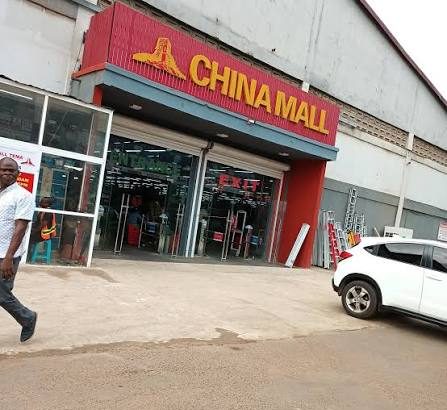
Today, we hear growing concerns about the emergence and expansion of Chinese-operated malls and retail businesses in Ghana. Local traders complain about unfair competition, pricing advantages, market displacement and the increasing influence of foreign businesses in sectors traditionally dominated by Ghanaians.
These concerns deserve attention, particularly where questions of regulatory compliance, fair competition and the enforcement of Ghana’s investment laws arise.

However, beyond the complaints lies a more uncomfortable question that our business associations must confront:
What have we, as Ghanaians, done with the collective economic power we have possessed for decades?
For years, associations such as the Ghana Union of Traders’ Associations (GUTA), the Ghana Private Road Transport Union (GPRTU), spare parts dealers’ associations, vehicle importers’ associations and numerous other trade groups have organised thousands of business operators under their respective umbrellas.
They have successfully mobilised members for meetings, negotiations, demonstrations and advocacy. They have represented members’ interests and provided platforms for collective engagement.
But have they done enough to transform their members from individual traders into collective owners of major businesses?
That is the conversation Ghana must begin to have.
1. The Missing Link: From Collective Advocacy to Collective Economic Power
The traditional role of many Ghanaian trade associations has centred on protecting members against unfavourable government policies, taxation, foreign competition and regulatory challenges.
These are legitimate responsibilities. However, they represent only one dimension of what organised business associations can achieve.
Imagine an association with 10,000 members, each contributing GH₵1,000 monthly towards a professionally managed investment vehicle.
That association could mobilise: GH₵10 million every month and GH₵120 million annually.
In five years, that represents GH₵600 million in gross contributions, even before investment returns, although actual investable capital would depend on operating costs, withdrawals and other obligations.
What could such an association achieve with this financial capacity?
It could establish modern shopping malls, wholesale distribution centres, vehicle assembly operations, logistics companies, transport terminals, warehouses and manufacturing businesses.
Instead, many members continue operating independently, competing against one another in fragmented markets, purchasing goods through multiple intermediaries and struggling with the same challenges year after year.
We have mastered the art of organising ourselves to complain, but we have not sufficiently mastered the art of organising ourselves to own.
This must change.
2. Lessons from Chinese Commercial Enterprises: Think Bigger, Organise Better
The growing presence of Chinese-owned and Chinese-operated commercial facilities in Ghana offers an important lesson about business scale, capital mobilisation, supply chains and strategic coordination.
We must be careful not to assume that every Chinese mall is financed by a consortium of individual Chinese traders. Ownership models differ. Some are funded by individual investors, family businesses, corporate groups or established commercial networks.
Nevertheless, an important feature of successful large-scale commercial enterprises is their ability to coordinate capital, purchasing, logistics, infrastructure and management.
They recognise that competitive advantage often comes not merely from selling products but from controlling the systems that make products available, affordable and profitable.
Ghanaian traders must begin to think in similar terms.
Why should 500 spare parts dealers each struggle to import small consignments when they could jointly establish a large importing and distribution company?
Why should thousands of traders individually rent expensive shops when they could become shareholders in the commercial properties from which they operate?
Why should transport operators continue purchasing vehicles independently when their unions could establish fleet ownership companies, maintenance centres and structured transport services?
The lesson is simple:
The future belongs not only to those who trade, but increasingly to those who own the infrastructure, distribution networks and systems that support trade.
3. GUTA: From Defending Traders to Building Ghanaian Retail Giants
GUTA has an opportunity to become a major catalyst for Ghanaian commercial transformation.
Beyond advocating for favourable trading conditions, it could champion the establishment of Ghanaian-owned retail consortiums.
Imagine a GUTA Investment and Development Company, established as a separate, professionally governed commercial entity in which participating members voluntarily acquire shares.
Such a company could develop large-scale shopping malls in Accra, Kumasi, Takoradi, Tamale and other major commercial centres.
Rather than remaining tenants for life, Ghanaian traders could become shareholders in the properties where they conduct business.
The consortium could also establish centralised importation and procurement systems, negotiate directly with international manufacturers, operate warehouses and create Ghanaian retail brands.
With economies of scale, members could potentially reduce procurement costs, improve their bargaining power and compete more effectively on price.
This is how we begin to move from fragmented trading to organised commercial power.
4. GPRTU: Why Are We Still Operating Transport as a Collection of Individual Vehicles?
Ghana’s commercial transport sector provides another compelling example.
For decades, GPRTU and other transport associations have organised drivers, vehicle owners and transport terminals across the country.
Yet much of the sector remains characterised by individually owned vehicles, fragmented operations, inconsistent service standards and limited technological integration.
Imagine if GPRTU spearheaded a professionally managed national transport investment company.
Instead of relying entirely on individual vehicle ownership, participating members could invest in a collective fleet of modern buses operating scheduled services.
The company could establish integrated ticketing platforms, fleet management systems, maintenance workshops, insurance arrangements and digital payment solutions.
Members could earn returns through share ownership, while drivers and operational staff receive structured compensation.
A collective transport enterprise could also create opportunities for pension contributions, professional training and improved passenger safety.
Why should Ghana’s transport unions remain primarily managers of loading stations when they could become shareholders in major national transport companies?
The opportunity is significant, although success would require sound financial planning, operational discipline and strong corporate governance.
5. Spare Parts Dealers: From Individual Importers to Industrial Investors
Abossey Okai and Suame Magazine are among Ghana’s most recognisable automotive commercial centres.
They represent enormous entrepreneurial experience, technical expertise and commercial networks.
However, much of their potential remains dispersed among individual operators.
Imagine a consortium of spare parts dealers establishing a national automotive parts distribution company.
Such an enterprise could negotiate directly with original equipment manufacturers and certified suppliers, import in bulk, establish quality assurance systems and build regional distribution centres.
Over time, the consortium could invest in local production of selected automotive components, vehicle servicing facilities, remanufacturing operations and technical training centres.
This would help shift the sector from being predominantly an importer and distributor of automotive parts towards becoming a participant in automotive industrial development.
The objective should not simply be to sell more spare parts. It should be to own a greater share of the automotive value chain.
6. Vehicle Importers: Why Not Become Vehicle Assemblers and Fleet Investors?
Ghana’s vehicle importers possess valuable knowledge of international automobile markets, customer demand, financing arrangements and distribution channels.
But what prevents them from pooling resources to establish larger automotive enterprises?
A vehicle importers’ consortium could negotiate bulk purchasing arrangements, develop modern vehicle sales centres, invest in bonded logistics facilities and create structured vehicle financing partnerships.
With sufficient capital, technical partnerships and market demand, such a consortium could eventually explore vehicle assembly, electric vehicle distribution, charging infrastructure and after-sales service networks.
Instead of remaining permanently dependent on importing finished vehicles, Ghanaian businesses could progressively develop greater participation in the automotive industry.
The transition would not happen overnight, but it must begin with a change in ambition.
7. The Street Trading Mentality Must Give Way to Institutional Entrepreneurship
One of the challenges confronting Ghanaian commerce is the excessive fragmentation of business ownership.
Many entrepreneurs understandably aspire to own their individual shops, kiosks, containers and trading spaces.
Individual enterprise is not inherently a problem. Indeed, it has sustained countless families, created employment and supported Ghana’s informal economy.
However, when almost everyone operates independently, businesses may struggle to achieve the scale necessary to negotiate better prices, invest in technology, access affordable financing and compete with larger commercial organisations.
We must therefore begin to redefine what business success means.
Owning 5% of a profitable GH₵100 million enterprise can be more economically rewarding than owning 100% of a struggling GH₵100,000 business.
The important considerations are profitability, valuation, risk, liquidity and governance—not merely the percentage of ownership.
Ghanaian entrepreneurs must become comfortable with the idea that they do not need to own every business entirely to benefit from its success.
Collective ownership is not a surrender of entrepreneurship. It can be an evolution of entrepreneurship.
8. The Biggest Obstacle May Not Be Capital, but Trust
Any serious proposal for collective business ownership in Ghana must confront an uncomfortable reality: the challenge of trust.
Many businesspeople are reluctant to pool resources because of concerns about mismanagement, favouritism, political interference, financial indiscipline and the absence of transparent accountability.
These concerns cannot be dismissed.
Indeed, without effective governance, a large consortium could simply become a larger vehicle for financial mismanagement.
That is why collective investment must not be confused with handing members’ contributions to union executives to manage without oversight.
The proposed enterprises must operate through properly registered corporate structures with clear shareholder rights, independent boards, audited financial statements, transparent procurement arrangements and professional management.
Digital platforms should allow shareholders to monitor their investments, receive financial reports and track dividend distributions.
Participation should be voluntary, with transparent disclosure of investment risks and appropriate regulatory compliance.
Union leadership should facilitate the establishment of these businesses, but the businesses themselves should be managed by competent professionals under independent governance arrangements.
Trust must be built through systems, not merely through personal relationships.
9. Government Must Enable, but Business Associations Must Lead
Government has an important role to play in creating an enabling environment for Ghanaian businesses.
Fair enforcement of investment laws, access to infrastructure, predictable taxation, affordable financing and support for local manufacturing can help domestic enterprises compete.
However, government cannot be expected to solve every structural weakness within Ghana’s business community.
Business associations must also take responsibility for developing the capacity of their members.
Instead of focusing almost exclusively on what government must do to protect local traders, associations should begin asking what their members can collectively build.
Development finance institutions, commercial banks, pension funds and other eligible investors could potentially support commercially viable consortium projects, subject to proper due diligence and applicable investment rules.
Universities, business schools and professional bodies could provide expertise in corporate governance, financial management, technology adoption and enterprise development.
The ultimate objective should be to create commercially sustainable Ghanaian enterprises that can compete on merit, innovation, efficiency and scale.
10. A Practical Five-Year Transformation Agenda for Trade Associations
The time has come for Ghanaian trade associations to adopt measurable business development agendas alongside their traditional advocacy functions.
Year One: Mobilisation and Institutional Design
Associations should undertake feasibility studies, assess members’ investment appetite, identify commercially viable projects and establish appropriate corporate and governance structures.
Year Two: Capital Mobilisation and Pilot Investments
Launch voluntary investment schemes through properly regulated structures, appoint independent management teams and implement modest pilot projects such as shared warehouses, bulk procurement facilities or transport fleet operations.
Year Three: Expansion and Professionalisation
Expand successful pilots, strengthen financial reporting, introduce enterprise technologies and pursue strategic partnerships with manufacturers, financiers and logistics providers.
Year Four: Industrial and Commercial Integration
Explore investments beyond trading, including processing, manufacturing, vehicle servicing, property development and distribution infrastructure.
Year Five: National Scale and Regional Competitiveness
Consolidate successful enterprises, establish stronger national brands and assess opportunities to participate in regional markets under the African Continental Free Trade Area.
Success should be measured not by the number of press conferences held or demonstrations organised, but by tangible indicators such as capital mobilised, profitable enterprises established, jobs created, shareholder returns generated and local value added.
11. From Economic Nationalism to Economic Competitiveness
There is nothing inherently wrong with Ghanaian businesses raising concerns about unfair competition or demanding the enforcement of laws intended to protect legitimate commercial interests.
However, national economic progress cannot depend solely on restricting competitors.
A sustainable response must include building stronger domestic enterprises capable of competing effectively.
Chinese businesses are not a single uniform group, and their success should not be reduced to nationality. Ghanaian businesses can learn from different international models of collective investment, supply-chain coordination and corporate growth.
Our objective should not be hostility towards foreign investors.
It should be the emergence of Ghanaian enterprises strong enough to compete, partner, manufacture, distribute and expand beyond our borders.
We should aspire to build businesses that attract customers because of their quality, pricing, reliability and efficiency—not merely because of the nationality of their owners.
Conclusion: Ghana Needs Business Builders, Not Only Business Defenders
Ghana’s trade associations have played important roles in representing the interests of their members.
But the demands of the modern economy require them to evolve.
The next generation of trade association leadership must be judged not only by its ability to negotiate with government, organise demonstrations or protect existing businesses, but also by its ability to create new economic opportunities for members.
Imagine a Ghana where GUTA members collectively own major shopping malls and distribution networks; where GPRTU members hold shares in professionally operated transport companies; where spare parts dealers invest in automotive manufacturing; and where vehicle importers become participants in assembly, fleet services and electric mobility.
Such a transformation would create employment, deepen local investment, strengthen supply chains, broaden the tax base and contribute to national development.
The capital may be fragmented. The expertise may be dispersed. The trust may be weak. But the collective potential is substantial.
What Ghana needs now is the leadership, governance and long-term vision to bring these resources together.
We cannot continue to complain about the size of foreign-owned businesses while refusing to build large businesses of our own.
We cannot keep celebrating the number of individual traders in our markets without asking how many sustainable companies, factories and commercial institutions those traders have collectively established.
And we cannot build a modern economy if our ambitions end at owning a shop, a container or a roadside trading space.
It is time to move beyond the culture of individual survival towards the economics of collective prosperity.
It is time for our unions and trade associations to become more than voices of protest.
Let them become architects of investment, builders of industries and shareholders in Ghana’s economic future.
The next chapter of Ghanaian entrepreneurship must be written not only in the markets where we trade, but in the enterprises we collectively own.